
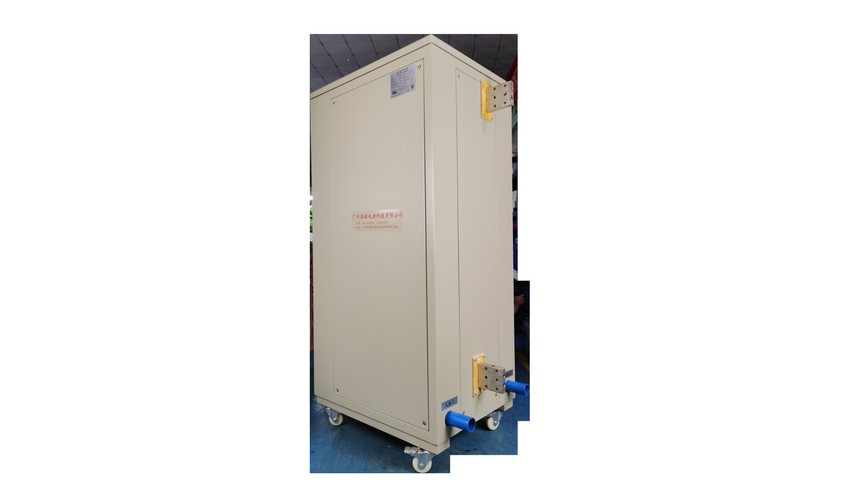
The Unseen Core: Powering Electrocoagulation Efficiency
Electrocoagulation (EC) has emerged as a highly effective and environmentally friendly method for treating a wide spectrum of industrial wastewaters. From heavy metals and suspended solids to emulsions and complex organics, EC offers a versatile solution by leveraging electrochemistry to destabilize contaminants. At the heart of every successful EC system lies a critical, yet often underappreciated, component: the industrial DC power supply, or rectifier. This device converts AC line power into the precise DC current and voltage required to drive the electrochemical reactions. For demanding applications, such as those requiring high current densities, the reliability and precision of a unit like the GAOHUI 3000A 36V water-cooled rectifier become paramount.
The Heartbeat of the Process: Why the Power Supply Matters
The performance of an electrocoagulation system is directly correlated with the stability and quality of its power input. A rectifier’s output defines the current density applied to the electrodes, which in turn dictates the rate of sacrificial anode dissolution, the generation of coagulants, and ultimately, the efficiency of contaminant removal. A high-power unit, such as the GAOHUI 3000A 36V, is designed for large-scale industrial applications where substantial volumes of wastewater need treatment. The “water-cooled” specification is not merely a feature but a necessity for such high current outputs, enabling continuous operation in challenging environments by effectively dissipating the significant heat generated. Without a reliable and precisely controlled power supply, the entire EC process can falter, leading to suboptimal treatment, increased operational costs, and potential downtime.
Navigating the Peril: Common Rectifier Failures
Industrial rectifiers, especially those operating at high power levels, are subjected to significant electrical and thermal stresses. Understanding common failure modes is crucial for mitigating risks and ensuring uninterrupted operation:
- Thermal Overload: High current leads to substantial heat generation within power semiconductor devices (IGBTs, diodes) and other components. Inadequate cooling—a particular risk for air-cooled units in dusty or high-ambient temperature environments—can lead to component degradation, premature failure, or even catastrophic thermal runaway. This is precisely where water cooling, as implemented in GAOHUI’s 3000A 36V units, offers a significant advantage.
- Component Failure: Beyond thermal stress, individual components like power capacitors, transformers, and control board ICs can fail due to manufacturing defects, voltage spikes, current surges, or simply aging. Rectifiers operating in harsh industrial settings are particularly vulnerable to these stresses.
- Control System Malfunctions: The sophisticated digital control systems responsible for maintaining precise output can develop faults. These can manifest as erratic current or voltage output, inability to hold setpoints, or communication errors, directly impacting process stability and treatment efficacy.
- Environmental Degradation: While often ruggedized, rectifiers can still suffer from ingress of dust, moisture, or corrosive fumes, especially if not adequately sealed or protected. This can lead to short circuits, component corrosion, and reduced lifespan.
The Imperative of Unwavering Reliability
For continuous industrial processes, downtime is simply not an option. Ensuring the reliability of an EC power supply like the GAOHUI 3000A 36V is therefore paramount, built upon several key pillars:
- Robust Design and High-Quality Components: GAOHUI rectifiers are engineered with industrial-grade, often over-specified, components that can withstand demanding operational conditions. This includes robust power modules, durable transformers, and capacitors with extended lifespans, all selected for their proven reliability.
- Advanced Cooling Systems: For high-power units, water cooling is a game-changer. It provides superior heat dissipation compared to air cooling, maintaining stable internal temperatures regardless of ambient conditions. This significantly extends component life, reduces the risk of thermal failures, and allows for a more compact footprint, making the GAOHUI 3000A 36V suitable for space-constrained installations.
- Comprehensive Protective Features: A truly reliable rectifier incorporates multiple layers of protection. This includes safeguards against overcurrent, overvoltage, short circuits, undervoltage, phase loss, and overtemperature. These features automatically detect anomalies and trigger protective shutdowns or alarms, preventing damage to the rectifier and the broader EC system.
- Rigorous Testing and Quality Assurance: Each GAOHUI unit undergoes extensive factory acceptance testing (FAT) to ensure it meets design specifications and operational integrity under simulated load conditions before deployment.
- Preventative Maintenance Design: Features that facilitate easy access for inspection and maintenance, coupled with diagnostics and remote monitoring capabilities, contribute significantly to long-term reliability by enabling proactive intervention.
The Mandate for Precision Control
The effectiveness of electrocoagulation is not just about applying power; it’s about applying the right power, consistently. Precision control is essential for several reasons:
- Optimal Current Density: Different wastewaters and desired treatment outcomes require specific current densities. Precise current regulation ensures the optimal rate of electrode dissolution and contaminant coagulation, preventing under-treatment or wasteful overuse of electrodes.
- Preventing Electrode Passivation: Fluctuations in current or voltage can contribute to electrode passivation (the formation of an insulating layer on the electrode surface), reducing efficiency and increasing energy consumption. A stable, precisely controlled output helps mitigate this issue.
- Minimizing Sludge Production: Fine-tuning the current allows for better control over floc formation, often leading to denser, more easily settleable sludge, which simplifies downstream dewatering and disposal.
- Extending Electrode Life: Consistent, controlled operation reduces stress on electrodes, leading to a longer operational lifespan and reduced replacement costs.
GAOHUI’s 3000A 36V rectifiers typically employ advanced digital signal processing (DSP) or microcontroller-based control systems. These systems offer fast response times, high accuracy, and closed-loop feedback, allowing the rectifier to instantaneously adjust its output to maintain the set current or voltage, even in the face of varying load conditions within the EC reactor. This level of control translates directly into consistent effluent quality, optimized chemical usage (if any), and lower overall operating expenditures.
Conclusion
The industrial landscape demands robust and efficient solutions, particularly in wastewater treatment. For electrocoagulation systems, the power supply is not merely a utility but a strategic asset. Addressing common rectifier failures through superior design, emphasizing unwavering reliability with features like advanced water cooling, and providing meticulous precision control are fundamental to maximizing EC system performance. GAOHUI’s 3000A 36V water-cooled electrocoagulation power supply exemplifies these principles, offering a dependable, high-performance solution engineered to ensure consistent treatment efficiency, extended operational life, and peace of mind in the most demanding industrial environments.