
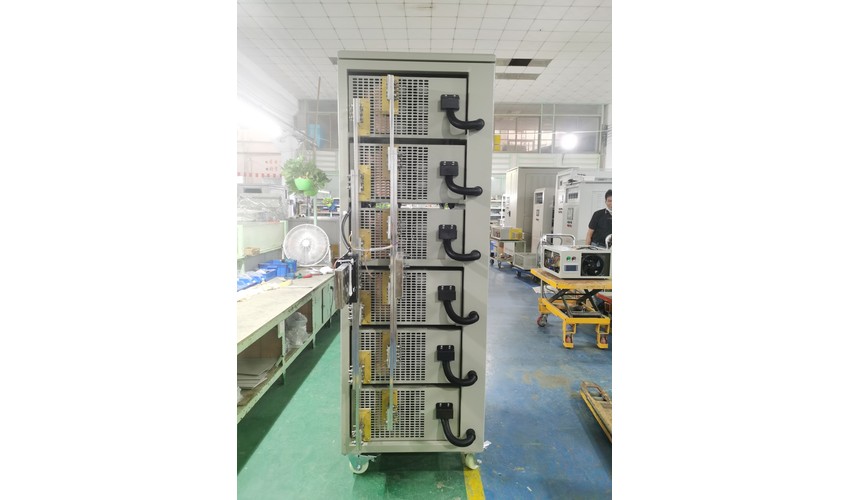
In the critical realm of water treatment, the integrity and continuous operation of equipment are paramount. From municipal purification plants to industrial wastewater facilities, reliable power conversion is the backbone for processes like electrocoagulation, electrochemical disinfection, chlor-alkali production, and impressed current cathodic protection. At the heart of these demanding applications lies the Water Treatment Rectifier, a device engineered to convert AC power into stable DC power. GAOHUI’s 2000A 12V Oil Immersed Water Treatment Rectifier stands out as a robust solution specifically designed to thrive in the notoriously challenging conditions characteristic of water treatment environments, prioritizing reliability, superior corrosion resistance, and optimal heat management.
The essential function of a rectifier in water treatment is to supply precise and consistent direct current to drive electrochemical reactions. These reactions are fundamental to removing contaminants, neutralizing pathogens, or preventing corrosion in tanks and pipelines. An unstable or failing DC supply can lead to inefficient treatment, regulatory non-compliance, and costly downtime. GAOHUI’s commitment to engineering excellence ensures that its rectifiers deliver the unwavering performance critical for these sensitive processes.
Unyielding Reliability: The GAOHUI Assurance
Reliability is not merely a feature; it is a fundamental requirement for any component operating within a water treatment plant. Operational interruptions can have severe environmental, financial, and public health consequences. The GAOHUI 2000A 12V Oil Immersed Water Treatment Rectifier is built with an intrinsic focus on uninterrupted operation. Its design incorporates high-grade silicon-controlled rectifiers (SCRs) or diodes, robust transformers, and advanced control circuitry, all selected for their durability and performance under sustained load. Each unit undergoes rigorous testing, ensuring it meets stringent industrial standards for voltage regulation, current stability, and efficiency. Furthermore, comprehensive protective features, including overcurrent, overvoltage, short-circuit, and thermal overload protection, are integrated to safeguard both the rectifier and connected systems from potential faults. This meticulous attention to design and quality control significantly extends the rectifier’s service life, minimizes maintenance requirements, and reduces the total cost of ownership, providing operators with peace of mind.
Superior Corrosion Resistance: The Oil Immersed Advantage
Water treatment facilities are inherently harsh environments, frequently exposed to corrosive chemicals such as chlorine, acids, and alkalis, coupled with high humidity and airborne particulates. These conditions pose a significant threat to electronic components, leading to premature failure due to corrosion and oxidation. This is where the Oil Immersed design of the GAOHUI rectifier offers a decisive advantage. Unlike air-cooled systems where sensitive electronic components are directly exposed to the ambient atmosphere, the GAOHUI unit encapsulates its power transformer and rectifier stacks within a hermetically sealed tank filled with dielectric oil. This oil serves as an impenetrable barrier, completely shielding the internal electrical components from moisture, corrosive gases, dust, and other contaminants. The absence of direct air contact eliminates pathways for corrosive agents to reach vital parts, thereby drastically extending the rectifier’s operational lifespan in the most aggressive chemical environments. This inherent protection makes the GAOHUI 2000A 12V Oil Immersed Water Treatment Rectifier an ideal choice where conventional air-cooled units would quickly succumb to environmental degradation.
Optimized Heat Management: Enhanced Longevity and Performance
Generating 2000 amps of DC current invariably produces a substantial amount of heat, which, if not effectively managed, can degrade component performance and shorten equipment life. The traditional challenges of air cooling in a water treatment setting – blocked filters from dust and debris, moisture-laden air, and corrosive aerosols – often compromise cooling efficiency and reliability. The Oil Immersed technology in the GAOHUI rectifier provides a vastly superior solution for heat dissipation. Dielectric oil possesses excellent thermal conductivity and specific heat capacity, allowing it to efficiently absorb heat generated by the transformer windings and semiconductor devices. This heat is then transferred to the external tank surface, often augmented by radiators, where it dissipates into the ambient air through natural convection or forced air cooling. This uniform and efficient heat transfer ensures that critical components operate within their optimal temperature ranges, preventing hot spots and thermal stress. By maintaining stable operating temperatures, the oil-immersed design not only extends the life of internal components but also ensures consistent electrical performance, preventing output fluctuations that can impair water treatment processes.
GAOHUI’s 2000A 12V specifications cater to specific low-voltage, high-current applications within water treatment, offering precise control for optimized process efficiency. This balance of power and precision, coupled with the inherent advantages of the oil-immersed design, positions the GAOHUI Water Treatment Rectifier as a leading choice for demanding industrial and municipal applications.
In conclusion, the GAOHUI 2000A 12V Oil Immersed Water Treatment Rectifier represents a pinnacle of industrial power conversion technology. Its design specifically addresses the most pressing challenges of water treatment environments: the imperative for absolute reliability, the need for robust corrosion resistance against aggressive chemicals and humidity, and the critical importance of effective heat management for sustained performance. By integrating these core principles, GAOHUI delivers a rectifier that not only performs consistently but also ensures longevity and operational efficiency, making it an indispensable asset for critical water treatment infrastructure worldwide.