
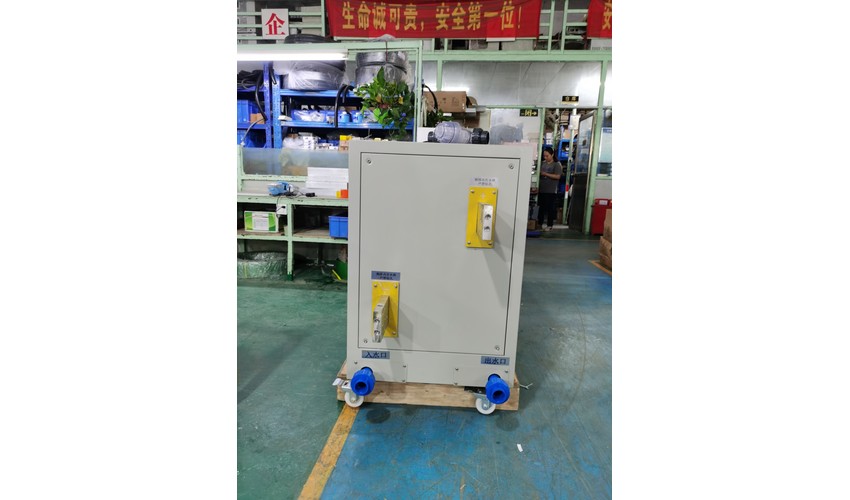
The landscape of industrial wastewater treatment is undergoing a significant transformation, driven by increasingly stringent environmental regulations, a demand for greater operational efficiency, and a push towards sustainable practices. At the forefront of this evolution is electrocoagulation (EC), a sophisticated electrochemical process gaining traction for its effectiveness in removing a wide spectrum of contaminants without heavy chemical reliance. Central to the performance and efficacy of any EC system is its power supply—the unsung hero that dictates the success of the entire operation. For industrial buyers, understanding the nuances of these critical components, particularly units like the robust 500A 36V air-cooled system, is paramount to securing long-term operational success and a compelling return on investment.
The Heart of EC: Understanding the Power Supply’s Role
An electrocoagulation power supply is more than just a rectifier; it’s a precision instrument that delivers controlled direct current (DC) to sacrificial electrodes, initiating the electrochemical reactions that drive contaminant removal. The specifications—amperage, voltage, and cooling method—are not arbitrary but are precisely calibrated to meet specific treatment demands.
- Amperage (e.g., 500A): The current capacity (amperage) directly correlates with the amount of electrode material consumed and, consequently, the treatment capacity. A 500A power supply indicates a substantial capability to treat large volumes of industrial wastewater or highly concentrated streams, ensuring rapid and efficient coagulation of pollutants. Insufficient amperage can lead to sluggish treatment times and compromised water quality.
- Voltage (e.g., 36V): Voltage is crucial for overcoming the electrical resistance within the wastewater and across the electrode gaps. A 36V output provides ample electromotive force to drive the necessary chemical reactions, ensuring consistent and effective treatment even with varying water conductivities or complex pollutant matrices. It ensures the system can maintain optimal current density without excessive energy loss.
- Cooling (e.g., Air Cooled): The operational environment of industrial facilities often presents challenges like dust, humidity, and high temperatures. Air-cooled power supplies offer a robust and reliable solution for heat dissipation. They are typically simpler to maintain than liquid-cooled systems, requiring less infrastructure and proving highly resilient in harsh industrial settings. For units like a 500A 36V system, efficient air cooling ensures stable performance, prevents overheating, and extends the lifespan of internal components, minimizing downtime.
A Buyer’s Guide: Key Considerations for Your Next EC Power Supply
Investing in an EC power supply requires a strategic approach. Beyond the core specifications, several factors distinguish a good investment from a costly mistake:
- Modularity and Scalability: Future-proof your investment. Can the system be easily upgraded or expanded to meet increasing treatment demands or stricter regulations? Modular designs allow for easy maintenance and swift component replacement.
- Energy Efficiency: Look for power supplies with high power factors and efficiency ratings. Even fractional improvements in efficiency can translate into significant energy cost savings over the lifespan of a 500A 36V unit, given its substantial power output.
- Advanced Control Systems: Modern power supplies integrate with PLC/SCADA systems, offering precise control over current and voltage, remote monitoring capabilities, and data logging. This enables optimized performance, predictive maintenance, and compliance reporting.
- Durability and Environmental Rating: Industrial environments demand rugged equipment. Ensure the power supply has appropriate IP ratings (e.g., IP54, IP65) for protection against dust and water ingress, along with robust construction suitable for continuous operation.
- Safety Features: Critical safety protocols like overcurrent protection, overvoltage protection, short-circuit protection, and thermal shutdown are non-negotiable for operator safety and equipment longevity.
- Supplier Support and Warranty: A reputable supplier offers comprehensive technical support, spare parts availability, and a strong warranty. This provides peace of mind and minimizes operational disruptions.
Calculating ROI: Justifying Your Investment
Implementing an EC system with a well-chosen power supply, such as a high-performance 500A 36V air-cooled unit, offers a compelling return on investment through various direct and indirect savings:
- Reduced Chemical Costs: EC significantly minimizes or eliminates the need for expensive chemical coagulants, flocculants, and pH adjusters, leading to substantial operational savings.
- Lower Sludge Volume & Disposal Costs: EC generates a denser, less voluminous sludge compared to conventional chemical precipitation, dramatically reducing sludge handling and disposal expenses—often a major operational cost.
- Improved Compliance & Reduced Fines: Consistent and effective treatment ensures regulatory compliance, avoiding costly fines and reputational damage.
- Energy Efficiency: While EC consumes electricity, modern power supplies are highly efficient, and the overall energy expenditure is often offset by savings in chemical purchases and sludge disposal.
- Operational Simplicity & Reduced Labor: Automated EC systems require less operator intervention and monitoring compared to chemical-intensive processes, freeing up labor for other tasks.
Navigating 2026 Industrial Trends: What’s Next for EC
Looking ahead to 2026, several industrial trends will further solidify EC’s position as a preferred wastewater treatment technology, with power supply innovation playing a key role:
- Industry 4.0 Integration: Expect power supplies to become even smarter, integrating seamlessly with IoT sensors, AI-driven analytics, and predictive maintenance platforms. This will allow for real-time optimization, energy consumption forecasting, and self-diagnosis of potential issues, enhancing uptime for robust units like the 500A 36V system.
- Sustainability Imperatives: The drive towards circular economies and net-zero emissions will prioritize technologies like EC that minimize chemical usage and facilitate resource recovery (e.g., metals, phosphorus). Power supply manufacturers will focus on even higher efficiencies and smaller footprints.
- Decentralized Treatment: The demand for modular, compact EC systems for on-site treatment, particularly in remote or specialized industrial facilities, will increase. This trend will favor adaptable, robust, and easily deployable power supplies.
- Advanced Materials & Design: Innovations in electrode materials and power supply components will lead to even more durable, corrosion-resistant, and energy-efficient systems, pushing the boundaries of EC performance.
- AI-Driven Process Optimization: Artificial intelligence will increasingly optimize power supply parameters in real-time based on influent characteristics, ensuring peak performance and minimal energy usage without manual intervention.
Conclusion
The electrocoagulation power supply is not merely an accessory but the strategic core of an efficient and sustainable wastewater treatment system. For industrial buyers, a comprehensive understanding of its specifications, coupled with a forward-looking perspective on ROI and evolving industrial trends, is essential. Investing in a robust, intelligent unit—such as a 500A 36V air-cooled power supply—positions your facility not only for compliance and cost savings today but also for adaptability and resilience in the industrial landscape of 2026 and beyond. Careful selection ensures that your EC system remains a powerful asset, delivering clean water and a healthier bottom line.