
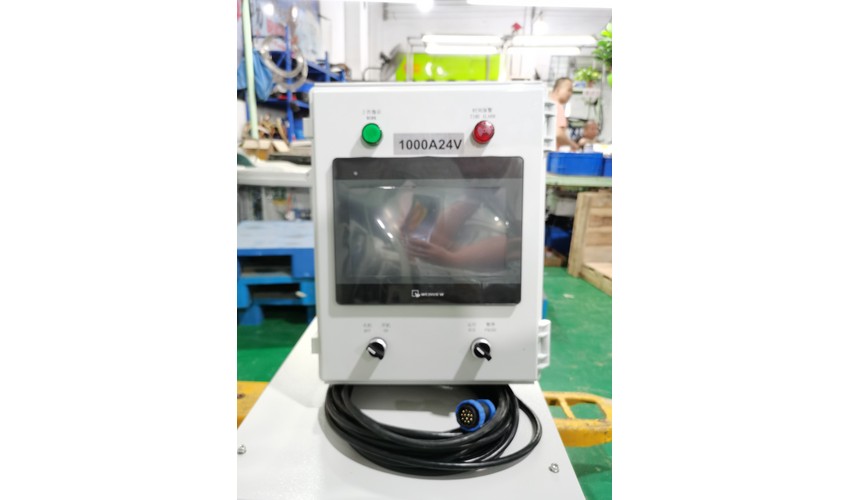
The escalating challenge of industrial wastewater treatment demands sophisticated and resilient solutions. Among the most promising advanced oxidation processes (AOPs), Electro-Fenton (EF) stands out for its efficacy in degrading recalcitrant organic pollutants. However, the success of an EF system hinges critically on its power supply—a component often overlooked yet central to performance and longevity. This article delves into the transformative capabilities of a specialized 3000A 100V oil-immersed Electro-Fenton power supply, meticulously engineered to deliver unparalleled reliability, exceptional corrosion resistance, and superior heat management, thereby ensuring optimal and consistent operation in the most demanding industrial environments.
The Extreme Demands of Electro-Fenton Processes
Electro-Fenton reactions create a highly aggressive electrochemical environment. The generation of powerful hydroxyl radicals (•OH) for contaminant degradation occurs within an electrolyte that is often acidic, laden with dissolved solids, and subject to high current densities. These conditions pose significant challenges for conventional power supply units. Exposure to corrosive fumes, high humidity, and the inherent thermal stress from dissipating hundreds of kilowatts of power can rapidly compromise standard electronics, leading to premature failure, increased maintenance, and inconsistent treatment outcomes. A purpose-built power solution is not merely advantageous; it is essential for the sustained viability of industrial EF applications.
Unmatched Reliability and Robust Corrosion Resistance
The core strength of the 3000A 100V oil-immersed Electro-Fenton power supply lies in its foundational design principle: oil immersion. This critical engineering choice imbues the unit with inherent advantages in reliability and corrosion resistance. The high dielectric strength of transformer oil provides superior electrical insulation, preventing arcing and short circuits even under the high voltage and current demands of EF processes. By completely encapsulating the vital internal components—such as transformers, rectifiers, and control circuitry—the oil acts as an impenetrable barrier against environmental aggressors. Dust, moisture, and corrosive atmospheric elements (like acidic vapors common in industrial settings) are sealed out, preventing oxidative degradation and electrochemical corrosion that plague air-cooled systems.
Furthermore, the oil immersion technology drastically reduces the risk of internal component failure due to external contamination. It mitigates the need for complex filtration systems often associated with air-cooled designs, simplifying maintenance and enhancing operational uptime. The controlled, stable internal environment afforded by oil immersion ensures that sensitive electronic components operate within their optimal parameters, significantly extending their service life and contributing to the power supply’s overall unwavering reliability, which is paramount for continuous industrial wastewater treatment operations.
Superior Heat Management: The Oil-Immersed Advantage
The generation of 3000 Amperes at 100 Volts translates to a formidable 300 kilowatts of power, a substantial portion of which is dissipated as heat within the power supply’s internal components. Effective heat management is therefore not just desirable, but absolutely critical for stable performance and longevity. Here, the oil-immersed design offers a significant advantage over traditional air-cooled systems.
Transformer oil possesses excellent thermal conductivity, efficiently absorbing heat generated by the windings, rectifiers, and other power electronics. Natural convection currents within the oil circulate the heated fluid away from critical components and towards the cooler surfaces of the tank walls, often augmented by external radiators or cooling fins. This highly efficient heat transfer mechanism prevents localized hot spots, which are common failure points in air-cooled systems where airflow might be restricted or uneven.
Unlike air cooling, which relies on fans that can draw in dust and corrosive particles, an oil-immersed system provides a sealed, stable thermal environment. The consistent cooling capability ensures that semiconductor junctions and transformer windings operate below their maximum temperature limits, thereby preventing thermal degradation and dramatically extending the lifespan of the unit. This proactive approach to heat dissipation directly contributes to the power supply’s consistent performance, preventing thermal runaway and ensuring stable voltage and current delivery to the Electro-Fenton reactor, irrespective of ambient conditions.
Precision, Stability, and Integration for Optimized Performance
Beyond its robust physical design, a high-performance 3000A 100V Electro-Fenton power supply integrates sophisticated control mechanisms. Advanced digital control systems ensure precise and stable current or voltage regulation, critical for maintaining optimal hydroxyl radical generation and consistent treatment efficiency. Features such as remote monitoring, programmable logic controller (PLC) compatibility, and overcurrent/overvoltage protection further enhance reliability and operational safety. This precise control not only optimizes the Electro-Fenton process by ensuring reproducible results but also protects the entire system from potential electrical anomalies, reinforcing the overall reliability and extending the service life of both the power supply and the EF reactor itself.
Conclusion
For industries facing increasingly stringent wastewater discharge regulations, the Electro-Fenton process offers a powerful solution. The effectiveness and economic viability of this advanced oxidation technology, however, are inextricably linked to the performance of its power infrastructure. The 3000A 100V oil-immersed Electro-Fenton power supply represents a pinnacle of industrial engineering, specifically designed to withstand and excel in the harshest operational realities. Its inherent advantages in reliability through robust construction, unparalleled corrosion resistance due to oil encapsulation, and superior heat management capabilities position it as an indispensable asset. Investing in such a purpose-built, high-performance power supply ensures consistent treatment efficacy, minimizes downtime, reduces maintenance costs, and ultimately underpins a sustainable and highly effective approach to industrial wastewater purification.