
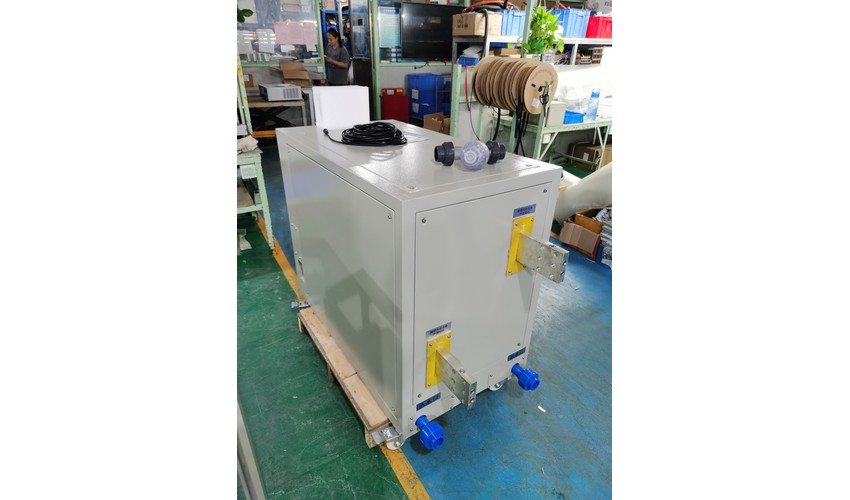
In the rigorous landscape of industrial electrochemical processing, the stability of the power source is the single most critical factor determining yield, purity, and operational longevity. Whether applied in metal refining, chlor-alkali production, or advanced wastewater treatment, the electrolysis process demands a continuous, steady flow of high-amperage current. For these demanding applications, the 1000A 24V oil-immersed DC power supply has emerged as the definitive engineering solution, providing a level of environmental isolation and thermal management that air-cooled systems simply cannot replicate.
The Architecture of Durability: Why Oil-Immersed Systems Prevail
Electrolysis environments are notoriously hostile. They are frequently characterized by high humidity, airborne acidic or caustic vapors, and conductive dust—a recipe for catastrophic failure in standard electronic equipment. An air-cooled power supply, which relies on intake fans to move ambient air across sensitive PCBs and transformers, inevitably draws these contaminants into its core. Over time, this leads to microscopic corrosion on copper traces, short circuits across terminals, and accelerated degradation of insulating materials.
In contrast, the 1000A 24V oil-immersed DC power supply utilizes a sealed, hermetic design. The core electrical components—specifically the transformer windings and the rectifier bridge—are submerged in a high-dielectric-strength mineral or synthetic oil. This immersion serves as a complete physical barrier against the external environment. By eliminating the intake of corrosive air, the system achieves an IP65 or higher ingress protection rating as a baseline, ensuring that internal components remain in a pristine, factory-new state for the duration of their multi-decade service life.
Superior Heat Management in High-Amperage Applications
The delivery of 1000A at 24V generates significant thermal energy. In high-power electrolysis, heat is the enemy of efficiency. Traditional air-cooled systems suffer from ‘hot spots’ within transformer windings, which can lead to localized insulation breakdown. If the ambient temperature of the facility rises, the efficiency of an air-cooled power supply drops sharply, forcing the unit to throttle performance or trigger thermal protection shutdowns.
Oil-immersed systems leverage the high specific heat capacity and thermal conductivity of dielectric oil. The oil acts as a massive thermal reservoir, absorbing heat generated by the transformer and internal rectifiers and conducting it effectively to the tank walls. This heat is then dissipated into the atmosphere through high-surface-area cooling fins or external heat exchangers. This design ensures that the core temperature remains exceptionally stable. By maintaining a constant, lower operating temperature, these systems significantly extend the lifespan of internal insulation and minimize electrical resistance, which translates directly into higher energy efficiency for the electrolysis process.
Achieving Precision Stability: The 1000A 24V Advantage
Electrolysis processes, such as electroplating or specialized chemical synthesis, rely on specific current densities to ensure uniform product deposition or reaction rates. A deviation in current can result in batch failure, hydrogen embrittlement, or uneven surface finishes. The 1000A 24V oil-immersed power supply is engineered with high-precision control loops that maintain tight tolerances on ripple current and voltage stability, even under variable load conditions.
Furthermore, the inherent mass of the oil-immersed system provides a dampening effect against electrical noise and input voltage transients. While air-cooled units might respond instantly to minor fluctuations in the supply grid, the thermal and electrical inertia of an oil-immersed system acts as a natural buffer, ensuring a steady, ‘clean’ DC output. This stability is vital for sensitive electrochemical reactions where the reduction-oxidation potential must remain within a narrow window to prevent side reactions.
Maintenance and Long-Term Reliability
One of the most compelling arguments for the oil-immersed 1000A 24V unit is its reduced total cost of ownership (TCO). Air-cooled units in electrolysis plants require rigorous maintenance schedules: filter replacements, cleaning of dust-laden heat sinks, and constant monitoring for corrosion. If ignored, the MTBF (Mean Time Between Failures) drops precipitously.
Oil-immersed systems, conversely, are essentially maintenance-free. With no air filters to change and no fans to fail, the mechanical stress on the internal components is virtually zero. Periodic oil analysis—much like in a large power transformer—is the only required preventive maintenance. By checking the dielectric strength and moisture content of the oil, operators can predict the health of the unit with pinpoint accuracy, allowing for scheduling-based maintenance rather than emergency repairs. This reliability is the hallmark of the 1000A 24V oil-immersed configuration.
Environmental and Safety Considerations
In addition to hardware longevity, oil-immersed power supplies offer enhanced safety features. The sealed tank design provides natural fire suppression capabilities and high-voltage isolation. Because the electrical components are encased in a dielectric fluid, the risk of arcing—even in volatile or dust-heavy industrial atmospheres—is significantly mitigated. For facilities operating under strict hazardous location requirements (such as ATEX or IECEx zones), oil-immersed power supplies can often be integrated more seamlessly than traditional cabinets, which would require expensive, bulky, and difficult-to-cool explosion-proof enclosures.
Future-Proofing the Electrolysis Infrastructure
As industries move toward more sustainable and energy-efficient practices, the demand for equipment that doesn’t ‘age out’ becomes paramount. A 1000A 24V oil-immersed DC power supply is an investment in infrastructure. While the initial capital expenditure may be higher than that of a solid-state air-cooled unit, the longevity of the oil-immersed design is unparalleled. These units are often capable of operating for 20 to 30 years with minimal intervention, outlasting multiple generations of secondary control hardware and facility peripherals.
When choosing a power supply for a mission-critical electrolysis application, the decision should be guided by the harshness of the operating environment. If the goal is a set-it-and-forget-it installation that guarantees high purity output and low maintenance downtime, the oil-immersed platform is the undisputed industry leader. It transforms the power supply from a vulnerable component into a robust, immovable foundation for chemical production.
Conclusion: The Gold Standard for Industry
For facilities requiring 1000A at 24V for electrolytic processes, the technical superiority of oil-immersed technology is clear. By prioritizing thermal stability, environmental immunity, and long-term reliability, these systems provide a superior operational baseline. In the face of increasing industrial demands for higher quality and lower downtime, the oil-immersed DC power supply is not merely a component choice—it is a strategic decision to safeguard the consistency and profitability of the entire production line. When performance under pressure is the requirement, the insulation, cooling, and shielding provided by the oil-immersed architecture remain the gold standard of modern electrical engineering.