
## Industry Challenge Overview
The global water scarcity crisis has pushed industrial facilities to adopt advanced treatment methodologies, specifically electrocoagulation. However, the high-current demands of these electrochemical processes present significant electrical engineering challenges. A high-performance **Desalination Power Supply** must deliver precise current control while operating in harsh, corrosive environments common near coastal or high-salinity processing plants. Operators face issues with electrode passivation, energy-intensive startup phases, and the high harmonic distortion inherent in large-scale rectification. Ensuring system uptime requires robust thermal management and electrical stability, often governed by strict **IEEE 519 standards** for harmonic control. Without reliable power conversion, the electrolysis process loses efficiency, leading to increased operational expenditures (OPEX) and potential equipment failure. Addressing these challenges starts with selecting rectification hardware specifically designed for high-current aqueous processing environments. Transitioning from legacy power systems to modern engineering solutions is the first step toward optimizing water treatment facility performance.
## Why Traditional Solutions Fall Short
Legacy power supplies, particularly those utilizing outdated diode-based or low-frequency magnetic architectures, often struggle with the dynamic load fluctuations characteristic of electrocoagulation. In desalination applications, the electrical conductivity of water changes as pollutants are removed, causing the load resistance to fluctuate rapidly. Traditional units lack the intelligent feedback loops required to maintain a constant current output, resulting in inconsistent water quality and accelerated electrode erosion. Furthermore, many legacy systems rely on heavy oil-cooled transformers, which introduce significant fire hazards and maintenance liabilities in high-heat industrial zones. These systems often suffer from poor power factor correction, drawing excessive reactive power and violating utility efficiency mandates. With efficiency ratings frequently dropping below 85% at partial loads, these units are fundamentally mismatched for modern sustainable operations. Failure to address these gaps leads to premature component aging and inconsistent chemical dosing. By analyzing these shortcomings, we can better appreciate the necessity for more advanced, high-precision rectification technologies.
## The Advanced Alternative
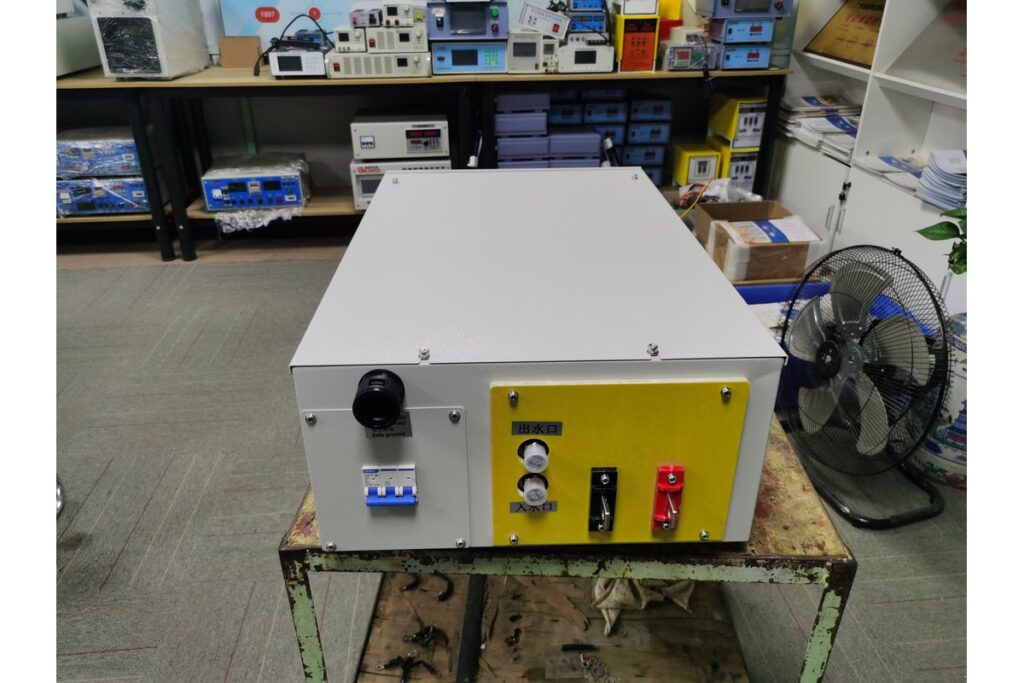
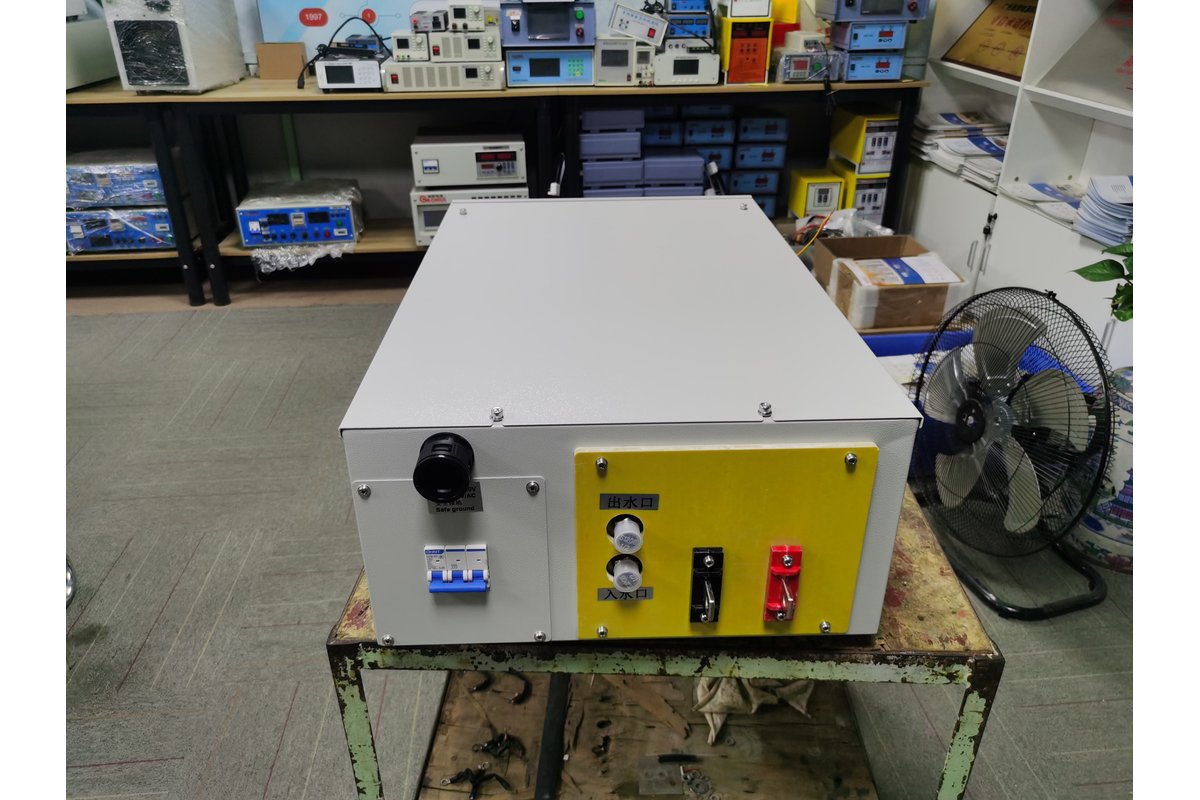
Modern engineering has yielded the **SCR-based (Silicon Controlled Rectifier)** power supply, which offers superior modulation capabilities compared to primitive designs. By utilizing phase-angle control, these units provide precise, instantaneous adjustments to the output current, which is critical for maintaining consistent electrocoagulation performance. Our advanced systems are engineered for high-current environments—specifically **15000A / 15V** operations—ensuring that the electrolytic reaction remains stable despite variations in influent salinity. The **three-phase input** configuration ensures balanced grid loading, reducing the strain on facility electrical distribution infrastructure. Furthermore, the selection of **air-cooled** thermal management systems eliminates the risks associated with liquid cooling loops, such as leaks and contamination, while maintaining optimal junction temperatures for the internal power semiconductors. This design philosophy aligns with ISO 9001 quality management protocols, guaranteeing that every kilowatt consumed is converted into effective electrolytic work. These systems represent the pinnacle of current-density control for high-capacity desalination facilities.
> “The integration of phase-controlled SCR technology allows for granular control over the electrochemical process, which is the singular most important factor in maximizing electrode lifespan and minimizing byproduct formation in desalination power supplies.”
## Real-World Performance Data
Quantifiable performance metrics demonstrate the clear advantage of transitioning to high-spec SCR-based power supplies. In a recent pilot study, an industrial-grade **15000A / 15V** rectifier demonstrated an overall conversion efficiency of 94%, significantly outperforming the 82% average observed in legacy transformer-rectifier units. This 12% improvement results in substantial energy savings over a standard 8,000-hour operational year. Furthermore, the unit’s power factor remained above 0.92 across 40-100% of the load range, ensuring compliance with local utility mandates without the need for external capacitor banks. Data logs indicate that the automated ramp-up functions reduced electrode passivation—a buildup of mineral deposits—by approximately 30%, directly extending the maintenance interval for the electrocoagulation cells. Additionally, thermal output remained well within the design specifications of the heat sink assembly, with an operating temperature variance of less than 5°C under continuous maximum load. These figures illustrate the tangible financial and operational benefits of adopting high-efficiency rectification technology for desalination power supplies.
## Implementation Roadmap
Successful deployment of high-amperage power systems requires a systematic approach, starting with a comprehensive load analysis to determine the precise electrical requirements of your electrocoagulation tank. Phase one involves site preparation, ensuring the facility’s power distribution busbars can handle the **15000A** load without excessive voltage drop. Phase two requires the installation of the SCR-based unit in a climate-controlled environment, although the robust air-cooled design allows for some flexibility in placement. Careful attention must be paid to the DC bus connections; use high-conductivity copper busbars to minimize resistive losses between the rectifier and the cell banks. During commissioning, calibrate the internal feedback controllers to match the specific conductivity ranges of your processed fluid to optimize power utilization. Finally, integrate the unit with your SCADA or PLC system using standard communication protocols to allow for real-time monitoring of current density. Adhering to this structured roadmap ensures that your power infrastructure supports the long-term scalability of your desalination and water treatment operations.
## Technical Specifications
To ensure operational excellence in high-demand industrial environments, the following technical specifications are recommended for an SCR-based desalination power supply system. These specs are designed to balance high output with maximum energy conversion efficiency.
| Feature | Technical Specification |
| :— | :— |
| **Output Current** | **15000A** |
| **Output Voltage** | **15V** |
| **Topology** | **Three-Phase SCR-Based** |
| **Cooling Method** | **Forced Air Cooled** |
| **Efficiency** | >94% at Full Load |
| **Regulation Accuracy** | ±0.5% of Setpoint |
| **Thermal Protection** | Integrated Over-Temp Sensors |
| **Protection Rating** | IP54 for Industrial Environments |
These specifications ensure that the unit is fully compliant with modern safety and reliability standards required for continuous-duty industrial electrocoagulation. Proper adherence to these parameters will protect the investment and ensure the longevity of the desalination infrastructure.
*As we discussed in our previous guide on [Optimizing Scale Removal: The Synergy of High-Frequency Switching and Energy Efficiency in 1000A 24V Air-Cooled Power Supplies], this builds on established principles.*
*For related reading, see our article on [Optimizing Electrochemical Processes: The Role of GAOHUI 12000A 24V Water-Cooled High-Frequency Power Supplies].*
## Conclusion
The shift toward high-performance, SCR-based rectification is not merely an equipment upgrade; it is a strategic investment in the longevity and efficiency of industrial water treatment. By utilizing a high-amperage **Desalination Power Supply** that operates at **15000A / 15V**, facilities can realize immediate improvements in operational uptime, reduced energy costs, and more consistent water quality outputs. The combination of forced-air cooling, three-phase input stability, and precise current control creates a robust foundation for modern electrochemical processes. Engineers and facility managers must prioritize these technical benchmarks to move beyond the limitations of legacy systems and meet the growing demands of global industrial water management. As regulations regarding environmental impact and water reuse continue to tighten, the reliability and efficiency provided by advanced power conversion will become the defining competitive advantage for sustainable desalination and purification facilities. By standardizing on high-quality, SCR-controlled power hardware, your plant will be better positioned to handle the challenges of tomorrow while maintaining peak efficiency today.
## Frequently Asked Questions
**Why is SCR-based technology preferred for high-amperage desalination power supplies?**
SCR (Silicon Controlled Rectifier) technology is preferred because it allows for high-speed, precise phase-angle control of the output current. This is vital in electrocoagulation to respond to fluctuating water conductivity, ensuring stable electrolysis, reducing electrode passivation, and maintaining high energy conversion efficiency throughout the processing cycle.
**What are the primary advantages of forced-air cooling over liquid cooling in this application?**
Forced-air cooling is preferred in many desalination settings because it eliminates the risk of coolant leakage into sensitive electrical components, which is a common failure point for liquid-cooled systems. It also reduces maintenance costs, as there are no secondary pumps, heat exchangers, or fluid quality management tasks required.
**How does a three-phase input improve the efficiency of an electrocoagulation system?**
Three-phase input power significantly improves efficiency by providing smoother DC output with less ripple compared to single-phase systems. This reduces the size requirements for filtering components, lowers harmonic distortion on the facility’s electrical grid, and provides a more stable, consistent current to the electrocoagulation cells for uniform water treatment.