
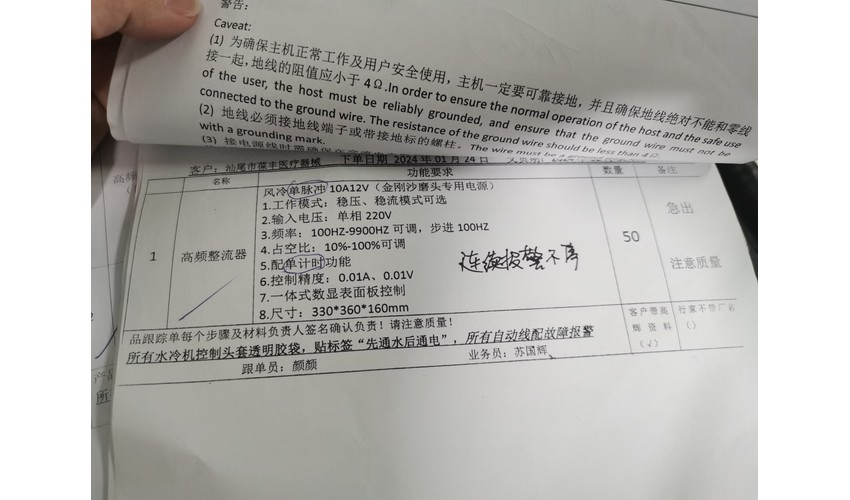
In the modern landscape of high-speed steel processing and precision metallurgy, the efficacy of scale removal systems remains a critical determinant of product quality and operational uptime. As manufacturing environments trend toward Industry 4.0 standards, the demand for precision-engineered power delivery has never been higher. At the heart of these high-performance systems lies the 1000A 36V Air-Cooled Power Supply, a workhorse designed to handle the rigorous demands of electrolytic and electromagnetic scale removal processes while adhering to the highest standards of energy efficiency and thermal management.
The Engineering Imperative of High-Frequency Switching
Traditional power systems for industrial descaling often relied on bulky, low-frequency transformer-rectifier sets. These legacy systems were characterized by significant energy losses, excessive heat generation, and a slow response time to dynamic load changes. The transition to high-frequency switching technology represents a paradigm shift in power conversion. By utilizing Pulse Width Modulation (PWM) and advanced Insulated Gate Bipolar Transistors (IGBTs), modern power supplies convert utility-grade AC into a precisely controlled DC output with unparalleled efficiency.
High-frequency switching (typically operating in the 20kHz to 100kHz range) allows for the miniaturization of internal components—specifically magnetic cores and capacitors. This reduction in physical size not only minimizes the footprint of the power supply within the production line but also leads to a significant reduction in ripple current. For scale removal, where consistency in voltage is paramount for uniform surface treatment, a low-ripple output ensures that the electromagnetic or electrolytic force applied to the steel surface remains stable, preventing localized over-processing or pitting.
Thermal Management: The Case for Air-Cooled Systems
For a system delivering 1000A at 36V (36kW of power), heat dissipation is the primary operational challenge. While water-cooled systems are common in extreme environments, air-cooled 1000A/36V units are often preferred for their ease of maintenance, lower risk of fluid leaks, and integration simplicity. Modern air-cooled units utilize sophisticated airflow design, featuring high-static-pressure fans and intelligent thermal sensors that modulate airflow based on real-time load requirements.
By optimizing the internal component layout and utilizing high-thermal-conductivity materials for heatsinks, manufacturers can maintain an operating temperature that extends the lifespan of sensitive electronic components. This focus on thermal resilience ensures that the system maintains its 36kW output without thermal throttling, even in harsh industrial environments where ambient temperatures may fluctuate significantly.
Energy Efficiency Standards and Sustainability
With global energy costs rising and stringent carbon-neutrality mandates, power supplies are no longer just utility devices; they are efficiency tools. The 1000A 36V high-frequency power supply is designed to exceed standard efficiency benchmarks, often achieving conversion efficiencies exceeding 94%. This efficiency is realized through reduced switching losses and lower conduction resistance during high-amperage cycles.
Energy efficiency in scale removal is not merely about electrical input; it is about the integration of intelligent control systems. Modern power supplies now feature Power Factor Correction (PFC) modules that maintain a near-unity power factor. This reduces the reactive power burden on the factory’s electrical infrastructure, minimizing utility surcharges and improving the overall stability of the plant’s electrical grid. When integrated into an automated scale removal line, these power supplies communicate via industrial protocols (such as Modbus TCP/IP or Profinet), allowing central control systems to adjust power parameters in real-time, matching the speed of the production line and further eliminating energy waste during line pauses or shifts in material gauge.
Reliability in High-Amperage Environments
Operating at 1000A presents unique challenges, particularly regarding electromagnetic interference (EMI) and electrical noise. A high-frequency power supply must be robust enough to withstand the feedback from other industrial machinery while maintaining a clean output. Precision shielding and advanced filtering circuits are essential to ensure that the 36V output remains stable regardless of the noise environment of the steel mill floor.
Furthermore, the modular architecture of contemporary 1000A 36V supplies allows for redundancy. In the event of a component failure, hot-swappable modules can be replaced with minimal downtime. This modularity is a critical feature for high-scale operations where a 30-minute unscheduled shutdown can result in thousands of dollars in lost throughput. By designing these supplies with a focus on ‘Mean Time To Repair’ (MTTR), engineers ensure that the equipment keeps pace with the aggressive duty cycles required by modern rolling mills.
Future-Proofing the Descaling Line
Investing in high-frequency power technology is an investment in the flexibility of the production line. As manufacturers pivot toward producing thinner, higher-strength alloys, the parameters for scale removal must change. Traditional systems often lack the range to adapt to these new materials. A digital, software-defined power supply provides the ability to adjust current ramps, voltage profiles, and pulse intervals, allowing the scale removal system to be ‘tuned’ to the specific surface requirements of different steel grades. This adaptability is the key to maintaining a competitive edge in a market that demands both volume and precision.
In conclusion, the selection of a 1000A 36V air-cooled power supply is a strategic decision that impacts the entire bottom line of a manufacturing facility. By leveraging high-frequency switching technology, maximizing thermal efficiency through optimized air-cooling, and adhering to modern standards of energy conservation, facility managers can significantly improve their scale removal outcomes. These systems represent the intersection of power electronics, environmental sustainability, and industrial reliability—a triad that is essential for any modern operation seeking to maximize output while minimizing the total cost of ownership.