
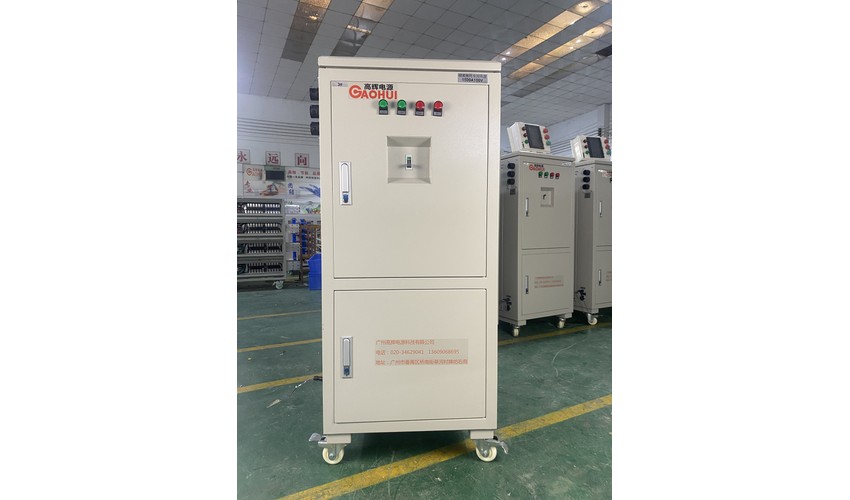
In the rigorous landscape of modern industrial wastewater treatment, the demand for high-amperage, low-voltage direct current (DC) power is constant. Whether powering electrocoagulation systems, electrolytic recovery units, or heavy-duty chemical dosing arrays, the stability of the power supply is the backbone of operational compliance and efficiency. For facilities requiring a 5000A 12V output, the industry standard has shifted decisively toward oil-immersed transformer-rectifier units. This configuration offers an unparalleled balance of electrical performance and environmental survivability, specifically engineered to withstand the volatile atmospheres inherent in wastewater processing.
The Necessity of Oil-Immersed Technology
Industrial wastewater environments are notoriously hostile. They are characterized by high humidity, airborne chemical particulates, and corrosive vapors—such as hydrogen sulfide—that rapidly degrade standard air-cooled electrical components. In a 5000A 12V system, the internal components, including copper windings and silicon-controlled rectifiers (SCRs), generate significant heat and are susceptible to microscopic surface oxidation.
An oil-immersed power supply mitigates these risks by encapsulating the active electrical components in high-dielectric, hermetically sealed mineral or synthetic oil. By removing the components from direct exposure to the ambient atmosphere, the system effectively eliminates the ingress of corrosive gases and particulate matter, ensuring that the critical internal electronics remain in an oxygen-free, clean environment throughout their entire lifecycle. This architectural choice is not merely a convenience; it is a fundamental requirement for achieving the high Mean Time Between Failures (MTBF) rates demanded by modern industrial facilities.
Superior Heat Management in High-Amperage Systems
At 5000A, electrical resistance becomes a significant factor. Even high-purity copper busbars can generate substantial waste heat. In conventional air-cooled systems, this heat is often difficult to dissipate uniformly, leading to ‘hot spots’ that shorten the lifespan of insulation materials and electronic controllers.
Oil-immersed systems leverage the high thermal conductivity and heat capacity of specialized transformer oil. The oil acts as a dual-purpose medium: it serves as both an electrical insulator and a convective cooling fluid. The oil circulates around the windings and diodes, absorbing heat and transferring it to the steel tank walls, which are often equipped with external cooling radiators or heat exchangers. This constant thermal flux ensures that the 5000A output remains stable regardless of the duty cycle. By maintaining a consistent operating temperature, the system prevents the thermal cycling that typically leads to mechanical fatigue in electronic components, thereby extending the operational lifespan of the power supply unit significantly beyond that of dry-type alternatives.
Corrosion Resistance: An Engineering Imperative
The exterior shell of a power supply is its first line of defense. In wastewater applications, the choice of enclosure material and coating is critical. Leading industrial power supply manufacturers utilize heavy-gauge, cold-rolled steel tanks finished with multi-stage, corrosion-resistant industrial coatings, such as epoxy-phenolic or powder-coated polymers.
However, the true mastery of corrosion resistance lies in the sealing technology. Because the 5000A 12V system operates as a sealed unit, all gaskets, seals, and interface points—such as the high-current output bushings—must be engineered for long-term resistance to chemical degradation. Fluorocarbon elastomers (Viton) or equivalent synthetic seals are preferred for their chemical inertness. This total isolation strategy ensures that even in the most acidic or alkaline environments, the internal integrity of the power conversion system remains pristine. This level of protection is essential for facilities operating in close proximity to chemical storage tanks or sludge dewatering units, where ambient fumes can destroy standard electrical enclosures in a matter of months.
Reliability and the 5000A Performance Profile
Reliability is quantified by uptime. For an industrial wastewater plant, a power supply failure can lead to non-compliance with environmental regulations, costly process shutdowns, or, in the case of electrocoagulation, an inability to remove hazardous contaminants from the effluent stream. The 5000A 12V oil-immersed system is specifically designed to handle the ‘dirty’ input power often found in industrial electrical grids.
These systems incorporate robust surge suppression and harmonic filtering, which protect the internal rectifiers from the voltage spikes common in heavy industrial facilities that share power with large pumps and motors. Furthermore, the oil immersion provides a secondary benefit: vibration dampening. Large transformers often vibrate at the frequency of the electrical grid (50/60 Hz), which can loosen connections over time. The viscous nature of the oil provides a natural damping effect, minimizing mechanical vibration and preserving the integrity of critical high-current connections. This stability ensures that the 5000A output remains clean and steady, even during peak load periods.
Maintenance and Safety Considerations
While oil-immersed systems are remarkably low-maintenance, they require a proactive approach to asset management. Monitoring the dielectric strength of the transformer oil is a standard industry best practice. Over time, moisture ingress (if the seals fail) or thermal breakdown can degrade the oil. Modern units are equipped with pressure-relief valves, gas-detection relays (Buchholz relays), and digital temperature monitoring systems that allow maintenance teams to track the health of the unit in real-time.
Safety is paramount when dealing with 5000A of current. The oil-immersed design enhances operator safety by eliminating the possibility of flashovers caused by dust accumulation—a common failure mode in dry, air-cooled rectifiers. With all high-voltage connections submerged in oil, the risk of accidental contact or short-circuiting due to environmental factors is virtually eliminated.
Conclusion: The Strategic Value of Robust Power
Selecting a 5000A 12V oil-immersed power supply is an investment in the long-term operational health of an industrial wastewater facility. By prioritizing thermal stability, physical isolation from corrosive environments, and mechanical ruggedness, plant engineers can effectively hedge against the risks of unexpected downtime.
In the final analysis, the cost difference between a standard air-cooled power supply and a professional-grade oil-immersed system is dwarfed by the potential costs of even a single day of system failure in a high-volume wastewater environment. As industrial regulations tighten and the cost of environmental non-compliance grows, the reliability provided by these advanced power solutions becomes not just an operational advantage, but a necessity for sustainable industrial manufacturing. For facility managers and engineers, the choice is clear: in an environment where failure is not an option, oil-immersed power supply technology remains the gold standard for high-current, low-voltage reliability.