
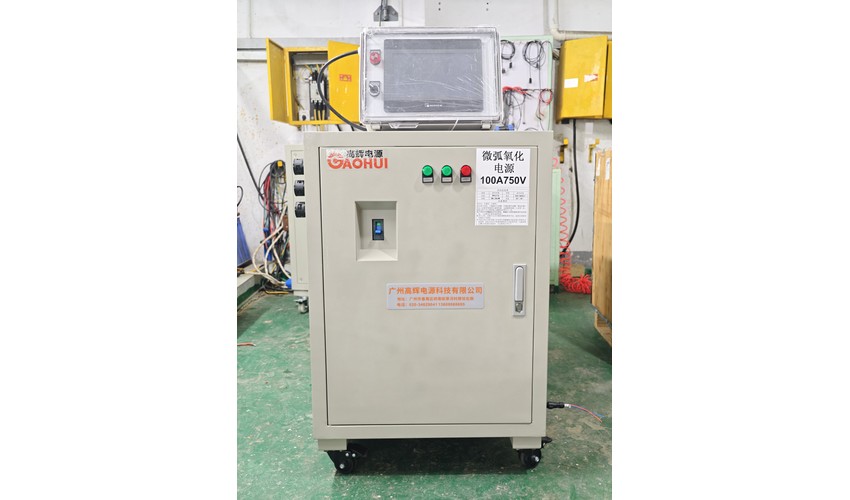
In the landscape of modern industrial wastewater treatment, the Electro-Fenton (EF) process stands as a cornerstone of Advanced Oxidation Processes (AOPs). By generating hydroxyl radicals in situ to degrade recalcitrant organic pollutants, EF technology offers unparalleled efficiency. However, the efficacy of an EF reactor is fundamentally dictated by the stability and precision of its electrical heart: the power supply. For heavy-duty industrial applications requiring 3000A at 15V, the challenge shifts from basic power conversion to a complex exercise in thermal dynamics and material science.
The Anatomy of High-Current Demand
Operating at a 3000A capacity is not a trivial engineering feat. In electrochemical applications, current is the primary driver of reaction kinetics. A 15V output provides the necessary potential to overcome ohmic losses and electrode overpotentials, but it is the 3000A load that demands rigorous architecture. When scaling to these levels, power density becomes the primary enemy of reliability. Standard air-cooled rectifiers often struggle with the thermal inertia generated by such high currents, leading to component fatigue and accelerated degradation of semiconductor junctions.
For systems of this magnitude, water-cooled power supplies are no longer a luxury; they are an operational necessity. By utilizing integrated liquid cooling plates, heat is extracted directly from the power modules—the IGBTs or MOSFETs—before it can propagate through the internal chassis. This allows for a much smaller footprint while ensuring the power supply maintains peak efficiency even under 24/7 continuous duty cycles.
Thermal Management: The Key to Longevity
In an Electro-Fenton environment, the ambient conditions are often hostile. High humidity, aggressive chemical vapors, and high-temperature ambient air are the norm. When a 3000A 15V system is tasked with running at full capacity, the total power throughput reaches 45kW. Even at 95% efficiency, over 2kW of heat must be rejected by the system.
Water cooling provides a superior thermal conductivity coefficient compared to forced-air convection. By incorporating a closed-loop deionized water system, the power supply can maintain a stable internal temperature, preventing ‘thermal runaway’—a phenomenon where increasing heat leads to decreased electrical efficiency, creating a catastrophic cycle. Furthermore, water cooling minimizes the accumulation of dust and contaminants within the cabinet. Air-cooled units act as vacuum cleaners, pulling airborne particulates into sensitive electronic boards, leading to conductive bridges and short circuits. A hermetically sealed, water-cooled cabinet effectively bypasses this risk, significantly extending the Mean Time Between Failures (MTBF).
Corrosion Resistance in Hostile Environments
Electro-Fenton processes involve the generation of reactive oxygen species and often require acidic electrolytes to maintain optimal pH levels. These acidic mists can easily penetrate standard industrial enclosures, leading to the rapid corrosion of PCB copper tracks, connectors, and switchgear.
Professional-grade 3000A 15V power supplies must feature NEMA 4X or IP65-rated enclosures built from 316L stainless steel or powder-coated high-grade aluminum. Beyond the shell, internal components require specialized conformal coating—a thin, protective polymer layer applied to printed circuit boards to shield them from moisture and corrosive gases. In high-amperage systems, the busbars are the most vulnerable points. Using tin-plated or silver-plated copper busbars, rather than bare copper, prevents the formation of insulating oxide layers that would otherwise increase resistance and lead to localized ‘hot spots.’
Precision Control and Ripple Management
The Electro-Fenton process relies on the precise concentration of Fe2+ and H2O2, which are directly influenced by current density at the cathode. High-frequency ripple in the DC output can induce fluctuating electrochemical potentials, leading to suboptimal reaction conditions and increased side-reactions that waste electricity and reduce electrode life.
Modern 3000A 15V units utilize high-frequency Pulse Width Modulation (PWM) combined with heavy-duty LC output filters. This ensures that the output is not just a steady DC flow, but one with minimal ripple, often below 1%. This stability is critical for ensuring the longevity of expensive boron-doped diamond or carbon-based electrodes. By providing a ‘clean’ power profile, the power supply protects the reactor from the mechanical stress caused by fluctuating current surges, ensuring that the electro-oxidation reaction remains uniform across the entire surface area of the electrodes.
Monitoring and Connectivity
In the era of Industry 4.0, the power supply must be more than just a provider of energy; it must be an intelligent node within the facility. For a 3000A 15V installation, remote telemetry is vital. The system should offer real-time data logging for voltage, current, and coolant flow rates.
By integrating communication protocols such as Modbus TCP/IP, Profinet, or EtherCAT, the power supply can feed data directly into a plant-wide SCADA system. If the coolant temperature rises or the flow rate drops below a safety threshold, the system should trigger an immediate, controlled shutdown or load-shedding sequence. This preventative intelligence safeguards the multi-thousand-dollar investment in electrodes and prevents catastrophic system failure due to a localized cooling failure.
Choosing the Right Infrastructure
When specifying a 3000A 15V Electro-Fenton power supply, the decision should be rooted in the Total Cost of Ownership (TCO) rather than the initial acquisition price. A cheaper, under-engineered air-cooled unit may seem economical, but the costs associated with downtime, frequent cleaning of clogged heatsinks, and the eventual replacement of oxidized components quickly erode those savings.
Reliability is engineered, not guessed. The ideal system features:
1. Modular Power Architecture: Allowing for easy serviceability without the need to replace the entire 45kW unit.
2. Isolated Liquid Cooling Loops: Utilizing non-conductive coolants or high-efficiency water-to-water heat exchangers to ensure zero electrical leakage.
3. Redundancy: In mission-critical applications, paralleling multiple smaller modules to achieve the 3000A output allows the system to continue operating at reduced capacity even if one module requires maintenance.
Conclusion
The implementation of an Electro-Fenton system at the 3000A scale represents a significant commitment to sustainable industrial wastewater management. To ensure that this technology delivers on its promise of cleaner discharge and regulatory compliance, the power supply must be treated with the same level of engineering rigor as the reactor itself.
By prioritizing water cooling, meticulous corrosion resistance, and intelligent output control, industries can harness the full potential of Electro-Fenton chemistry. The result is a robust, reliable, and highly efficient system that stands the test of time, proving that in electrochemical processes, the stability of the power supply is the true catalyst for long-term industrial success.