
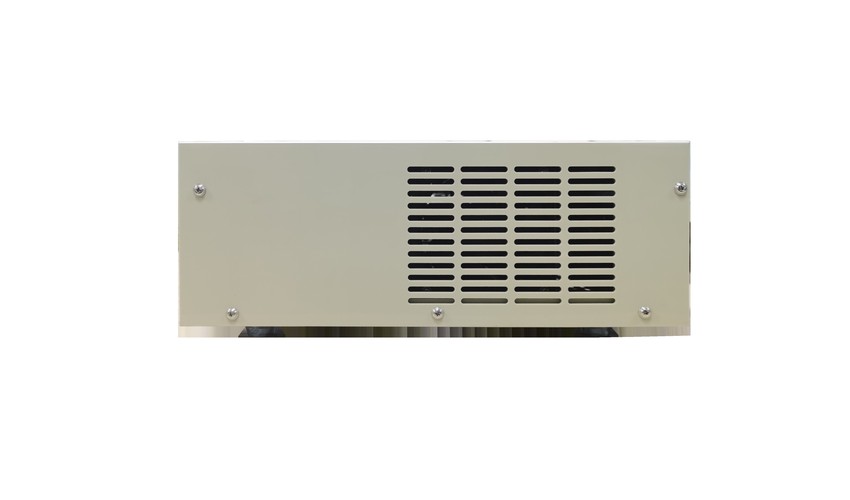
As global water scarcity intensifies, the industrial reliance on desalination plants has shifted from a peripheral necessity to a critical utility infrastructure. For engineers and facility managers, the core of this infrastructure lies not just in membrane technology, but in the precision of the power delivery systems that drive electrodialysis (ED) and electrodeionization (EDI) processes. GAOHUI has emerged as a premier manufacturer in this sector, particularly with their high-performance 3000A 150V air-cooled power supply units. This article delves into the technical imperatives of high-frequency switching and the drive toward unprecedented energy efficiency in large-scale desalination power supplies.
The Shift to High-Frequency Switching Technology
Traditional desalination power supplies often relied on silicon-controlled rectifiers (SCRs) or bulky transformer-based systems. While durable, these legacy technologies suffered from significant energy loss, massive footprints, and slow response times to fluctuations in water conductivity. GAOHUI’s transition to high-frequency switching power supply (HF-SMPS) architecture represents a technological leap for the industry.
By utilizing advanced Insulated Gate Bipolar Transistors (IGBTs) or Silicon Carbide (SiC) MOSFETs operating at high switching frequencies, the GAOHUI 3000A 150V units are able to significantly reduce the size of the internal magnetic components—specifically the transformers and inductors. This high-frequency modulation allows for a more granular control over current output, which is essential when treating feed water with varying mineral compositions. The ability of the GAOHUI system to adjust its output in real-time ensures that the electrochemical process remains optimal, preventing membrane fouling and minimizing energy waste.
Technical Deep Dive: The 3000A 150V Architecture
The 3000A 150V specification is a ‘sweet spot’ for medium-to-large-scale industrial desalination modules. Delivering a total power capacity of 450kW, these units require sophisticated thermal management. GAOHUI’s commitment to air-cooled design is a deliberate choice for operational simplicity and maintenance efficiency.
- Precise Current Regulation: With a 3000A capacity, the unit manages high-density current flow across electrolytic cells. GAOHUI’s control circuitry ensures a ripple current of less than 1%, which is critical for maintaining membrane integrity and preventing localized overheating that can lead to rapid degradation.
- Thermal Management and Air Cooling: Unlike liquid-cooled systems that introduce the risk of coolant leaks and require complex heat exchangers, the GAOHUI air-cooled solution utilizes high-efficiency heatsinks and intelligent, variable-speed fan arrays. This setup ensures an optimal MTBF (Mean Time Between Failures) by maintaining the power electronics within their ideal thermal envelope, even in harsh desert or coastal environments.
- Dynamic Response: Desalination input variables—such as salinity spikes or temperature shifts—require immediate power adjustments. The high-frequency switching capability allows the GAOHUI controller to respond in milliseconds, ensuring that the voltage stays within the desired range to maintain constant desalting efficiency.
Energy Efficiency: The New Industrial Standard
Energy represents the largest operational expenditure (OPEX) in desalination. Every percentage point of efficiency gained directly impacts the bottom line of a plant. Standard industrial rectifiers often operate with efficiencies between 85-90%. GAOHUI’s high-frequency architecture pushes these benchmarks closer to 95-97%.
This gain is achieved through three primary mechanisms:
- Reduced Switching Losses: By minimizing the transition time between ‘on’ and ‘off’ states in the switching components, GAOHUI mitigates the heat generated during the commutation process.
- PFC (Power Factor Correction): The units are equipped with active Power Factor Correction, ensuring that the reactive power drawn from the grid is kept to a minimum. This reduces the burden on site-wide electrical transformers and prevents potential harmonic distortion issues that could affect other sensitive equipment on the network.
- Smart Load Sharing: In plants utilizing multiple 3000A modules, the GAOHUI control software can manage load distribution, allowing individual modules to operate at their peak efficiency curve, or transitioning to ‘standby’ modes during low-demand periods, effectively reducing idling energy consumption.
Reliability in Harsh Environments
Desalination plants are notoriously difficult environments for power electronics. High humidity, salt spray, and particulate matter represent constant threats to circuit boards and power components. GAOHUI addresses these challenges through a combination of industrial-grade conformal coating and modular structural engineering.
The air-cooled design is specifically shielded with dust-repellent intake filters, which are easily serviced without interrupting the electrical output. This modularity allows for ‘hot-swapping’ or easy maintenance cycles, ensuring that a single module failure does not compromise the entire desalination train. By prioritizing modularity, GAOHUI ensures that the 3000A 150V systems provide a robust backbone for continuous-duty applications where downtime is measured in thousands of dollars per hour.
The Future of Desalination Power
As we look toward the future of water security, the integration of intelligent, data-driven power supplies becomes inevitable. The GAOHUI units are designed with digital communication protocols (Modbus, Profibus, or Ethernet/IP) that allow plant operators to monitor voltage, current, and temperature remotely. This integration facilitates predictive maintenance; by tracking subtle changes in heat signatures or current harmonics, operators can identify potential component failure long before a disruption occurs.
Furthermore, the evolution of GAOHUI’s 3000A 150V line aligns with the global trend toward decarbonizing water production. As plants increasingly integrate solar and wind energy, the stable, high-efficiency conversion provided by GAOHUI ensures that these renewable sources can be reliably used to power electrochemical desalination. The ability to handle the variable input of renewable energy sources without compromising the output quality is a testament to the sophistication of the high-frequency control algorithms embedded within these systems.
Conclusion
GAOHUI has successfully bridged the gap between raw power capacity and refined electronic control. Their 3000A 150V air-cooled desalination power supply is more than just a rectifier; it is an intelligent energy management tool designed to meet the rigorous demands of modern water infrastructure. By leveraging high-frequency switching, superior thermal design, and an unwavering commitment to efficiency, GAOHUI provides a sustainable path forward for large-scale desalination projects.
For facility managers aiming to lower operational costs, extend the life of their membrane systems, and increase the reliability of their water production, investing in GAOHUI’s advanced power solutions is an essential strategic decision. As the industry continues to evolve, GAOHUI remains at the forefront, powering the technology that turns the world’s most abundant resource into a life-sustaining commodity.