
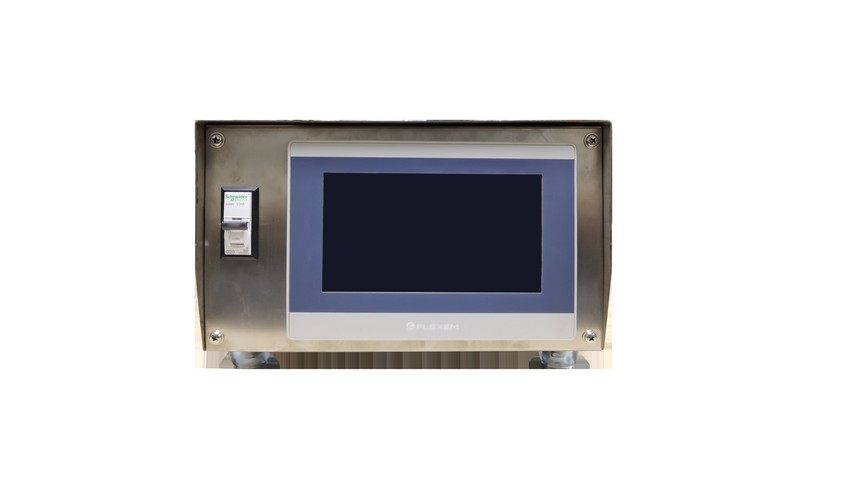
In the modern landscape of municipal water treatment and industrial disinfection, the on-site generation of sodium hypochlorite has become the gold standard for safety, sustainability, and cost-effectiveness. Central to this process is the electrolytic cell, which requires a highly stable, efficient, and robust direct current (DC) source. As the industry moves toward higher operational demands, GAOHUI has emerged as a leader in power electronics, specifically with its 1000A 15V oil-immersed high-frequency power supply. This article delves into the technological sophistication of these units and why high-frequency switching and oil-immersed cooling are the twin pillars of modern electrolytic efficiency.
The Shift to High-Frequency Switching Technology
Traditional sodium hypochlorite generators often relied on outdated silicon-controlled rectifier (SCR) or thyristor-based power supplies. While functional, these units suffered from low power factors, significant harmonic distortion, and substantial energy losses. GAOHUI has pivoted from these legacy designs to advanced high-frequency switching technology, utilizing Insulated Gate Bipolar Transistors (IGBTs) to transform the electrical delivery mechanism.
By operating at frequencies significantly higher than the 50/60Hz grid standard, GAOHUI power supplies enable the use of smaller, more efficient magnetic components. This reduction in physical mass does not sacrifice output; rather, it allows for a more granular control over the electrolysis process. Precise current regulation is critical in sodium hypochlorite generation because the salt-to-chlorine conversion rate is highly sensitive to fluctuations in electrical input. High-frequency switching allows the GAOHUI unit to respond to load variations in microseconds, ensuring that the electrolytic cells receive a constant, ripple-free current, which effectively minimizes over-potential and suppresses unwanted chemical side reactions.
Thermal Management: The Case for Oil-Immersed Architecture
Electrolytic environments are notoriously harsh. They are characterized by high ambient temperatures, corrosive chlorine vapors, and high humidity. An air-cooled power supply in such an environment is prone to rapid degradation of its internal electronics due to dust accumulation, salt mist crystallization, and thermal hotspots.
GAOHUI’s 1000A 15V oil-immersed design is an engineering masterstroke for industrial longevity. By submerging the transformer and critical power components in a high-dielectric insulating oil, the unit achieves several distinct advantages:
- Uniform Heat Dissipation: Unlike air, which relies on fans that can fail and pull in corrosive air, oil provides a homogeneous cooling medium that wicks heat away from all surfaces of the transformer windings, preventing localized hotspots and extending the lifespan of the insulation material.
- Corrosion Protection: The hermetic sealing of the oil tank provides a complete barrier against the aggressive, chlorine-rich atmosphere typical of sodium hypochlorite plants. This prevents the oxidation of copper windings and the failure of electronic interconnections.
- High Power Density: Because oil cooling is so efficient, GAOHUI engineers have been able to compress the 1000A/15V output into a smaller footprint. This high power density makes it easier for plant operators to retrofit existing infrastructure without significant capital expenditure on building extensions.
Energy Efficiency and Grid Compliance
Energy is the single largest operational expenditure (OPEX) in on-site sodium hypochlorite generation. Efficiency in this context is twofold: conversion efficiency (the ratio of AC input to DC output) and electrochemical efficiency (the yield of chlorine per kilowatt-hour).
GAOHUI power supplies are designed to achieve conversion efficiencies exceeding 92%. By utilizing advanced PWM (Pulse Width Modulation) control schemes, the system maintains a high power factor across various load profiles. This is not merely an operational cost benefit; it is a regulatory one. Many industrial grid codes now mandate stringent limits on harmonic feedback. The high-frequency architecture of the GAOHUI power supply includes built-in harmonic mitigation, ensuring that the equipment operates within compliance standards without the need for cumbersome external filtration banks.
Furthermore, the stability provided by GAOHUI’s units ensures that the cell electrodes are protected from current spikes. In an electrolysis cell, high ripple current leads to premature anode coating wear. By smoothing the output current, GAOHUI reduces the replacement frequency of expensive precious-metal-coated anodes, further lowering the total cost of ownership for the facility.
Precision Control and Smart Integration
The 1000A 15V unit is more than just a power converter; it is a smart controller. GAOHUI integrates sophisticated digital interfaces that allow plant operators to monitor voltage, current, and temperature in real-time. Through Modbus or similar industrial communication protocols, the power supply can be integrated into a SCADA system, enabling remote adjustment of production rates based on real-time water flow or residual chlorine demand.
This level of automation ensures that the generator is never running inefficiently. For instance, during low-demand periods, the GAOHUI power supply can automatically ramp down its output while maintaining optimal electrolytic efficiency, preventing the waste of electricity and chemical reagents.
Conclusion: Why GAOHUI Stands Apart
In the competitive market of industrial power electronics, the GAOHUI 1000A 15V oil-immersed high-frequency power supply sets a new benchmark. It successfully bridges the gap between high-performance electrochemistry and sustainable power management. By leveraging high-frequency switching, operators can ensure tighter control over the electrolysis process, while the oil-immersed construction ensures that this performance is maintained for decades, even in the most corrosive environments.
Choosing the right power supply is a decision that impacts the life cycle of the entire sodium hypochlorite system. For municipal engineers and industrial facility managers, GAOHUI represents the intersection of reliability, efficiency, and technological maturity. As global water treatment regulations tighten and energy costs fluctuate, the investment in high-efficiency, high-frequency power electronics is not just a preference—it is a strategic necessity. GAOHUI provides the power required to meet the challenges of tomorrow, today.