
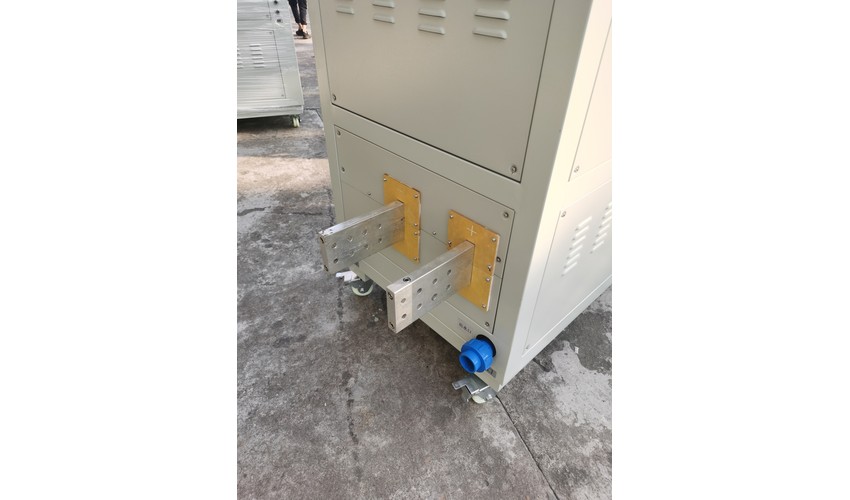
In the modern industrial landscape, the transition from legacy thyristor-based power systems to advanced high-frequency switch-mode power supplies (SMPS) has revolutionized electrolytic processes. For applications requiring a robust 5000A 12V output—such as electroplating, metal refining, and hydrogen production—the shift toward high-frequency architecture represents more than just a technical upgrade; it is a fundamental leap in operational efficiency and process control.
The Architecture of High-Frequency Electrolysis
Electrolysis is inherently a power-intensive process. Maintaining a steady 5000A current at 12V requires a power architecture that can mitigate ripple current while maximizing power factor. Traditional linear or silicon-controlled rectifier (SCR) power supplies are notoriously bulky and suffer from low efficiency at partial loads. In contrast, modern high-frequency SMPS technology utilizes Insulated Gate Bipolar Transistors (IGBTs) or Silicon Carbide (SiC) MOSFETs switching at frequencies often exceeding 20kHz to 100kHz.
By operating at these elevated frequencies, the size of internal magnetic components—transformers and inductors—is drastically reduced. This allows for a significantly higher power density, enabling a 5000A 12V unit to be housed in a compact, manageable footprint. Furthermore, high-frequency switching enables rapid transient response, ensuring that the electrolytic bath receives a clean, precise current even during load fluctuations.
Energy Efficiency: The Core Metric
Energy consumption remains the single largest operational expenditure in large-scale electrolysis. Efficiency in a 5000A 12V system is measured by the ratio of DC output power to total AC input power. High-frequency systems consistently outperform legacy counterparts by achieving efficiencies exceeding 92-95%.
This efficiency is primarily driven by three factors:
1. Minimized Switching Losses: Through advanced soft-switching techniques (Zero Voltage Switching and Zero Current Switching), power dissipation during state transitions is minimized.
2. Improved Power Factor Correction (PFC): Modern systems utilize active PFC circuits to ensure that the current draw is in phase with the voltage, reducing harmonic distortion and avoiding penalties from electrical utility providers.
3. Reduced Eddy Current Losses: High-frequency transformers utilize nanocrystalline or high-grade ferrite cores, which minimize core losses compared to the heavy iron-laminated transformers used in traditional units.
Thermal Management: The Case for Air Cooling
While water-cooled systems are often discussed for high-amperage applications, the 5000A 12V air-cooled configuration remains the industry standard for facilities where water quality is inconsistent or maintenance simplicity is paramount. Air cooling, when engineered correctly, offers a more reliable and cost-effective thermal solution.
Modern air-cooled units utilize modular airflow channels and high-static-pressure fans with smart speed control. By sensing internal temperatures at the heat sink level, the power supply adjusts fan RPM dynamically. This not only saves energy but also reduces dust ingress—a major failure point in industrial environments. To ensure longevity, these units often feature conformal-coated PCBs and isolated cooling ducts that prevent corrosive electrolytic fumes from damaging sensitive electronic components.
Precision and Pulse Control
Electrolysis is not just about raw power; it is about current consistency. In metal deposition (plating) or chemical synthesis, the precision of the DC signal determines the quality of the end product. High-frequency 5000A 12V power supplies offer sub-1% ripple current, which prevents grain coarsening in electroplating and optimizes gas evolution rates in electrolysis.
Furthermore, many advanced units offer programmable pulse modes. By modulating the DC output at specific intervals, operators can overcome concentration polarization at the electrode surface, leading to improved throughput and reduced byproduct waste. This level of digital control is only possible through high-speed microcontrollers embedded within the switching power electronics.
Maintenance and Industrial Reliability
For a system tasked with delivering 60kW of power continuously, reliability is non-negotiable. Modern power supplies incorporate modular design principles. In the event of a component failure, the modular architecture allows for the quick swapping of power modules without needing to decommission the entire system.
Integrated diagnostics are also a staple of the modern 5000A power supply. Systems are now equipped with communication protocols such as Modbus TCP/IP, Profibus, or CANopen, allowing operators to monitor voltage, current, and temperature remotely. Predictive maintenance algorithms can track the health of electrolytic capacitors—the most common point of failure—and alert maintenance teams before a breakdown occurs. This transition from ‘reactive repair’ to ‘predictive maintenance’ is essential for high-uptime industrial environments.
Compliance and Future-Proofing
Global energy standards, such as the IEC 60146-1-1 for semiconductor converters, are becoming increasingly stringent. Investing in a high-efficiency 5000A 12V system is a strategic hedge against rising energy costs and impending environmental regulations. Beyond the financial benefits, these systems contribute to lower carbon footprints by reducing the total energy required per kilogram of produced metal or hydrogen.
When selecting a system, engineers must look for units that prioritize:
* High-grade magnetic materials: For reduced heat and improved energy transfer.
* Smart Control Logic: For seamless integration with existing SCADA or PLC systems.
* Robust EMI Shielding: High-frequency switching generates electromagnetic interference; high-quality systems must meet electromagnetic compatibility (EMC) standards to ensure they do not interfere with other plant instrumentation.
Conclusion
The selection of a 5000A 12V air-cooled power supply is a decision that impacts the long-term viability of an electrolysis operation. By embracing high-frequency switching technology, industrial facilities can move away from energy-inefficient, maintenance-heavy legacy systems toward a cleaner, more precise, and more profitable future.
As the industry trends toward smarter, automated manufacturing, the DC power supply remains the heart of the electrolytic process. By prioritizing efficiency standards and optimized thermal management, operators ensure that they are not just powering their machines, but optimizing their entire value chain. The investment in high-frequency SMPS is not merely an expense; it is a commitment to the precision and sustainability of industrial electrolysis.