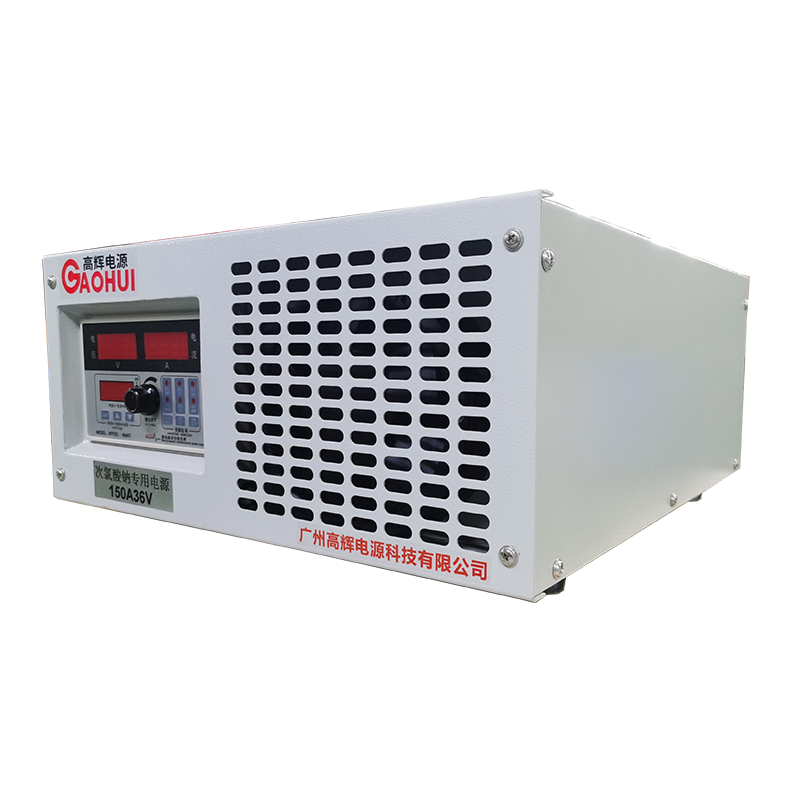
Electrolytic sodium hypochlorite generators use controlled DC current at the cell electrodes to support chlorine production from a salt solution. The rectifier supplies the electrical load, while salt concentration, cell geometry, flow, temperature and ventilation determine the operating response.
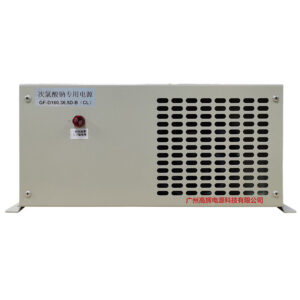
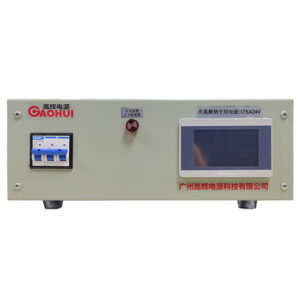
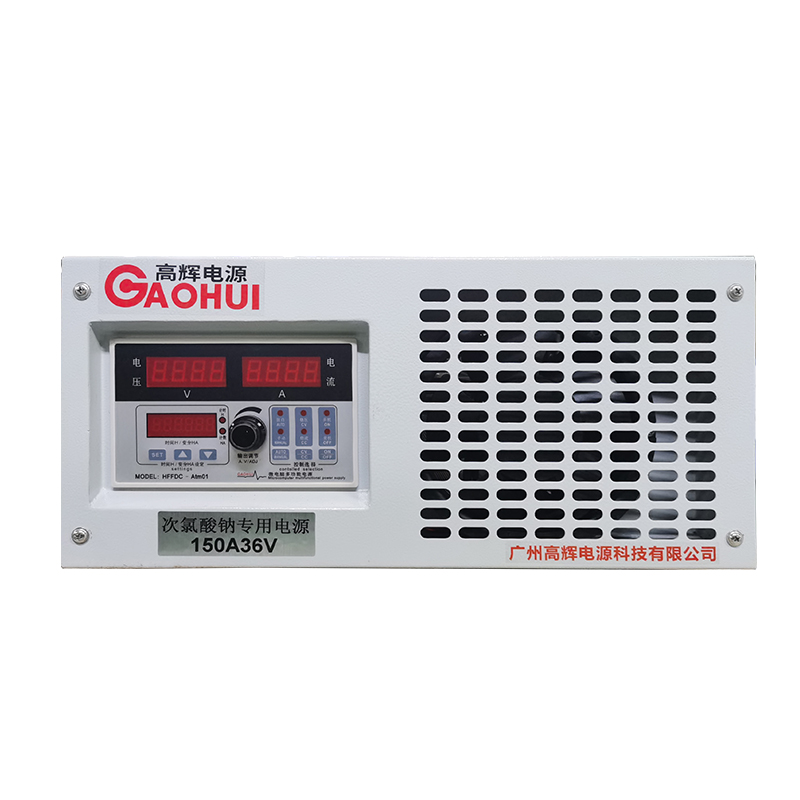
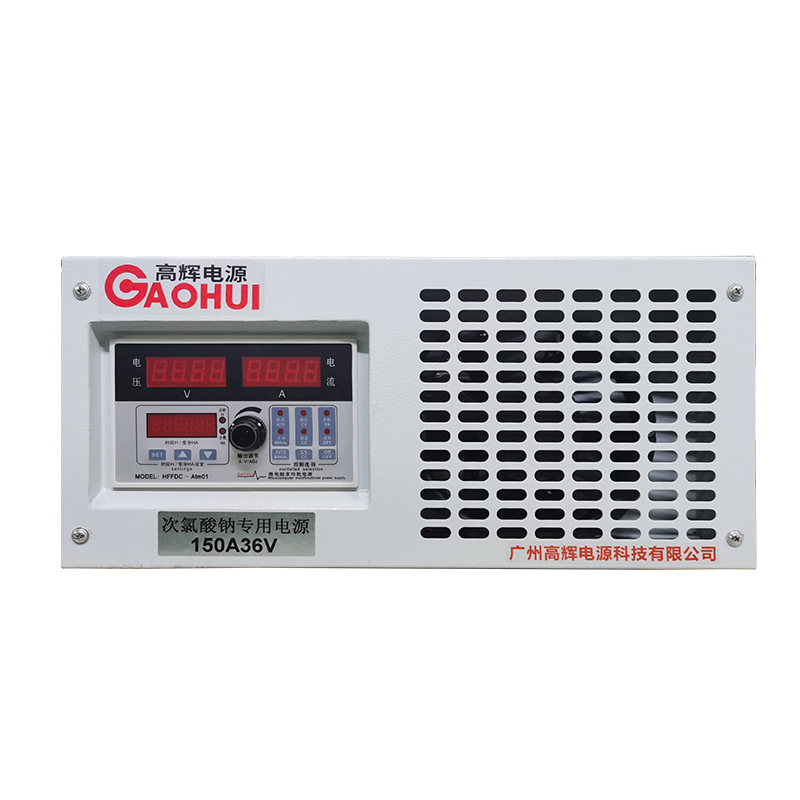
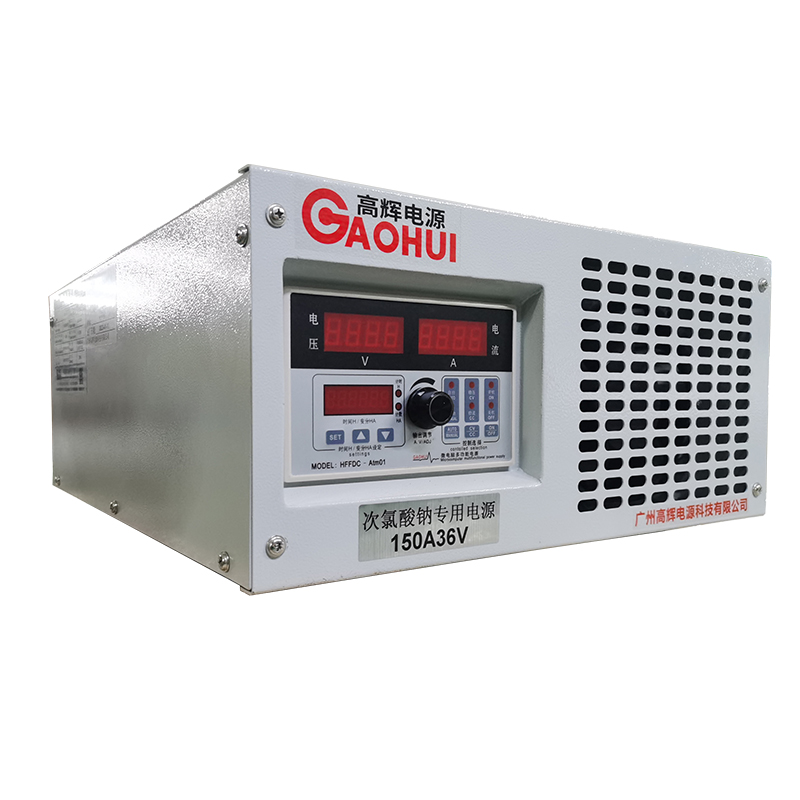
This 36V 150A air-cooled rectifier is a reference supply for on-site chlorination and modular electrolysis skids. Its smart control arrangement helps operators coordinate output with circulation and dosing equipment.
Key functions for hypochlorite generation systems
- Adjustable DC voltage and current: set the electrical load around cell area, conductivity and target current density.
- Constant-current or constant-voltage operation: select the mode that fits the cell and commissioning data.
- Smart local control: view output values and adjust the working setpoint at the cabinet.
- Start/stop and alarm integration: coordinate the rectifier with flow, level, dosing and ventilation signals.
- Forced-air cooling: support normal operation when airflow and clearance are provided.
- Optional timing or polarity management: configure only when the cell maintenance strategy requires it.
These functions manage the electrical input and do not guarantee a fixed chlorine concentration or dosing result.
Reference configuration
| Item | Reference configuration |
|---|---|
| Rated DC output | 0–36 V, 0–150 A |
| Rated DC power | 5.4 kW |
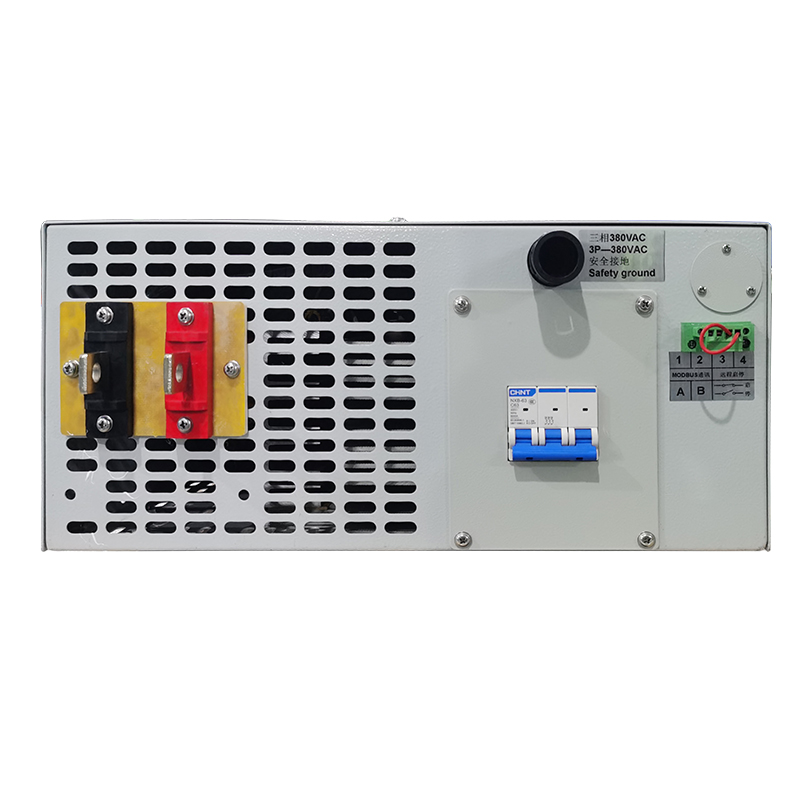
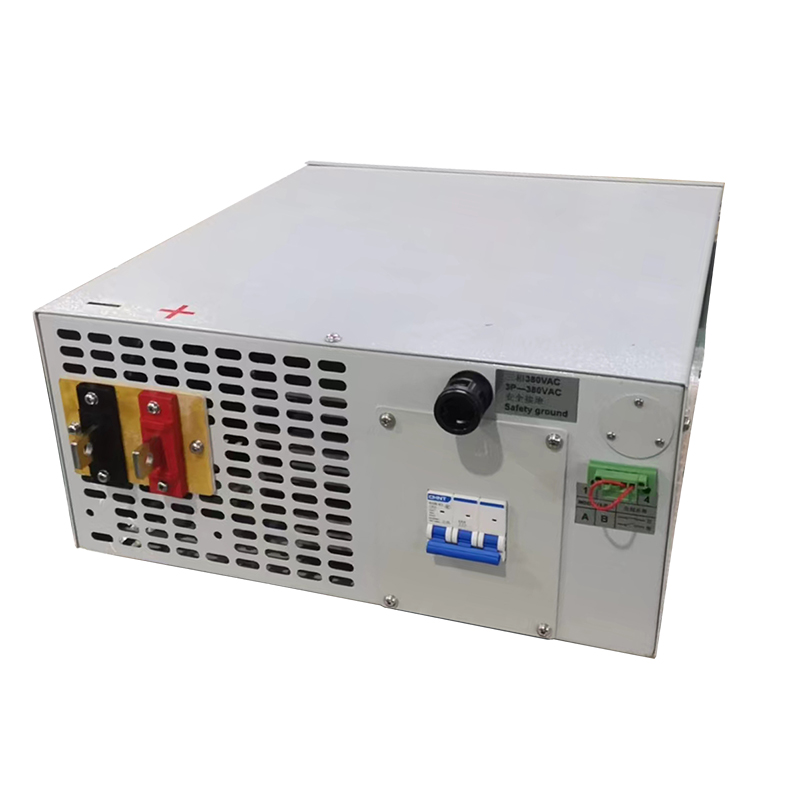
| Typical AC input direction | Three-phase 380/415 V reference input |
| Cooling | Forced-air cooling |
| Control | Smart control interface |
| Installation | Floor or rack support |
Final selection should check cell area, salt solution conductivity, flow, target current density, duty cycle and control signals.
Connecting and selecting the supply
Connect the DC outputs to the electrolytic cell using conductors sized for continuous current and cable distance. Confirm circulation, liquid level, ventilation and downstream dosing conditions before enabling output.
Current selection should start from effective cell area and target current density. Verify voltage across electrode gaps, connections and the complete cell over the expected conductivity and temperature range.
See the electrochemical wastewater rectifier range for other output envelopes. For electrocoagulation rather than hypochlorite generation, compare the 200A 24V electrocoagulation rectifier.
Can 150A alone define hypochlorite output?
No. Output depends on salt concentration, cell area, current density, flow, temperature and operating time.
Is polarity management always included?
No. It is configured only when the cell and maintenance strategy require it.
Can the rectifier guarantee a chlorine concentration?
No. Concentration depends on the complete cell, solution and dosing system.
Request a project configuration
Send the cell drawing, salt solution data, flow, pilot current and voltage, operating cycle, AC input and control requirements. We can then confirm the electrical envelope and function combination for the generator.