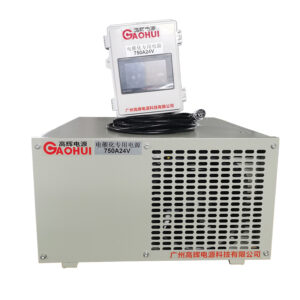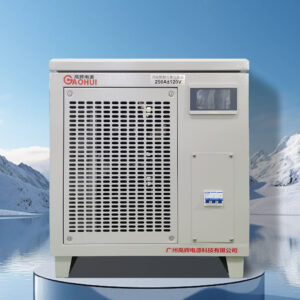
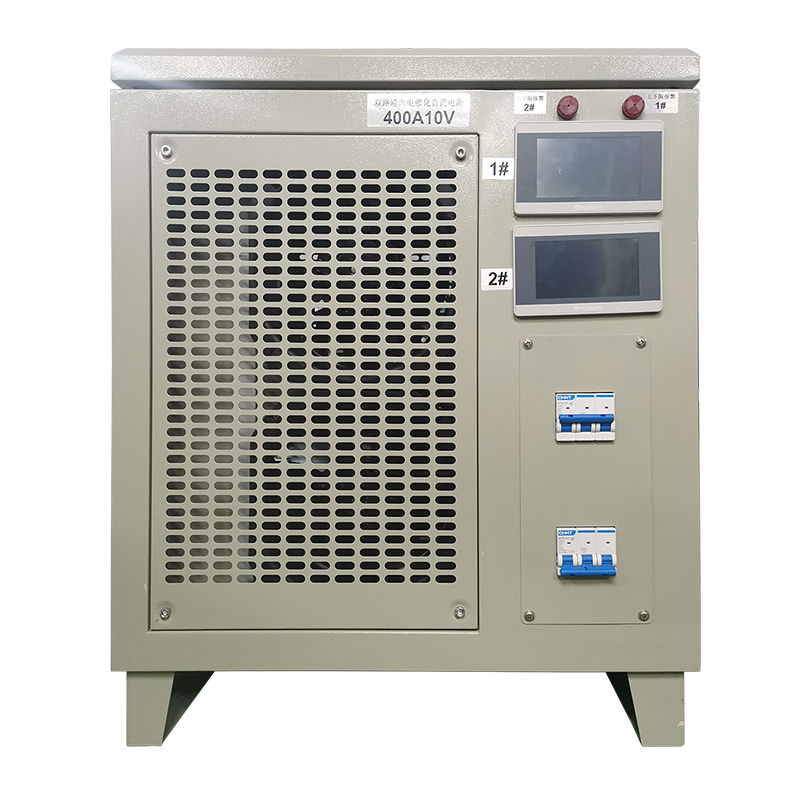
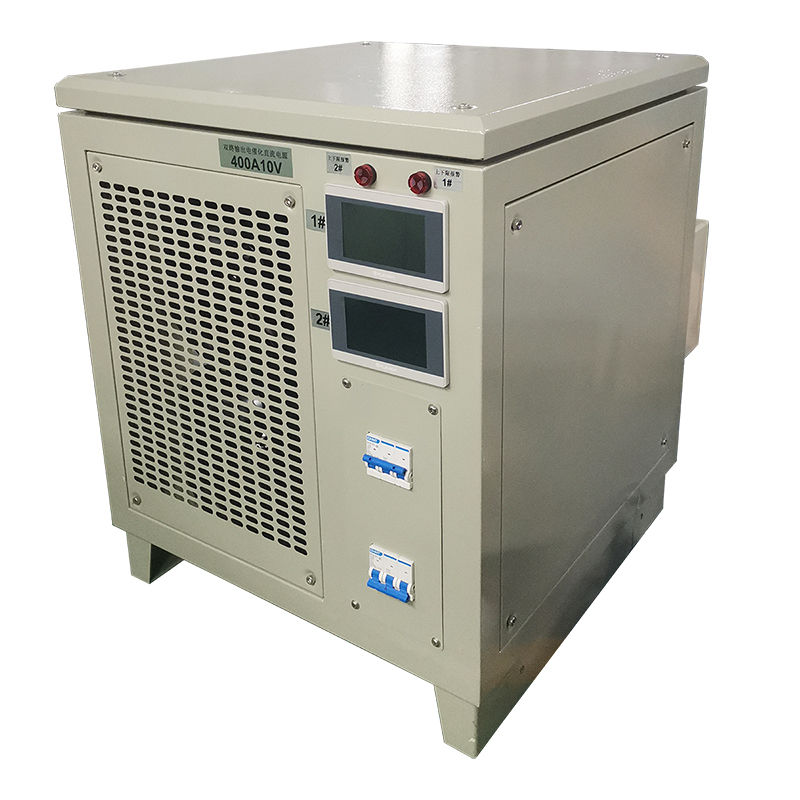


Product Parameters
| Commonly Used Water Treatment Power Supply Models (Custom models are available if not listed in the table). | |||||||
| Model | Output current A | Output voltage V | Power KW | Input current A | Input voltage V | Weight (KG) | Width W * Length L * Height H |
| GH10024 | 100A | 24V | 2.4 | 12 | 220 | 17 | 380*400*170 |
| GH100100 | 100A | 100V | 10 | 17 | 380 | 40 | 450*500*225 |
| GH120100 | 120A | 100V | 12 | 20 | 380 | 40 | 450*500*225 |
| GH20015 | 200A | 15V | 3 | 15 | 220 | 17 | 380*400*170 |
| GH20024 | 200A | 24V | 4.8 | 8 | 380 | 40 | 450*500*225 |
| GH20036 | 200A | 36V | 7.2 | 12 | 380 | 40 | 450*500*225 |
| GH20048 | 200A | 48V | 9.6 | 16 | 380 | 40 | 450*500*225 |
| GH200100 | 200A | 100V | 20 | 33 | 380 | 130 | 510*580*920 |
| GH30024 | 300A | 24V | 7.2 | 12 | 380 | 40 | 450*500*225 |
| GH30036 | 300A | 36V | 10.8 | 18 | 380 | 40 | 450*500*225 |
| GH30048 | 300A | 48V | 14.4 | 24 | 380 | 95 | 510*580*690 |
| GH300100 | 300A | 100V | 30 | 50 | 380 | 130 | 510*580*920 |
| GH33030 | 330A | 30V | 9.9 | 16.5 | 380 | 40 | 450*500*225 |
| GH40030 | 400A | 30V | 12 | 20 | 380 | 40 | 450*500*225 |
| GH50024 | 500A | 24V | 12 | 20 | 380 | 95 | 510*580*690 |
| GH50036 | 500A | 36V | 18 | 30 | 380 | 95 | 510*580*690 |
| GH50048 | 500A | 48V | 24 | 40 | 380 | 95 | 510*580*690 |
| GH50012 | 500A | 12V | 6 | 10 | 380 | 45 | 380*400*170 |
| GH60048 | 600A | 48V | 28.8 | 48 | 380 | 95 | 510*580*920 |
| GH100024 | 1000A | 24V | 24 | 40 | 380 | 95 | 510*580*690 |
| GH100036 | 1000A | 36V | 36 | 60 | 380 | 130 | 510*580*920 |
| GH100048 | 1000A | 48V | 48 | 80 | 380 | 130 | 510*580*920 |
| GH100012 | 1000A | 12V | 12 | 20 | 380 | 45 | 480*525*310 |
| GH200024 | 2000A | 24V | 48 | 80 | 380 | 130 | 510*580*920 |
| GH300024 | 3000A | 24V | 72 | 120 | 380 | 165 | 530*600*1200 |
| GH4000100 | 4000A | 100V | 400 | 667 | 380 | 195 | 580*650*1400 |
| GH800036 | 8000A | 36V | 288 | 480 | 380 | 235 | 600*680*1600 |
| GH1000036 | 10000A | 36V | 360 | 600 | 380 | 260 | 800*1350*1510 |
Process Overview
Electrocatalytic oxidation is an advanced oxidation technology. Under ambient temperature and pressure conditions, and with catalytic induction, the catalyst coating on the anode surface undergoes a series of physicochemical interactions with organic pollutants in wastewater. This process generates reactive intermediates (such as H₂O₂,·OH, ClO⁻, and other nascent oxidants) along with one or more novel coagulants. These components catalyze multiple physicochemical reactions—including oxidative decomposition, coagulation, adsorption, complexation, and displacement—effectively degrading target pollutants.Application
Electrocatalytic oxidation technology is an advanced oxidation technology. Under normal temperature and pressure and catalytic induction, a series of physical and chemical reactions occur between the catalyst coating on the surface of the anode plate and the organic pollutants in the waste water. At this time, active intermediates(nascent oxidizing agent such as H202,·0H, Cl0-, etc.)and one or more new ecological coagulants will be generated, resulting in catalytic oxidative decomposition, coagulation, adsorption, complexationreplacement, etc. Physical and chemical effects to achieve the degradation of targetpollutants.Technical Features
- Low operating costs: this technology eliminates the need to add expensive oxidants, which greatly reduces the costs;
- No secondary pollution: the system produces almost no sludge and no secondary pollution;
- Strong oxidizing ability: the highly oxidizing hydroxyl radicals generated by electrocatalytic oxidation can oxidize most pollutants, and the reaction is non-selective;
- Automated control: electrocatalytic oxidation technology is automatically controlled, unattended and easy to manage.
- Scope of application: zero discharge projects of highly difficult wastewater in thermal power plants, chemical industry, papermaking, steel, printing and dyeing and other industries.
Structure
The water treatment power supply primarily consists of a rectifier-filter circuit, a full-bridge converter circuit, a high-frequency transformer, a high-frequency rectifier-filter circuit, an auxiliary power circuit, and a main control unit. The main control unit circuit mainly comprises phase loss protection, temperature protection, overload protection, short-circuit protection, and a PWM circuit with PI regulation. The three-phase grid voltage is rectified and filtered after passing through the power switch, yielding a smoothed 520VDC supply for the inverter circuit. The inverter circuit primarily employs high-power MOSFET or IGBT modules to form a full-bridge converter. When the PWM output control signal drives the power modules through isolated drivers, two sets of diagonal transistors conduct alternately. This generates a high-frequency pulse voltage in the primary winding of the high-frequency transformer. The secondary voltage is transformed by the high-frequency transformer, rectified, and then supplies energy to the load.Features
- The power supply can operate in either voltage-regulated current-limited mode or current-regulated voltage-limited mode, with seamless switching between the two states.
- DC output voltage regulation accuracy ranges from 50% to 100%. When input voltage fluctuates by 10% or load changes occur, the output voltage remains stable with regulation accuracy ≤0.5%.
- Incorporates filtering functionality to prevent interference with instruments during power-up, eliminate grid pollution, and mitigate current inrush phenomena.
- Phase Loss Protection: Automatically locks out when any phase is missing from the three-phase AC input. Resumes operation automatically after fault resolution.
- Overcurrent Protection: Automatically enters overcurrent shutdown and alarm state when current exceeds rated value.
- Short-circuit protection: In case of load short-circuit or internal component short-circuit, the circuit breaker automatically disconnects the power supply.
- Over-temperature protection: When abnormal temperatures of semiconductor components (e.g., IGBT, Schottky diodes) reach ≥80°C, the electronic switch on the main control board activates, locking the power supply to effectively protect the unit.