Electrocatalytic oxidation systems use an electrical potential across an electrode reactor to support oxidation reactions in wastewater treatment. The rectifier supplies the controlled DC conditions, while electrode material, water chemistry, reactor geometry and residence time determine the process response.
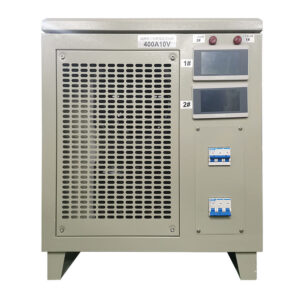
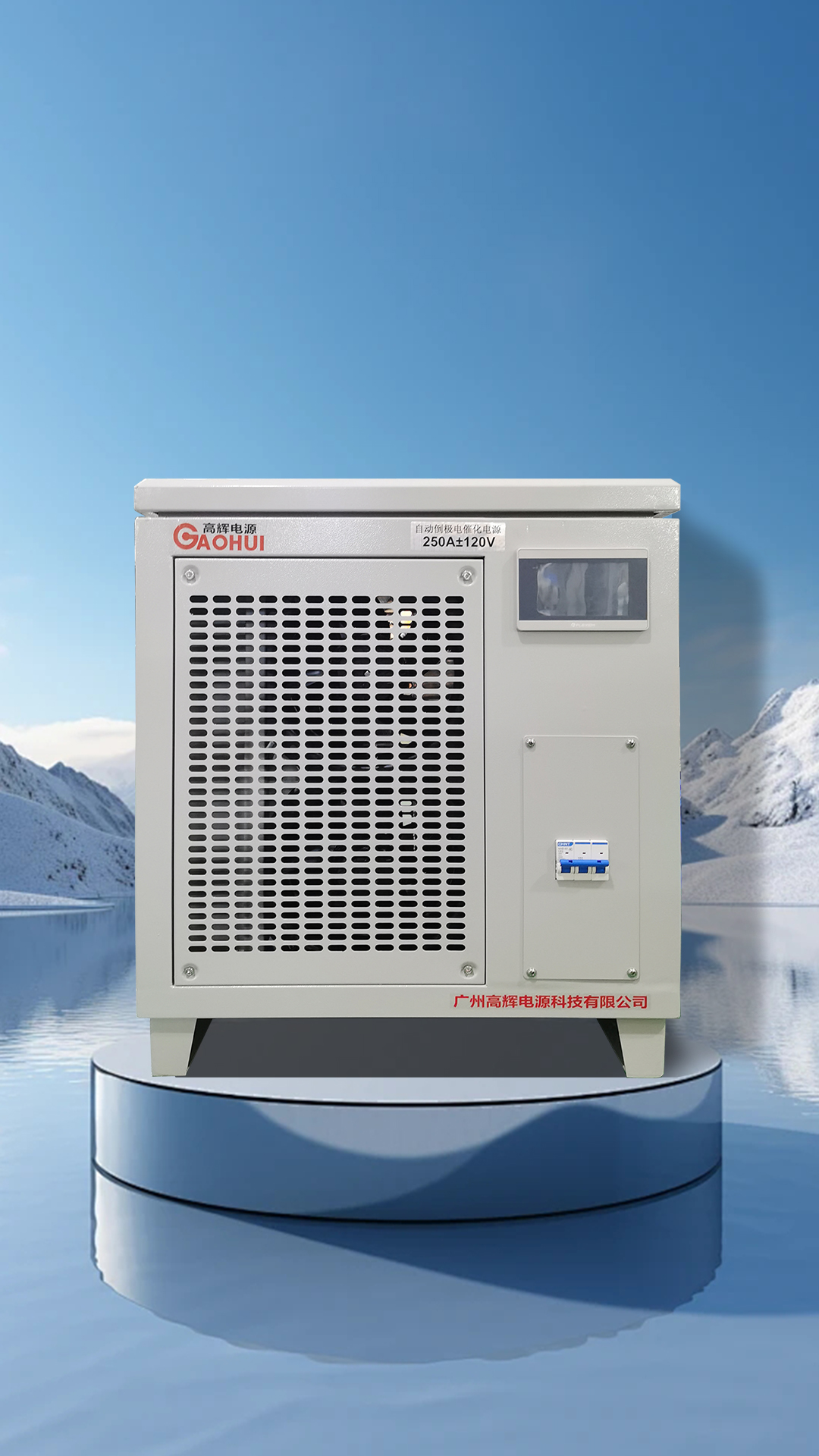
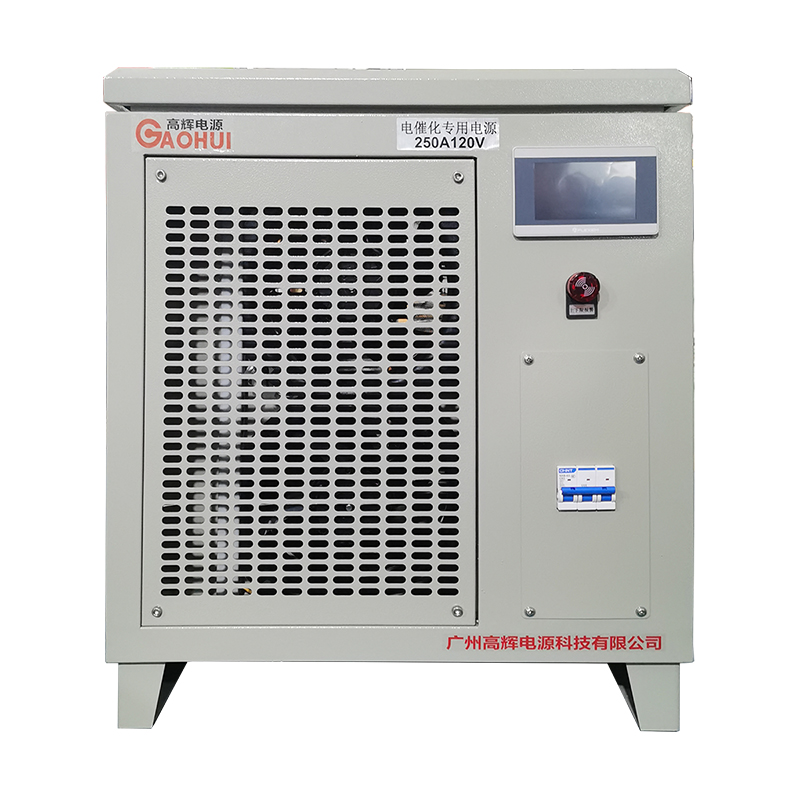
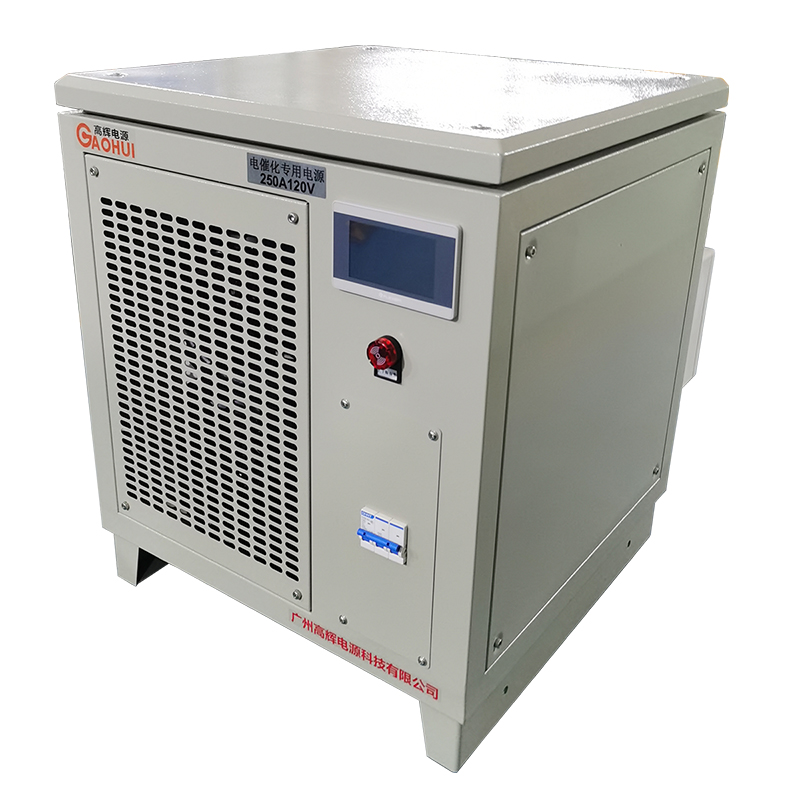
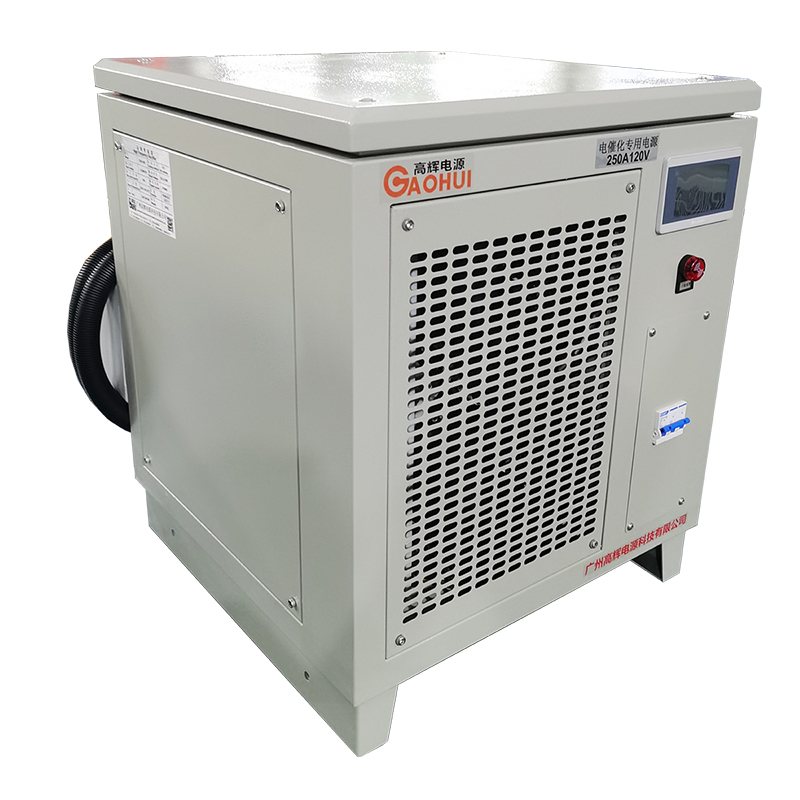
This 120V 250A air-cooled cabinet is a reference configuration for higher-voltage electrocatalytic oxidation equipment. Its output range is suitable for series-connected electrode modules or reactor arrangements that require more voltage headroom than a low-voltage supply.
Key functions for the oxidation system
- Adjustable DC voltage and current: set the electrical load around electrode area, conductivity and target current density.
- Constant-current or constant-voltage operation: select the control mode that fits the reactor and test data.
- Automatic polarity reversal: run a defined reversal cycle when electrode management or the process strategy requires it.
- 4.3-inch local interface: view operating values and adjust the working setpoint at the cabinet.
- Forced-air cooling: support continuous operation when the installation provides the required airflow and clearance.
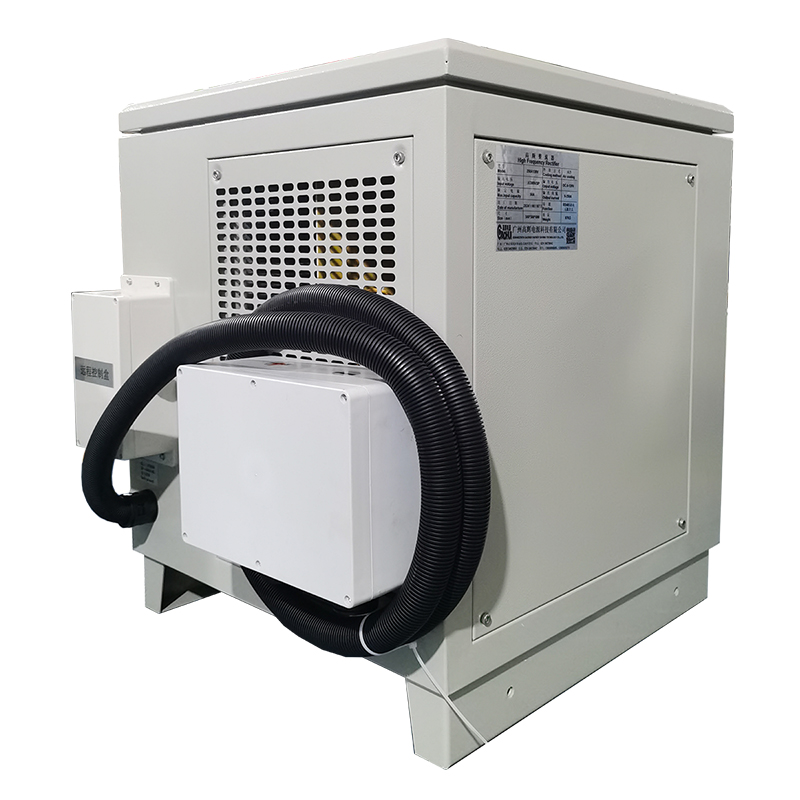
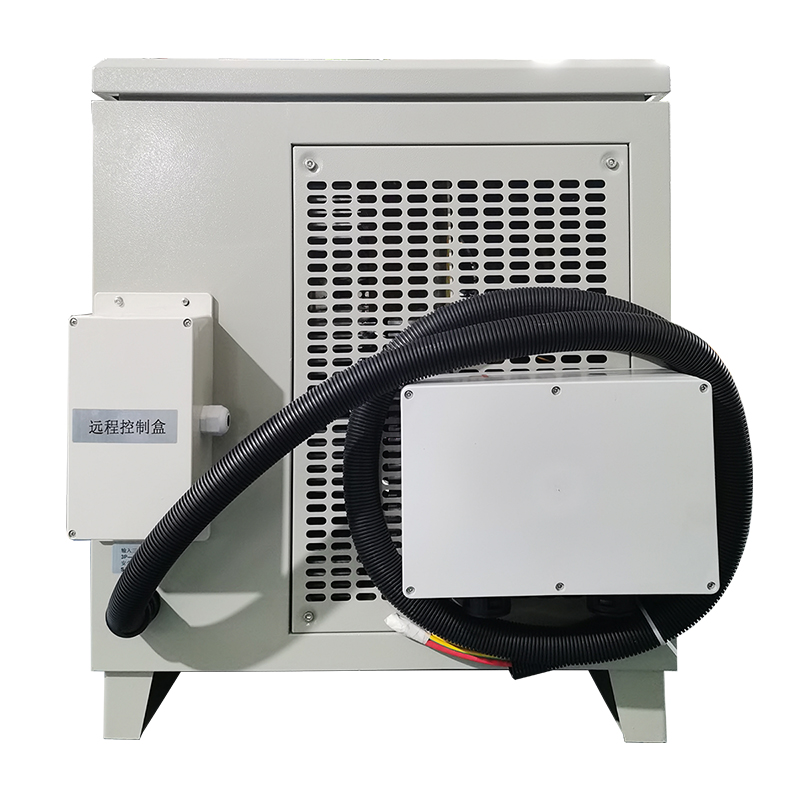
- External control integration: discuss start/stop, setpoint, run feedback and alarm signals for the complete skid.
These functions manage the electrical part of the process; they do not guarantee a fixed oxidation or pollutant-removal result without reactor and water testing.
Reference configuration
| Item | Reference configuration |
|---|---|
| Rated DC output | 0–120 V, 0–250 A |
| Rated DC power | 30 kW |
| Typical AC input direction | Three-phase 380/415 V |
| Cooling | Forced-air cooling, two-fan reference cabinet |
| Local operation | 4.3-inch touch interface |
| Installation | Floor-standing cabinet |
| Approximate enclosure | 510 × 580 × 690 mm |
| Approximate weight | 86 kg |
The reference rating does not define reactor capacity. Final selection should check electrode area, series or parallel connection, conductivity range, cell voltage and the required operating cycle.
How the rectifier connects to the reactor
The positive and negative DC outputs connect to the electrode busbars using conductors sized for the continuous current and cable distance. The reactor control system should confirm the required liquid level, flow and ventilation conditions before enabling output.
Automatic reversal is not a universal requirement. When it is selected, the interval, transition behavior and allowable current should be coordinated with the electrode material and process designer.
Selecting the voltage and current range
Start with effective electrode area and target current density, then verify the voltage across the complete electrical path. Include electrode gap, series or parallel connection, conductivity at its expected extremes, electrode ageing, temperature and the longest treatment cycle.
Our electrochemical wastewater rectifier range includes other output envelopes. If the main mechanism is electro-Fenton rather than direct electrocatalytic oxidation, compare the control and electrode requirements with our 1000A 18V electro-Fenton rectifier.
Information for a project quotation
- Reactor drawing and electrode material
- Effective electrode area, gap and connection method
- Conductivity, pH and temperature range
- Pilot current, voltage and treatment cycle
- Reversal interval or electrode-management requirement
- Available AC supply, cable distance and preferred control signals
Is automatic reversal always needed?
No. Reversal is included only when the electrode and process strategy require it. A normal fixed-polarity configuration may be more suitable for another reactor.
Does 120V mean 120V across one electrode gap?
Not necessarily. In a series or multi-module arrangement, the total output voltage can be distributed across several gaps. The electrical drawing is needed for a correct check.
Can the supply guarantee oxidation performance?
No. Performance depends on electrode chemistry, water composition, current density, residence time and downstream treatment conditions. Representative testing is needed to establish the operating window.
Request an engineering check
Send the reactor electrical diagram, electrode data, conductivity range, pilot readings, AC input and control requirements. We can then confirm the voltage margin, current range, reversal logic, cooling arrangement and interface for the complete oxidation system.