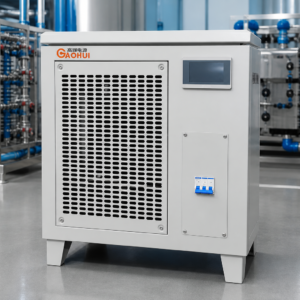
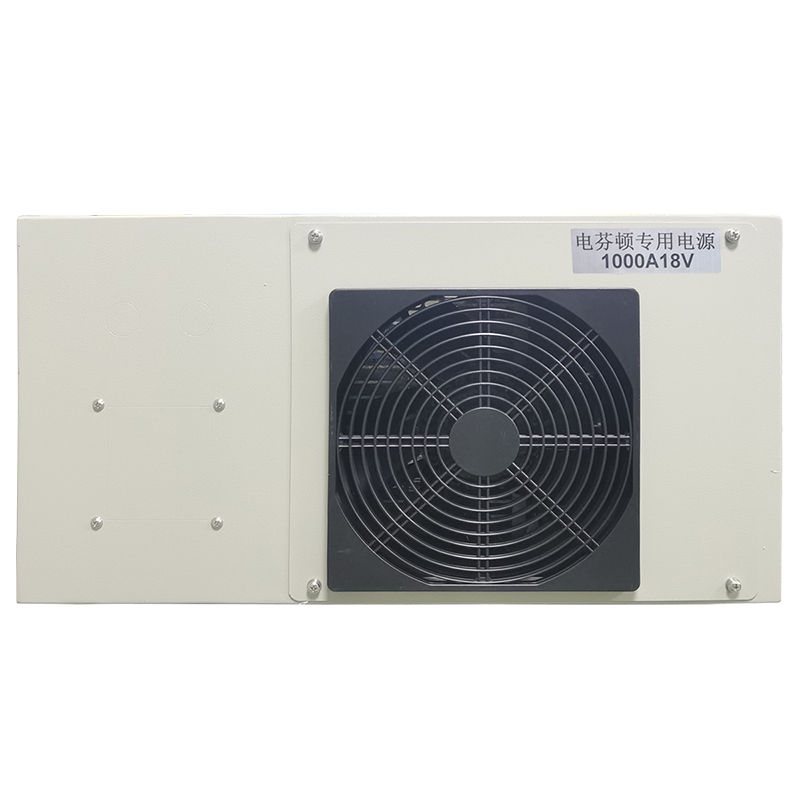
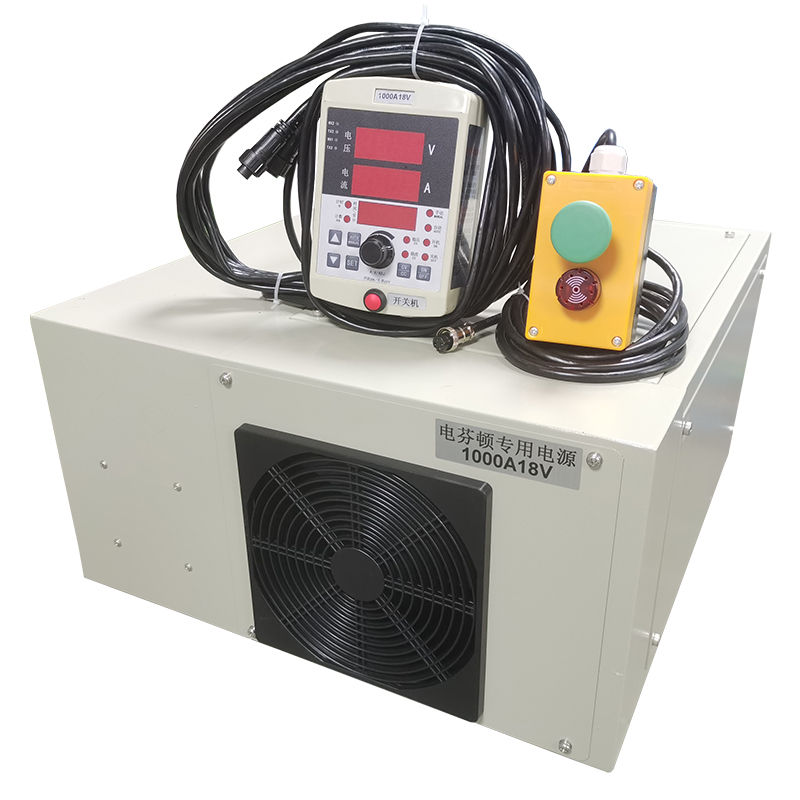
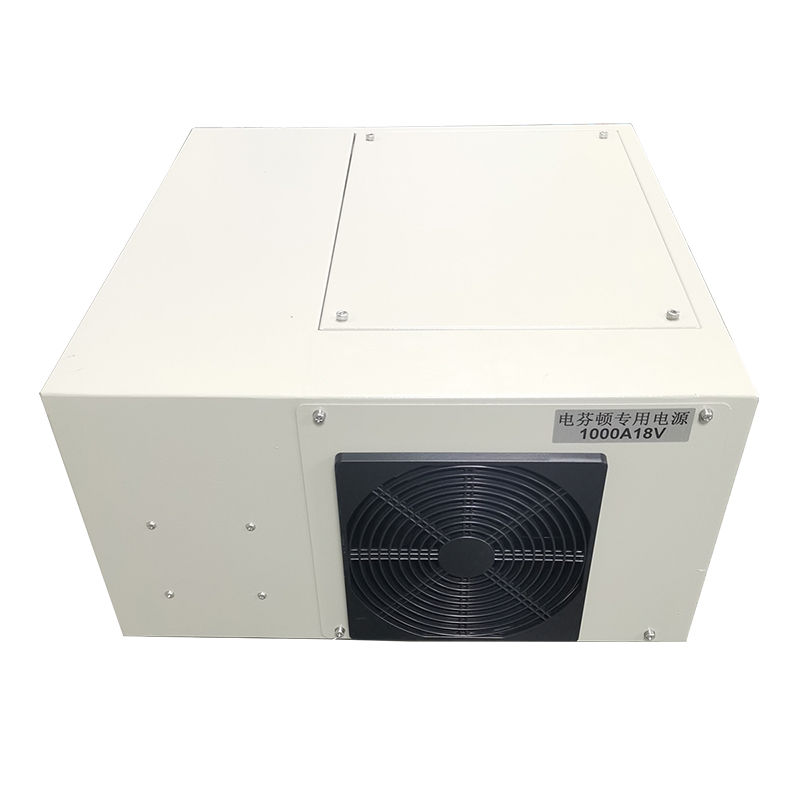
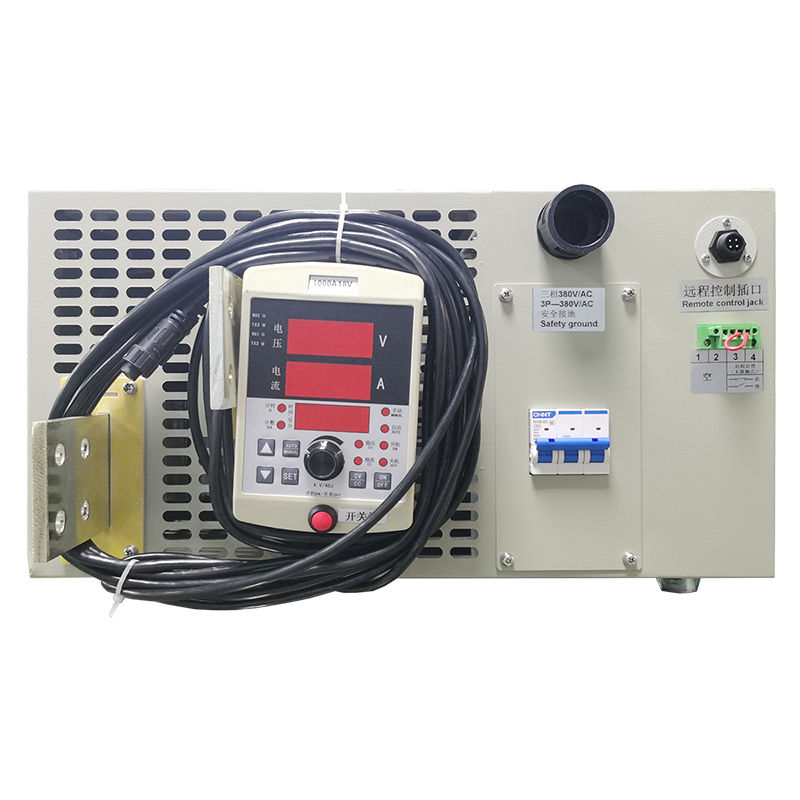
An electro-Fenton reactor does not behave like a simple resistive load. Its operating voltage changes with electrode spacing, water conductivity, gas delivery, electrode condition and the reaction route selected by the process designer. The rectifier therefore needs more than a large current rating: it must deliver controllable DC output while fitting the reactor, operating sequence and safety interlocks.
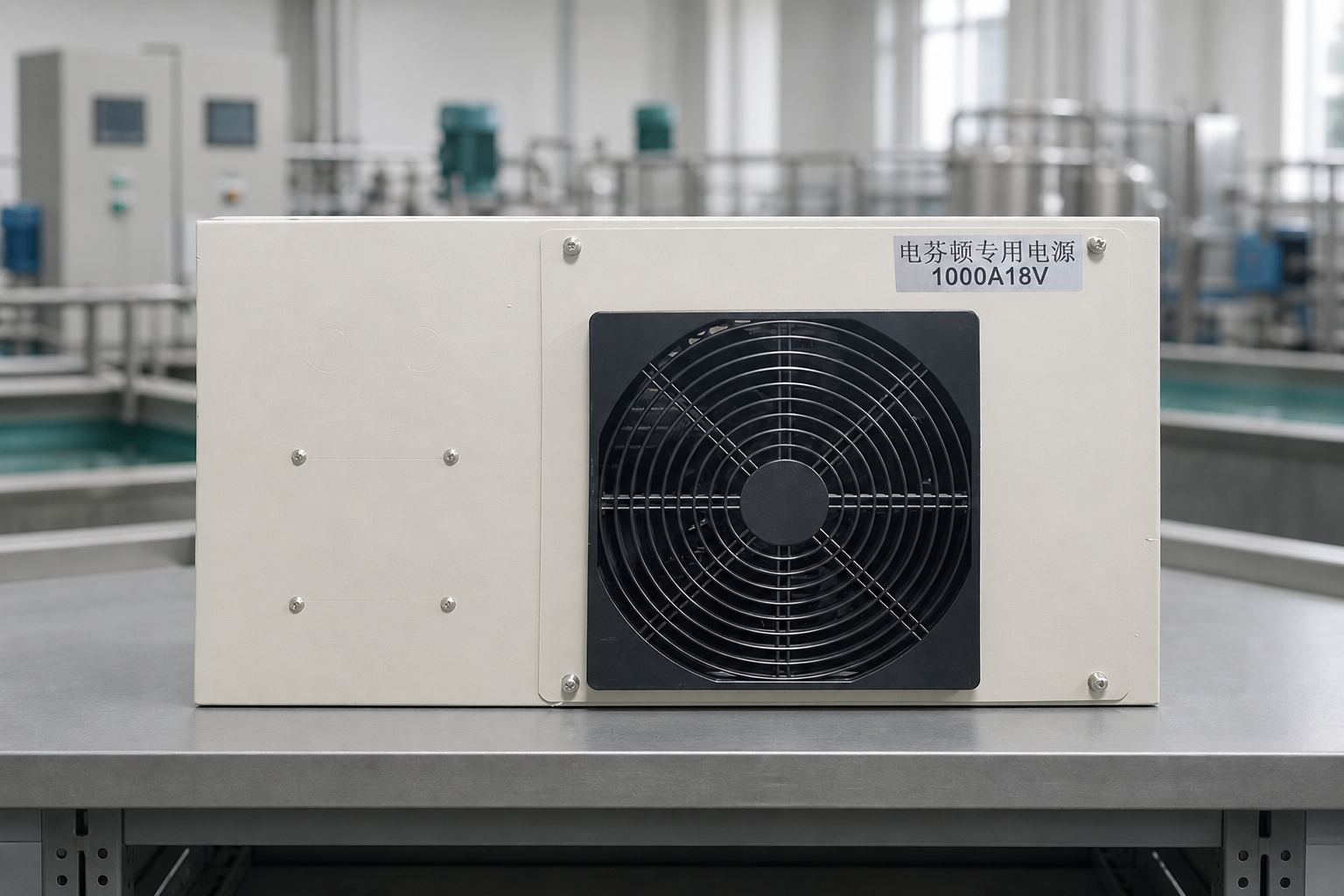
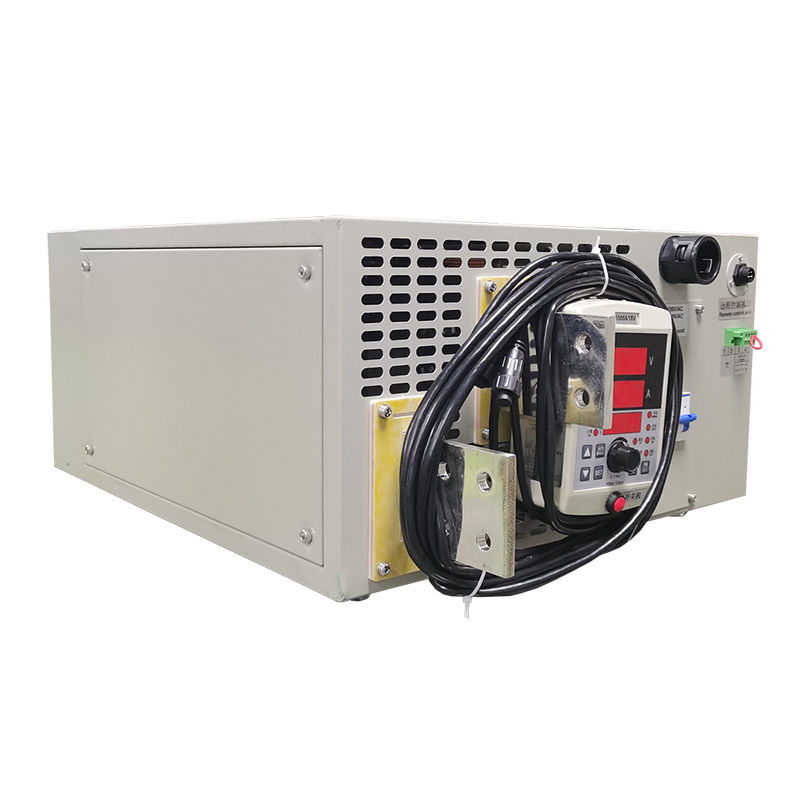
This 18V 1000A air-cooled rectifier is designed for low-voltage, high-current electrochemical wastewater equipment. It can support electro-Fenton systems that use cathodic hydrogen peroxide generation, ferric-to-ferrous regeneration, or a combined electrochemical oxidation route. The exact connection and control sequence are confirmed against the reactor before production.
Key functions for electro-Fenton equipment
- Adjustable DC voltage and current: set the electrical load around electrode area, conductivity and the selected current density.
- Constant-current control: maintain a defined electrochemical loading as water resistance and electrode condition change.
- Remote timing and reset: coordinate repeatable electrical treatment windows when the rectifier is installed away from the operator.
- Remote start/stop and alarm feedback: connect the power stage with circulation, oxygen or air delivery and skid safety logic.
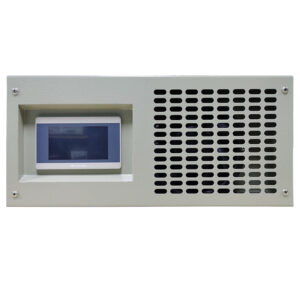
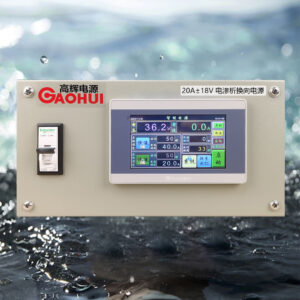
- Local interface: view operating status and adjust the working setpoint at the cabinet.
- Forced-air cooling: support continuous high-current operation when the installation provides the required airflow and clearance.
These functions control the electrical part of the process; they do not replace pilot testing, reactor design or water-chemistry evaluation.
Where the power supply fits in the process
The DC positive and negative outputs connect to the anode and cathode busbars of the treatment cell. The rectifier controls the electrical input to the electrodes; pumps, oxygen or air delivery, chemical dosing and water circulation remain part of the wider treatment system.
For a stable process, electrical operation should be coordinated with liquid level, flow and gas supply. A typical start sequence establishes circulation and the required oxygen condition before current rises. A stop or alarm sequence reduces the output before auxiliary equipment is isolated. Project-specific interlocks can be discussed when the reactor control philosophy is known.
Practical configuration
| Item | Reference configuration |
|---|---|
| Rated DC output | 0–18 V, 0–1000 A |
| Rated DC power | 18 kW |
| Typical AC input direction | Three-phase 380/415 V |
| Cooling | Forced-air cooling |
| Installation | Horizontal, floor or rack support |
| Control | Local interface with remote timing/reset control |
| Approximate enclosure | 520 × 580 × 320 mm |
| Approximate weight | 45 kg |
These values describe the reference unit. Cable length, input standard, control interface, enclosure details and communication functions are confirmed for each project.
Why current control matters
In many electro-Fenton systems, current determines the electrochemical production rate more directly than voltage. Constant-current operation can help the reactor maintain a selected electrical loading while conductivity and electrode condition change. The available voltage range must still be sufficient for the worst expected water condition and cell arrangement.
This is why an 18V rating should not be selected from reactor volume alone. The engineering check should include effective electrode area, target current density, electrode gap, conductivity range, connection method and the voltage observed near the end of an operating cycle.
Remote timing for repeatable operating cycles
The reference configuration includes a separate remote control head with timing and reset functions. It is useful when the rectifier is installed away from the operator or when treatment is performed in defined batches.
Timed operation does not replace process monitoring. It gives the system integrator a practical way to coordinate an electrical treatment window with circulation, aeration and downstream steps. Remote communication, external start/stop and alarm feedback can be configured after the control architecture is confirmed.
Information needed for selection
For a useful proposal, please provide:
- Electro-Fenton route and the expected role of the cathode and anode
- Electrode material, effective area, gap and series/parallel connection
- Wastewater conductivity, pH and temperature range
- Target current density or pilot-test current and voltage data
- Oxygen or air-supply method and circulation conditions
- Batch or continuous operation, including the required treatment time
- Preferred local, remote or PLC control signals
- Installation environment, cable distance and available AC supply
If the process is still at pilot stage, the rectifier can be specified with an adjustable operating range rather than one fixed production setpoint. Our overview of electrochemical wastewater rectifiers shows other configurations for comparison.
For a lower-voltage bubble-generation load, compare the electrical assumptions with our 500A 12V electroflotation rectifier; it serves a different process mechanism and should not be sized as an electro-Fenton substitute.
Common questions
Does 1000A guarantee a particular COD removal result?
No. Current is one process input. COD response also depends on wastewater composition, pH, oxygen transfer, iron chemistry, electrode design, residence time and any coupled oxidation route. Pilot data should be used to define the operating window.
Can the rectifier run in constant-voltage mode?
Constant-current or constant-voltage operation can be configured according to the load and control strategy. Electro-Fenton projects often prioritize controlled current, but the final mode should follow the reactor design.
Is polarity reversal included?
It is not assumed for every electro-Fenton reactor. Reversal may affect electrode reactions and process chemistry, so it is added only when the treatment route requires it.
Can it connect to a PLC?
Yes, remote start/stop, setpoint, operating feedback, alarms or serial communication can be discussed. The exact signal list and protocol should be confirmed before manufacture.
Request a project configuration
Send the reactor drawing, electrode data, water conductivity range, available AC input and any pilot-test readings. We can then check the required voltage margin, current range, cooling arrangement, cable interface and control functions for the complete electro-Fenton system.