In electrodialysis reversal, changing electrical polarity is only one part of the event. The water path must also change at the correct time. A practical EDR power supply therefore needs a controlled transition that can be coordinated with valves, pumps and direction feedback—not a sudden swap of the positive and negative outputs.
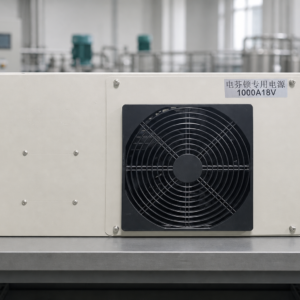
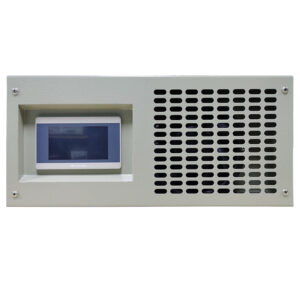
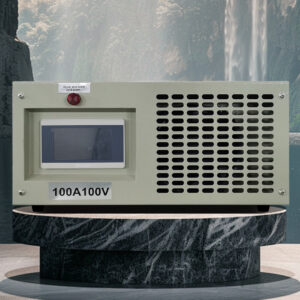
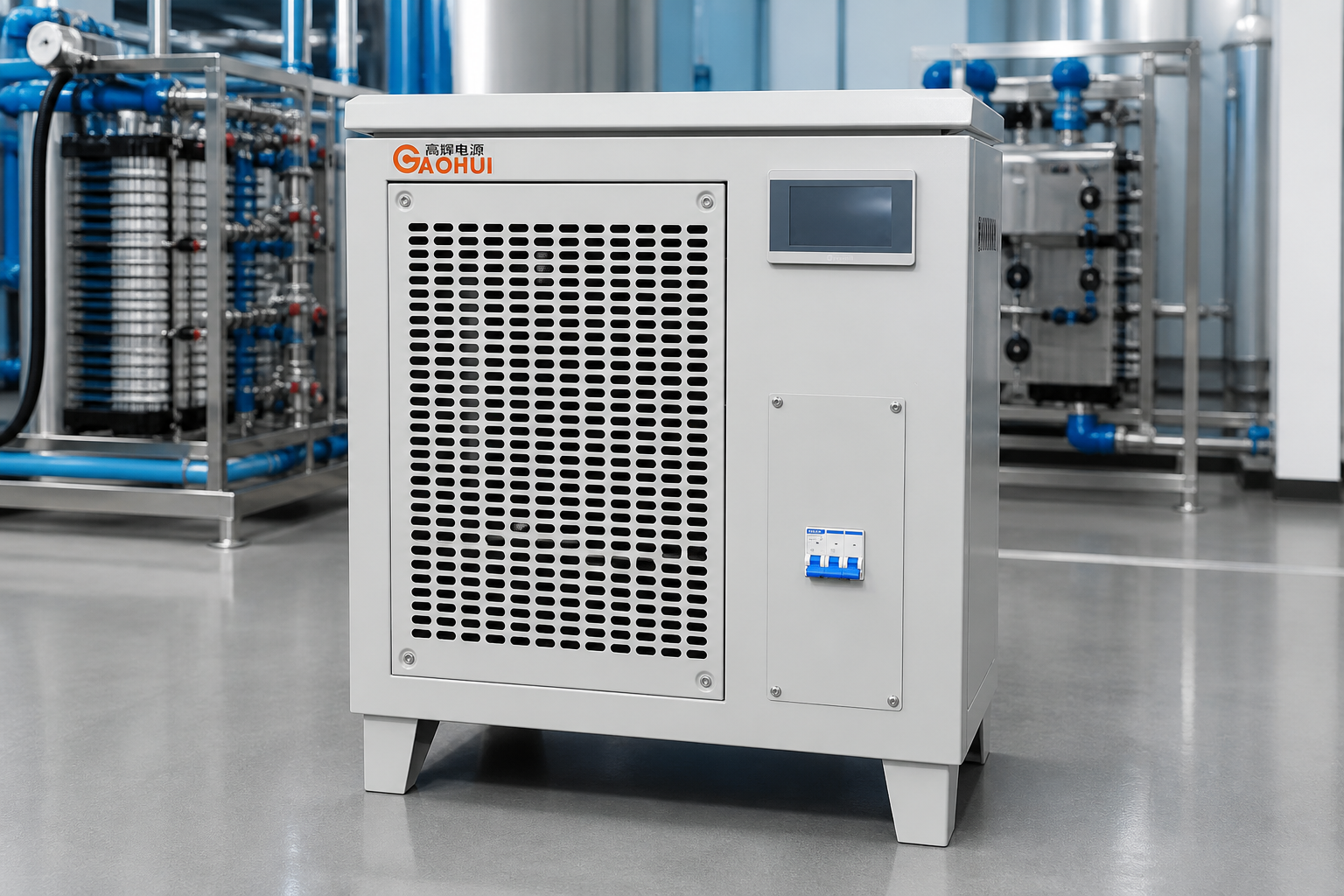
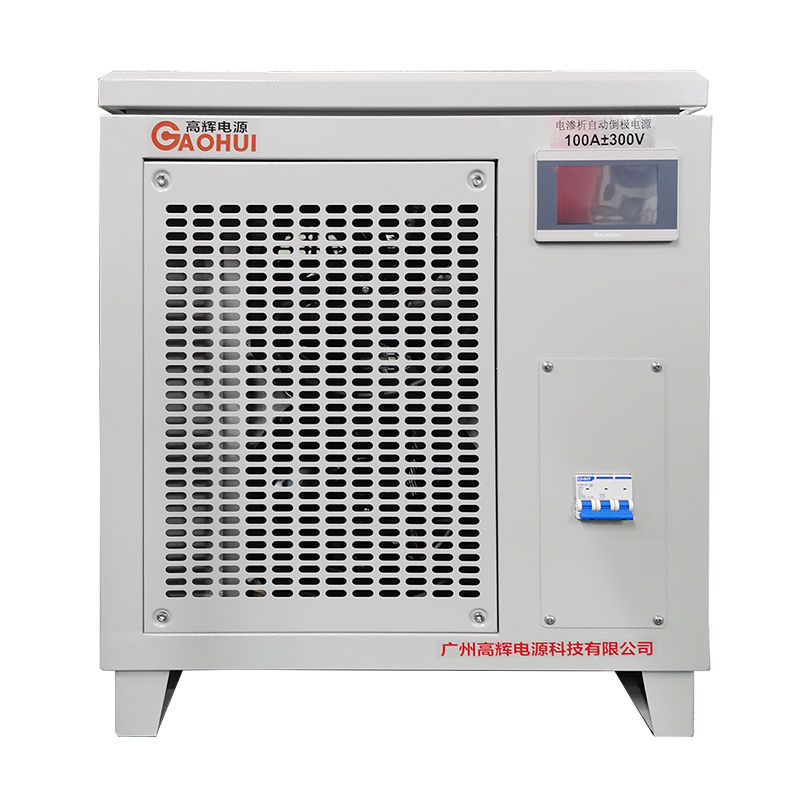
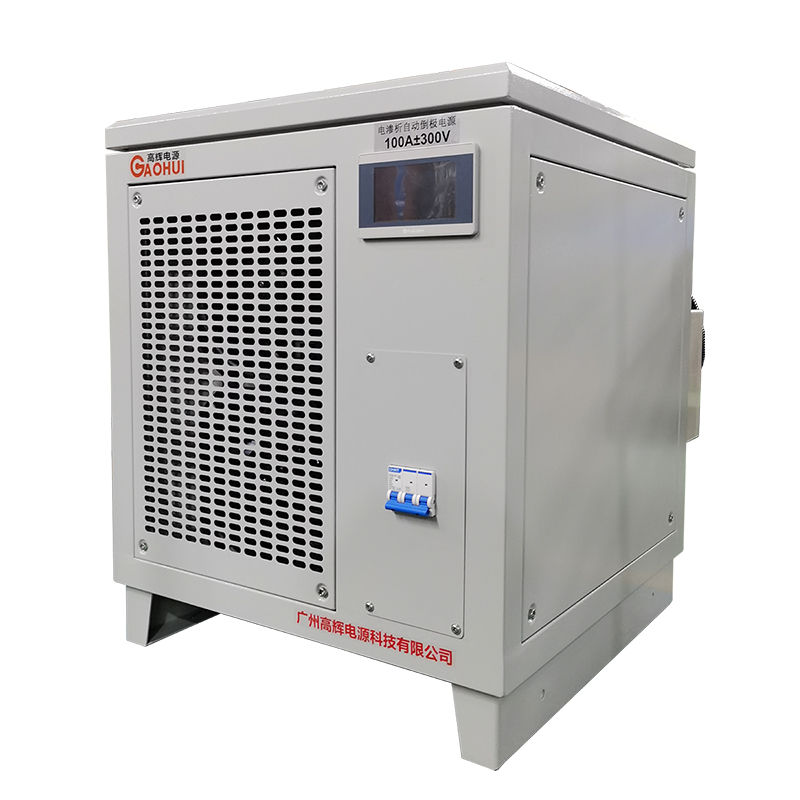
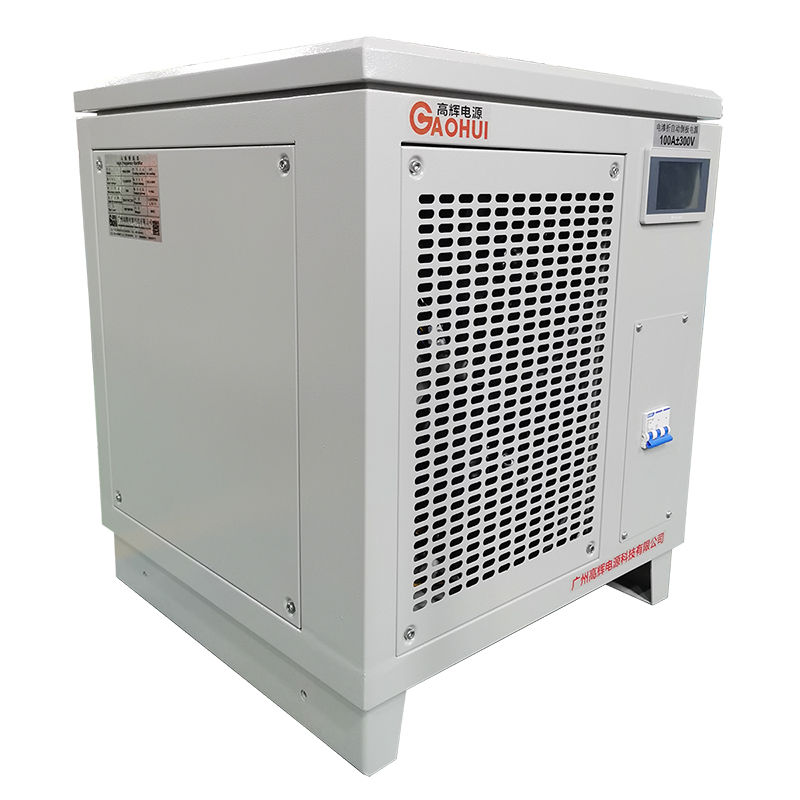
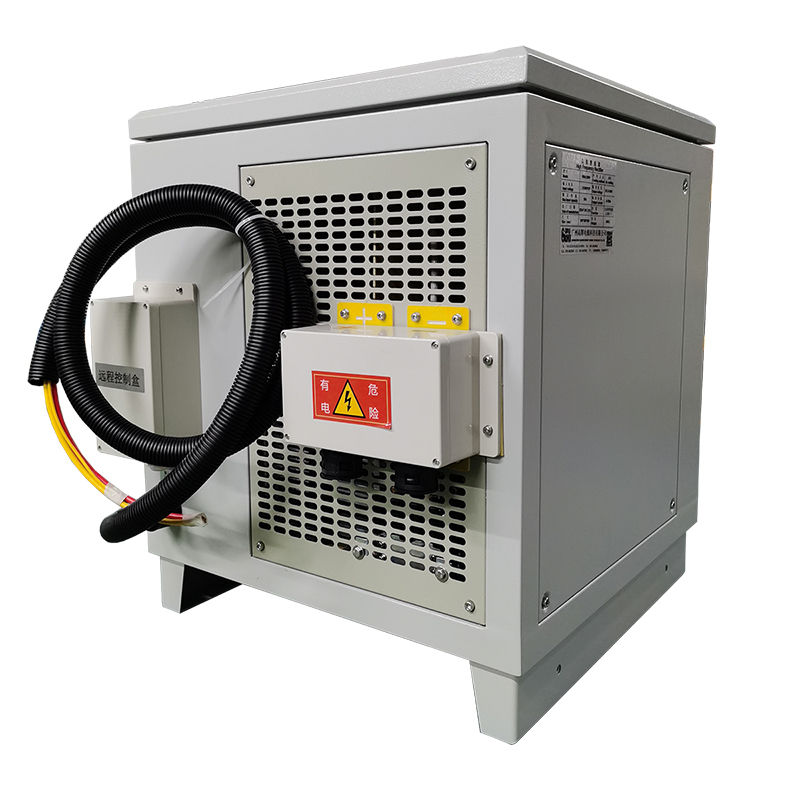
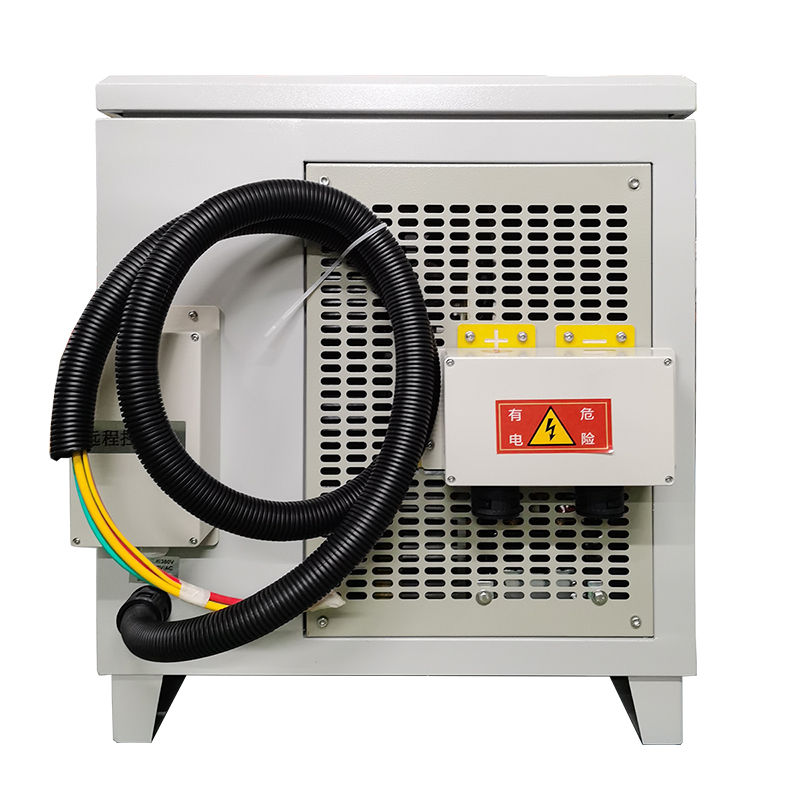
This 300V 100A air-cooled rectifier is built for EDR skids requiring adjustable DC output and automatic polarity reversal. Its 30kW rating suits membrane stacks where voltage accumulates across many cell pairs while the current is set by membrane area and the selected current density.
A reversal sequence the system can manage
A well-designed sequence usually includes four electrical stages:
- Reduce the operating current in a controlled way.
- Hold a defined zero-output interval while the hydraulic path changes.
- Confirm valve position or flow direction where the skid provides feedback.
- Apply the opposite polarity and ramp to the new setpoint.
The timing belongs to the complete EDR control system. The rectifier can provide the electrical actions and signals, while the skid PLC coordinates hydraulic equipment. Exact I/O, delay times and fault handling are agreed during integration.
Reference configuration
| Item | Reference configuration |
|---|---|
| Rated DC output | 0–300 V, 0–100 A |
| Rated DC power | 30 kW |
| Typical AC input direction | Three-phase 380/415 V |
| Polarity function | Automatic forward/reverse output |
| Cooling | Forced-air cooling, dual-fan reference unit |
| Local operation | 4.3-inch touch interface |
| Installation | Floor-standing cabinet |
| Approximate enclosure | 580 × 580 × 690 mm |
| Approximate weight | 80 kg |
The final cabinet, input standard, cable terminals, communication protocol and reversal logic can be customized for the membrane skid.
How voltage and current should be selected
Current is normally estimated from target current density and effective membrane area. Voltage is the sum of the electrical drops across membranes, solution compartments, electrode chambers and connections. It changes with concentration, temperature, scaling, fouling and the number of cell pairs.
That distinction matters. Selecting 300V simply because another EDR installation uses it can leave too little operating margin—or specify more voltage than the stack needs. The most useful inputs are the membrane supplier’s data, stack arrangement, feed and concentrate conductivity ranges, temperature limits, and measured pilot values.
The rectifier should have enough voltage compliance to maintain the required current at the most demanding valid operating condition, without becoming a substitute for poor hydraulic or membrane design.
Control options for skid integration
Depending on the automation level, the rectifier can be configured for local operation, remote enable, remote setpoint, forward/reverse command, running status, polarity status and alarm feedback. Serial communication can also be evaluated.
For automatic operation, the interface list should define which controller owns the sequence, how a failed valve confirmation is handled, and whether output must remain inhibited after power recovery. These details prevent ambiguous commands at the moment of reversal.
For broader process context, see the electrochemical wastewater rectifier range and our technical article on the role of an electrodialysis rectifier.
What to send for a configuration review
- ED or EDR process type and membrane-stack model
- Number of cell pairs and electrical connection arrangement
- Effective membrane area and target current density
- Feed, diluate and concentrate conductivity ranges
- Normal and worst-case operating temperature
- Expected stack voltage from pilot data or the membrane supplier
- Reversal interval, valve actuation time and required dead time
- PLC signal list, communication protocol and alarm philosophy
- AC input, installation environment and cable distance
Questions engineers often ask
Is automatic polarity reversal the same as EDR control?
No. Reversing DC polarity is an electrical function. EDR operation also requires coordinated hydraulic switching and a safe transition sequence. The complete skid controller must manage both sides.
Can the rectifier reverse while delivering full current?
The recommended approach is to reduce output before changing polarity. The required ramp and zero-output interval are defined for the stack and switching equipment.
Why can an electrodialysis stack require hundreds of volts?
Voltage drops accumulate across many membranes and solution compartments. A high stack voltage can be normal for a large series arrangement, even when the current is moderate.
Can one rectifier operate several membrane stacks?
It depends on how the stacks are connected and whether they need independent control. Provide the series/parallel arrangement and operating sequence so output sharing and protection can be checked.
Build the rectifier around the stack
Send the membrane-stack electrical data and the EDR reversal sequence. We will review current range, voltage margin, reversal timing, control ownership, interlocks, terminals and cooling before preparing a custom configuration.