
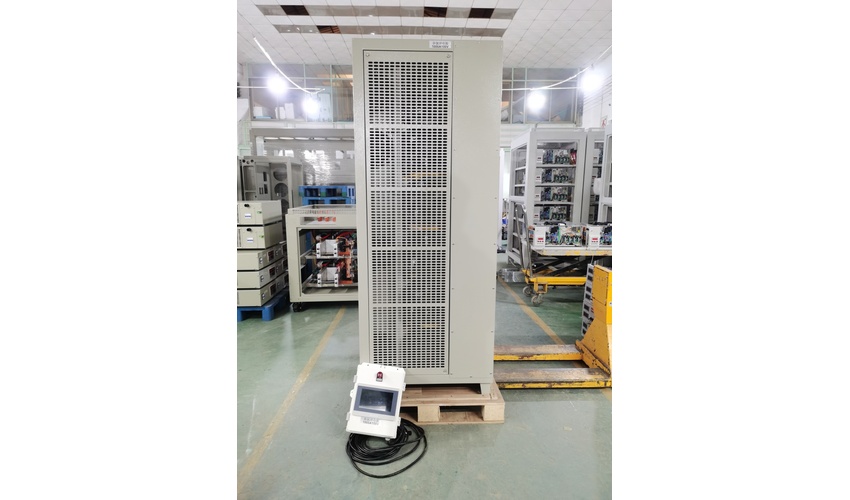
The escalating global challenge of industrial wastewater treatment demands innovative, efficient, and scalable technological solutions. Among these, electrochemical advanced oxidation processes (EAOPs) have emerged as a cornerstone technology, capable of degrading recalcitrant organic pollutants that resist conventional treatment methods. At the heart of these processes lies the Electrocatalytic Oxidation Power Supply, a critical piece of equipment that dictates the efficiency, reliability, and overall success of the treatment system. This article explores the pivotal role of these power supplies in modern wastewater management, highlighting their key features, applications, and the diverse range of models available to meet specific industrial needs.
### The Critical Role of Power Supplies in Electrochemical Treatment
Electrocatalytic oxidation relies on the application of an electric current to drive chemical reactions at the surface of an electrode. This process generates powerful oxidizing agents, such as hydroxyl radicals (•OH), which can mineralize a wide spectrum of organic contaminants into harmless substances like carbon dioxide and water. The performance of this process is directly proportional to the quality and control of the electrical power supplied. An inadequate or poorly controlled power supply can lead to inefficient oxidation, excessive energy consumption, electrode fouling, and inconsistent treatment results. Therefore, a high-performance Electrocatalytic Oxidation Power Supply is not merely a power source but the central nervous system of the entire treatment plant, ensuring precise control over current density, voltage, and waveform to optimize the destruction of pollutants.
### Key Features and Design Considerations for Modern Power Supplies
Modern power supplies for electrochemical applications are engineered with a focus on efficiency, durability, and intelligent control. Key features that distinguish high-quality units include:
* **Advanced Cooling Systems:** Effective thermal management is paramount. Power supplies utilize forced-air cooling with multiple fans to dissipate heat generated during high-current operation, ensuring stable performance and extending the lifespan of internal components.
* **Robust and Compact Enclosures:** Designed for harsh industrial environments, enclosures are typically constructed from durable materials and available in various form factors, including compact horizontal (卧式) units for space-limited installations and vertical (立式) designs for high-power applications.
* **Intelligent Control Interfaces:** User-friendly control panels, ranging from simple 4.3-inch displays to sophisticated 7-inch remote control heads, provide operators with intuitive access to critical parameters. These interfaces allow for real-time monitoring, precise adjustments, and the programming of complex operational cycles, including automatic polarity reversal.
* **High-Frequency and Pulse Technologies:** High-frequency rectification technology improves energy efficiency by reducing power loss. Pulse power supplies, including single-pulse and dual-pulse variants, offer superior control over the electrochemical reactions, enhancing treatment efficiency for specific applications like precious metal recovery or specialized surface finishing.
### Applications and Power Supply Selection Guide
The selection of an appropriate power supply is contingent upon the specific requirements of the wastewater treatment process, including the contaminant type, flow rate, and desired treatment efficiency. The following table provides a guide to matching power supply specifications with common industrial applications.
| Application | Typical Voltage Range (V) | Typical Current Range (A) | Key Power Supply Features | Example Model Match |
|—|—|—|—|—|
| **General Electrochemical Oxidation** | 12V – 24V | 1000A | High current, robust cooling, intelligent remote control | 1000A24V–(风冷-2风扇)-(5寸)电催化氧化驱动电源 |
| **Electrocoagulation (EC)** | 12V – 15V | 1000A | Stable output, suitable for continuous operation | 1000A15V–(风冷)-(普通单计时远控头)普氧化电源 |
| **Electro-Fenton Process** | 18V | 1000A | Specialized for Fenton reaction, often with timer control | 1000A18V–(风冷-1风扇-黑拼)-(智能远控头带计时复位盒)电芬顿专用电源 |
| **Electrodeposition / Metal Recovery** | 10V – 48V | 100A – 1000A | High-frequency rectification, precise current control | 100A100V–(风冷-1风扇-黑拼)-(智能远程)电解除垢专用电源, 1000A48V–(风冷-2风扇)-(智能远程)高频整流电源(提铜) |
| **Electro-Polishing** | 24V | 1000A | High stability, often with pulse capability | 1000A24V–卧式(风冷-1风扇-黑拼)-(4.3寸)电解抛光电源 |
| **Laboratory & Pilot Scale** | 10V – 12V | 100A | Compact, lightweight, versatile control options | 100A12V–卧式(风冷)-(4.3寸)电絮凝电源, 100A12V–卧式(风冷)-(智能控制)电催化氧化电源 |
In conclusion, the Electrocatalytic Oxidation Power Supply is a fundamental enabler of effective and sustainable wastewater treatment. As industries face increasingly stringent environmental regulations, the demand for sophisticated, reliable, and application-specific power solutions will continue to grow. By leveraging advanced technologies in cooling, control, and power conversion, these systems provide the precise electrical energy needed to transform contaminated wastewater into a resource that can be safely returned to the environment or reused, paving the way for a cleaner, more sustainable industrial future.