
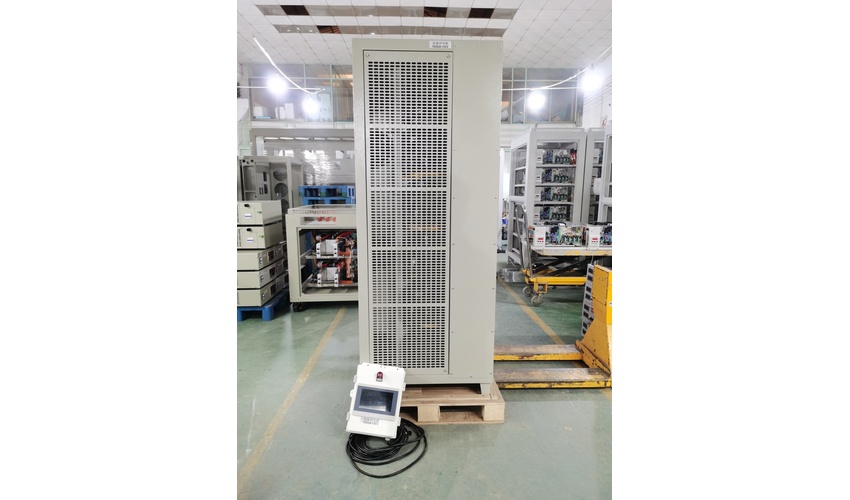
The global push for sustainable industrial practices has placed wastewater treatment at the forefront of environmental management. Among the various technologies available, electrolysis stands out for its effectiveness in removing contaminants, heavy metals, and organic pollutants from industrial effluents. At the heart of this process lies the electrolysis power supply, a critical component that dictates the efficiency, reliability, and scalability of the treatment system. This article explores the evolution and application of advanced electrolysis power supplies in wastewater treatment, highlighting key features and technological innovations that are shaping the industry.
### The Critical Role of Power Supplies in Electrolysis
Electrolysis for wastewater treatment relies on the application of direct current (DC) to drive electrochemical reactions within a treatment cell. These reactions can oxidize organic pollutants, reduce heavy metals to less soluble forms, or generate oxidants like chlorine and hydrogen peroxide for disinfection. The power supply is not merely a source of current; it is a sophisticated system that must deliver precise control over voltage, current, and waveform to optimize treatment efficiency while minimizing energy consumption and electrode wear. Modern power supplies are engineered to handle a wide range of applications, from small-scale industrial effluent treatment to large municipal water purification projects.
### Key Features of Modern Electrolysis Power Supplies
Recent advancements in power supply technology have focused on enhancing control, efficiency, and integration. Modern units are equipped with intelligent control panels, remote monitoring capabilities, and specialized modes for different treatment processes. For instance, power supplies for electrocoagulation (EC) often feature automatic polarity reversal to prevent passivation of electrodes, while those for electrochemical oxidation (EO) may support high-frequency pulse modes to improve reaction kinetics. Cooling systems, primarily air-cooled with multiple fans, ensure stable operation even under high loads, and compact designs facilitate easy installation in space-constrained industrial environments.
### Application-Specific Power Supply Configurations
The versatility of electrolysis technology is reflected in the diverse range of power supplies available, each tailored to specific treatment requirements. Below is a summary of key configurations and their applications:
| Application Type | Voltage Range (V) | Current Range (A) | Key Features | Typical Use Case |
|——————|——————-|——————-|————–|——————|
| Electrocoagulation (EC) | 10-24 | 100-1000 | Automatic polarity reversal, compact design | Removal of heavy metals, suspended solids, and emulsified oils |
| Electrochemical Oxidation (EO) | 12-24 | 100-1000 | High-frequency pulse, remote control | Degradation of persistent organic pollutants (POPs) |
| Electrolytic Polishing | 24-48 | 1000-2000 | High current stability, specialized waveform | Surface finishing and metal treatment |
| Electrodialysis | 100-120 | 100 | Low ripple, high efficiency | Desalination and ion removal |
| Electro-Fenton | 15-18 | 1000 | Integrated timer, remote control | Advanced oxidation for toxic wastewater |
### Conclusion
The development of advanced electrolysis power supplies has significantly improved the viability and efficiency of wastewater treatment technologies. With features like intelligent control, remote monitoring, and application-specific modes, these power supplies offer unparalleled precision and reliability. As industries continue to face stricter environmental regulations, investing in high-performance electrolysis systems will be crucial for achieving sustainable compliance and operational excellence. The future of wastewater treatment lies in the continued innovation of these power systems, enabling cleaner water and a healthier environment for all.