
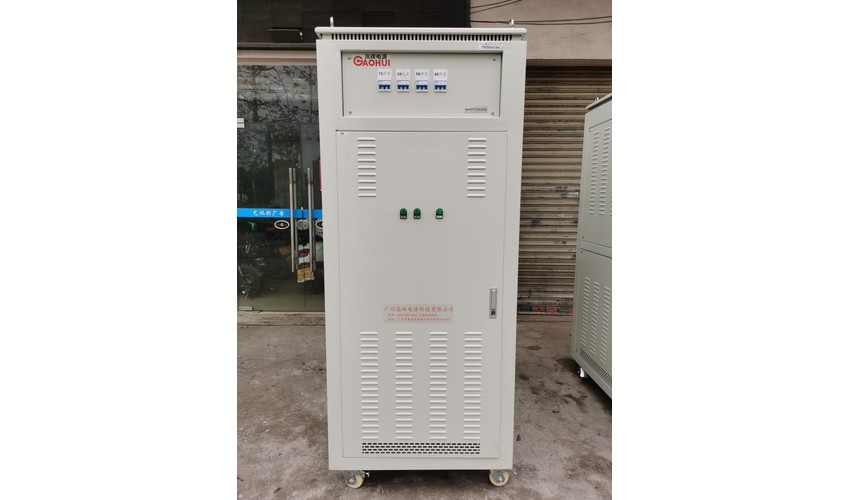
As global water scarcity intensifies, desalination technologies are becoming increasingly vital for providing potable and process water across industries and communities worldwide. However, the energy-intensive nature of desalination has historically posed a significant challenge, driving up operational costs and environmental impact. The imperative for sustainability and economic viability has placed a spotlight on every component within these complex systems, none more critical than the power supply units that drive the core processes. Modern desalination plants demand robust, reliable, and exceptionally efficient power conversion, a demand being met by advancements in high-frequency switching technology and stringent energy efficiency standards.
The energy consumption of desalination plants, particularly those employing Reverse Osmosis (RO) or Electrodialysis (ED), constitutes a substantial portion of their total operating expenditure. Traditional power conversion systems, often operating at lower frequencies, suffered from larger footprints, slower response times, and inherent energy losses due to their design. These limitations translated directly into higher electricity bills and a larger carbon footprint. Consequently, the industry has aggressively pursued solutions that can minimize energy waste while ensuring precise and stable power delivery to sensitive electrochemical cells and membrane processes. This is where the evolution of power supply technology, characterized by high-frequency switching and a relentless pursuit of efficiency, becomes indispensable.
High-frequency switching is at the heart of this transformation. Unlike conventional low-frequency rectifiers, modern power supplies utilize advanced semiconductor devices like IGBTs (Insulated Gate Bipolar Transistors) and MOSFETs (Metal-Oxide-Semiconductor Field-Effect Transistors) to switch power at hundreds of kilohertz or even megahertz. This rapid switching allows for significantly smaller inductive and capacitive components within the power supply, leading to a dramatic reduction in the overall physical size and weight of the unit. For a critical application requiring a 3000A 12V power supply, this compact design can be a game-changer, freeing up valuable plant space and simplifying installation.
The benefits extend far beyond footprint. High-frequency operation inherently improves power quality by enabling more precise control over the output voltage and current. This is crucial for desalination processes where stable and ripple-free DC power is essential for maintaining membrane integrity, optimizing electrochemical reactions, and extending equipment lifespan. Furthermore, the faster response times inherent in high-frequency designs allow the power supply to adapt almost instantaneously to changes in load or input conditions, ensuring uninterrupted and stable operation—a non-negotiable requirement for continuous process plants. These systems also significantly reduce switching losses, which are a major source of inefficiency and heat generation in traditional power supplies, directly contributing to improved energy conversion.
Driving these innovations are increasingly rigorous energy efficiency standards. Modern desalination power supplies are engineered to meet and exceed benchmarks such as those set by regulatory bodies or industry-specific performance metrics. Achieved through sophisticated topologies like resonant converters, advanced control algorithms, and optimized component selection, these power supplies boast power conversion efficiencies often exceeding 95-97%. For a unit delivering 3000A at 12V, a mere 1% increase in efficiency translates to substantial energy savings over its operational lifetime, directly impacting the plant’s profitability and environmental compliance. This focus on efficiency also encompasses features like high power factor correction (PFC), which minimizes reactive power draw from the grid, reducing utility penalties and improving overall grid stability.
The specific requirements for a 3000A 12V Air Cooled power supply further underscore the need for robust and reliable design. A 3000-amp output provides the substantial current required for large-scale electrochemical cells found in advanced electrodialysis reversal (EDR) or capacitive deionization (CDI) systems, where precise voltage and current control directly influence salt removal efficiency and energy consumption. The 12-volt output is tailored for these specific applications, indicating a high-current, low-voltage demand profile. The ‘Air Cooled’ specification highlights a design choice prioritizing reliability and ease of maintenance in demanding industrial environments. Air cooling, while requiring careful thermal management, often offers a simpler, more robust solution compared to liquid cooling in certain contexts, reducing complexity and potential points of failure, which is paramount for continuous operation in a critical infrastructure like a desalination plant.
In conclusion, the future of sustainable desalination hinges significantly on the continuous evolution of its core power infrastructure. The synergy of high-frequency switching technology, adherence to rigorous energy efficiency standards, and robust design principles like those found in a 3000A 12V Air Cooled power supply, is instrumental. These advanced power supplies not only minimize the energy footprint and operational costs of desalination plants but also enhance their reliability and longevity. As the world increasingly turns to the oceans and brackish sources for fresh water, the innovations in power electronics will remain at the forefront, powering a more sustainable and water-secure future.