
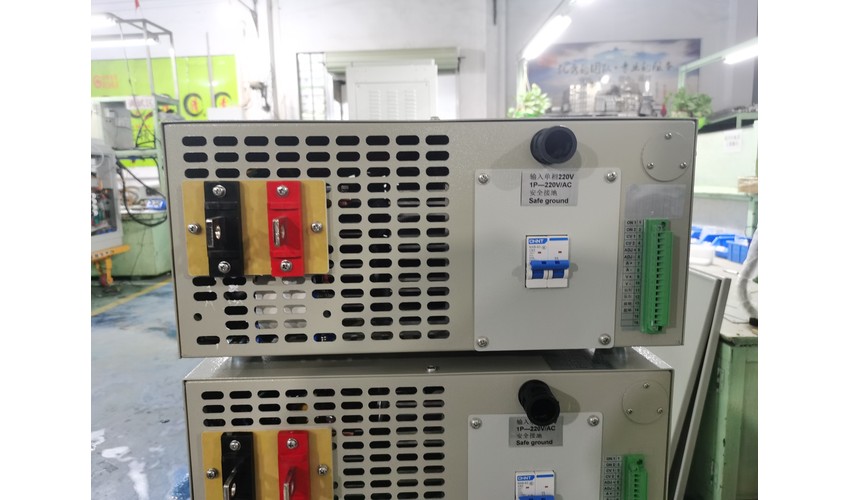
The Future of Electrochemical Precision: Navigating High-Power Rectification
In the rapidly evolving landscape of industrial manufacturing, the precision of electrochemical processes is directly tethered to the stability of power conversion. As we approach 2026, the demand for high-output, energy-efficient, and thermally managed power solutions has never been higher. For sectors ranging from large-scale metal finishing and electro-winning to advanced water treatment and chlor-alkali production, the GAOHUI 3000A 150V water-cooled rectifier represents the gold standard in robust power electronics.
This guide serves as a strategic roadmap for facility managers and procurement engineers tasked with optimizing production lines while maximizing Return on Investment (ROI) in an era defined by automation and sustainability mandates.
The GAOHUI Advantage: Engineering Excellence at 3000A/150V
When operating at a capacity of 3000A and 150V, power density becomes the primary design challenge. GAOHUI has distinguished itself by focusing on high-frequency switching technology and modular architecture, which minimizes heat loss and maximizes uptime.
- Thermal Management Superiority: Water cooling is non-negotiable at the 450kW (3000A x 150V) threshold. GAOHUI’s proprietary liquid-cooling heat sink designs ensure that internal junction temperatures remain well within optimal ranges even under 24/7 full-load operation. By maintaining lower operating temperatures, these units significantly extend the lifespan of internal IGBT modules and capacitors compared to forced-air counterparts.
- Precision Control Systems: Modern electrochemical processes require tight ripple current control. GAOHUI rectifiers integrate advanced DSP (Digital Signal Processing) control, ensuring high-frequency stability that translates into uniform plating thickness and consistent chemical reaction rates.
- Modular Redundancy: Recognizing that downtime is a catastrophic expense, GAOHUI’s design philosophy incorporates modular power blocks. In the event of a localized fault, the system maintains partial operation rather than full failure, safeguarding production schedules.
Strategic Buyer’s Guide: What to Look for in 2026
Procuring a high-capacity rectifier is a long-term capital expenditure. Buyers should evaluate potential vendors against the following criteria:
- Total Efficiency (Wall-to-Bus): In 2026, efficiency is no longer just about operational cost; it is about ESG compliance. Look for efficiencies exceeding 94%. Even a 1% gain in efficiency over a 450kW system translates to thousands of dollars in energy savings annually.
- Communication Protocols: The ‘Smart Factory’ is no longer a luxury. Ensure your GAOHUI unit supports industry-standard communication protocols like Profinet, Modbus TCP/IP, or EtherCAT for seamless integration into your PLC/SCADA control networks.
- Protection Suites: High-power systems are sensitive. Look for comprehensive protection features, including phase-loss detection, over-temperature monitoring, short-circuit protection, and leakage monitoring. GAOHUI’s built-in diagnostic telemetry provides predictive maintenance data, allowing for repairs before failures occur.
- Support & Scalability: Does the provider offer localized field support? The 3000A class of equipment requires expert commissioning. GAOHUI’s global technical footprint ensures that commissioning and routine maintenance are supported by deep-domain engineers.
ROI Analysis: Quantifying the Value of GAOHUI Reliability
Calculating ROI for industrial rectifiers must extend beyond the initial sticker price. To build a robust business case, consider the Total Cost of Ownership (TCO) over a five-year horizon:
- Energy Savings: With industrial energy costs fluctuating, a high-efficiency rectifier provides immediate, compounding savings. By shifting from older SCR (Silicon Controlled Rectifier) technology to GAOHUI’s modern switch-mode power supply (SMPS) technology, facilities often see power factor improvements from 0.85 to 0.95, significantly reducing utility penalties.
- Extended Consumable Life: In water treatment and electro-winning, the chemistry is volatile. Consistent current prevents ‘over-treatment’ or under-reaction, saving money on chemicals and electrodes.
- Maintenance Uptime: A rectifier that fails every 18 months is a liability. GAOHUI’s focus on water-cooling efficiency prevents ‘thermal cycling’ fatigue. By reducing maintenance interventions by even 30%, the labor and component costs saved often exceed the initial investment difference within 24 months.
2026 Industrial Trends: What’s Coming Next
As we look toward the 2026 industrial horizon, three major trends are reshaping the procurement of power electronics:
1. Industry 4.0 and Predictive Analytics:
Procurement managers are no longer buying static boxes; they are buying data streams. The GAOHUI rectifiers of 2026 are expected to provide real-time degradation metrics. This allows for ‘Condition-Based Maintenance’ (CBM), shifting from scheduled maintenance to maintenance driven by actual component wear.
2. Green Manufacturing & Carbon Credits:
As governments continue to tighten carbon reporting, the efficiency of your rectifiers will contribute to your facility’s environmental score. GAOHUI’s integration of regenerative features—where the heat generated by the process can be recovered or managed more sustainably—is becoming a competitive advantage for OEMs.
3. Decentralization of Power Control:
Instead of one massive central rectifier for a large plant, the trend is moving toward decentralized, smaller high-capacity units (like the 3000A/150V blocks) controlled by a master system. This improves flexibility. If one process cell needs a different voltage curve, it can be adjusted independently without affecting the entire line. GAOHUI’s scalability is perfectly aligned with this modular expansion strategy.
Final Recommendations for Procurement
Investing in a 3000A 150V water-cooled rectifier from GAOHUI is a decision centered on reliability and future-proofing. To successfully integrate this into your facility, we recommend:
- Define Load Profiles: Clearly specify if your application requires constant current or constant voltage and confirm the ripple requirements of your downstream process.
- Environmental Assessment: Ensure your site water-cooling infrastructure (chillers/heat exchangers) meets the flow rate and temperature requirements specified by GAOHUI technical documentation.
- Future Expansion Capacity: When designing your power room, ensure space for additional units. GAOHUI rectifiers are designed to be paralleled for higher currents; planning for modular growth now will save massive integration costs later.
Conclusion
The landscape of industrial rectification is shifting from ‘utility-grade’ reliability to ‘data-driven’ precision. GAOHUI has successfully bridged this gap, offering the high-amperage, high-voltage performance required by modern industrial applications, backed by the thermal management capabilities of robust liquid cooling. By prioritizing energy efficiency, digital integration, and modular scalability, facilities can ensure their operations remain productive and profitable through 2026 and beyond.
For procurement teams, the GAOHUI 3000A 150V water-cooled rectifier is more than just a piece of hardware; it is a fundamental building block for a scalable, efficient, and technologically advanced production ecosystem.