
The Evolution of Electrochemical Treatment: 2026 Industrial Landscape
As global environmental regulations tighten and the cost of raw water intake continues to climb, industries from textile manufacturing to heavy metal processing are rapidly pivoting toward advanced electrochemical treatment solutions. Central to this transition is the Electrocoagulation (EC) Power Supply. In 2026, the industry has reached a tipping point where efficiency is no longer just a regulatory checkbox—it is a primary driver of competitive advantage and Return on Investment (ROI).
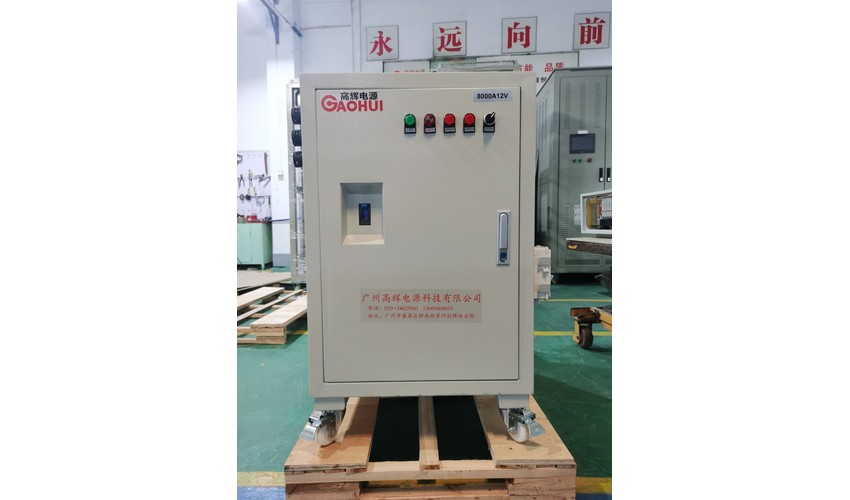
For high-volume wastewater treatment facilities, the 12000A 12V air-cooled power supply has emerged as the ‘gold standard’ for balancing massive throughput with manageable heat dissipation. This guide explores how to select, integrate, and maximize the ROI of this critical infrastructure in an era defined by automation and sustainability.
Why 12000A 12V? Understanding the Specifications
In the realm of electrocoagulation, current density is the primary engine of contaminant removal. A 12000A capacity provides the necessary amperage to drive ion release from sacrificial anodes (typically iron or aluminum) at a scale sufficient for high-flow industrial output.
- The Amperage Factor (12000A): This capacity allows for rapid destabilization of emulsions and complex pollutants. It is engineered for facilities processing tens of thousands of gallons per hour, where uptime is mission-critical.
- The Voltage Threshold (12V): Lower voltage profiles in EC are strategically chosen to minimize energy waste in the form of ohmic heating while maintaining the required electrical potential to break down stubborn chemical bonds.
- The Cooling Advantage: Air-cooled systems are increasingly preferred in 2026 for their reduced maintenance footprint compared to liquid-cooled alternatives. By eliminating heat exchangers, pumps, and the risk of coolant leaks, air-cooled 12000A units provide a lower Total Cost of Ownership (TCO) in environments where air quality can be managed via positive pressure filtration.
ROI Analysis: The Economic Argument for Upgrading
Investing in a high-capacity 12000A 12V power supply is a capital-intensive decision, but the ROI manifests through several distinct channels:
- Reduction in Chemical Sludge: Traditional chemical coagulation relies on bulk polymers and flocculants that create massive, difficult-to-dewater sludge volumes. EC systems drastically reduce chemical sludge volume, resulting in significant savings in disposal costs and landfill fees.
- Energy Efficiency and Harmonic Distortion: Modern 2026-spec power supplies utilize advanced IGBT (Insulated Gate Bipolar Transistor) technology, ensuring high power factors and minimal harmonic distortion. This protects the plant’s electrical grid and minimizes utility surcharges.
- Sacrificial Anode Longevity: Precision-controlled power supplies allow for ‘Smart Polarity Reversal.’ By automatically switching the polarity of the electrodes, these units prevent scaling and passivation. This extends the lifespan of the sacrificial metal plates, significantly reducing raw material expenditure.
2026 Industrial Trends: The Smart-Connected Power Supply
As we enter the latter half of the decade, the ‘dumb’ power supply is effectively obsolete. When sourcing your 12000A 12V unit, keep an eye out for these emerging trends that define industry 4.0 standards:
- Predictive Maintenance Analytics: Integrated sensors now monitor real-time electrode degradation and electrical load anomalies. Instead of reactive maintenance, plant managers can now receive alerts via mobile dashboards weeks before an anode failure occurs.
- Energy-on-Demand Scaling: The best-in-class power supplies now feature modular load-balancing. If wastewater flow rates drop during off-peak shifts, the system intelligently scales its amperage output, ensuring that electricity isn’t wasted treating water that isn’t there.
- Seamless PLC Integration: Modern units ship with standard industrial communication protocols (Profinet, EtherNet/IP, or Modbus TCP). This allows the power supply to ‘talk’ directly to the site’s central SCADA system, enabling real-time adjustments based on water turbidity or conductivity sensors.
Strategic Buyer’s Checklist: What to Look For
When vetting suppliers for a 12000A 12V air-cooled EC power supply, the technical specifications are only half the battle. Use this checklist to ensure long-term success:
- IP Rating & Filtration: Since these units are air-cooled, ensure they are rated for your specific environment (e.g., NEMA 4/IP65). In dusty or humid environments, check that the cooling intake features replaceable industrial-grade filters to protect the internal components.
- Ripple Factor: Low ripple is essential for consistent ion production. Ensure the manufacturer guarantees a ripple of <1% to prevent electrode unevenness and localized pitting.
- Duty Cycle: A true industrial-grade power supply must be rated for 100% duty cycle. Anything less will inevitably lead to overheating or system failure during peak production hours.
- Support and Spare Parts: Does the manufacturer maintain regional support? In a 12000A environment, downtime costs can reach thousands of dollars per hour. Ensure you have access to a local technician and a ready supply of critical modules.
Sustainability and Regulatory Compliance
By 2026, ESG (Environmental, Social, and Governance) requirements have become a standard audit metric for multinational corporations. The electrocoagulation process is inherently more sustainable than traditional ‘add-chemical’ methodologies. It reduces the chemical footprint of your facility, improves the recyclability of effluent water, and aligns your operations with the global move toward circular water management.
Conclusion: Future-Proofing Your Facility
The decision to invest in a 12000A 12V air-cooled electrocoagulation power supply is a strategic move toward operational excellence. By focusing on systems that prioritize modularity, smart-grid compatibility, and robust cooling engineering, you are not just purchasing a power source—you are securing the backbone of your facility’s environmental and economic viability for years to come.
As the industrial sector continues to face more rigorous discharge standards and water scarcity pressures, the ability to effectively and efficiently treat wastewater internally will be the defining trait of successful operations. Ensure your choice in power supply reflects these future-forward requirements, and you will see the impact immediately in your operational margins and your facility’s long-term environmental compliance.