
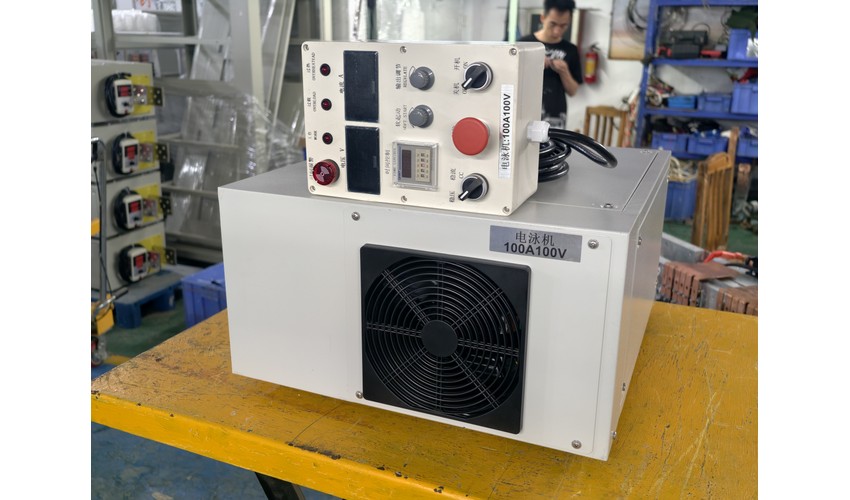
In the modern landscape of municipal water treatment and industrial disinfection, the shift toward on-site sodium hypochlorite generation has become the gold standard for safety and sustainability. At the heart of these systems lies a sophisticated piece of power electronics: the Sodium Hypochlorite Generator Power Supply. For large-scale applications requiring 3000A at 15V, the transition from traditional, bulky transformer-based rectifiers to high-frequency switching mode power supplies (SMPS) has revolutionized performance, footprint, and operational efficiency.
The Architecture of High-Frequency Switching
Traditional silicon-controlled rectifier (SCR) power supplies rely on line-frequency transformers (50/60 Hz), which are inherently heavy, inefficient, and prone to significant energy loss due to hysteresis and eddy currents. In contrast, modern high-frequency power supplies utilize insulated-gate bipolar transistors (IGBT) or metal-oxide-semiconductor field-effect transistors (MOSFET) operating at switching frequencies typically ranging from 20 kHz to 100 kHz.
By elevating the switching frequency, the physical size of the magnetic components—specifically the transformers and inductors—is drastically reduced. This allows for a more compact 3000A 15V unit that can be easily integrated into containerized or modular skid-mounted systems. More importantly, high-frequency switching enables rapid pulse-width modulation (PWM) control, which is essential for maintaining the precise current density required for optimal chlorine production across varying water qualities.
Precision Control and Electrolytic Efficiency
Electrolysis is a process dictated by Faraday’s laws, where the amount of sodium hypochlorite produced is directly proportional to the electrical current passed through the brine solution. In a 3000A 15V system, maintaining a stable current is paramount. Any fluctuation in voltage or current can lead to secondary reactions, such as the formation of chlorates or the premature degradation of electrode coatings.
High-frequency power supplies offer superior ripple control. While a standard SCR rectifier may suffer from 5% to 10% ripple, a well-engineered high-frequency switching supply can maintain a ripple factor below 1%. This stability ensures that the electrochemical cell operates at the peak of its efficiency curve, significantly reducing the kilowatt-hours required per kilogram of chlorine generated (kWh/kg Cl2).
Furthermore, the logic controllers integrated into these units provide real-time monitoring and soft-start capabilities. When the system initiates, the power supply gradually ramps up the current to avoid electrical surges and thermal stress on the electrodes—a crucial factor in extending the lifespan of precious metal oxide (MMO) coated titanium anodes.
Thermal Management: The Case for Air-Cooled Systems
For a 3000A 15V unit, heat dissipation is a significant engineering challenge. Generating 45 kW of DC power inevitably results in heat loss, even with efficiency ratings exceeding 90%. While liquid cooling is often considered for extreme environments, air-cooled systems are the preferred solution for the majority of industrial installations due to their simplicity, lower maintenance requirements, and lack of potential for fluid leakage near sensitive electronics.
Modern air-cooled power supplies utilize advanced thermal design, featuring high-static-pressure fans and optimized heatsink geometries. In 3000A configurations, the power module is usually segmented into smaller, parallel-connected sub-modules. This modularity serves two purposes: first, it enhances thermal distribution by spreading the heat-generating components over a larger surface area; second, it provides redundancy. If one sub-module experiences a fault, the system can often continue to operate at a reduced capacity, preventing total downtime in critical water treatment infrastructure.
Energy Efficiency Standards and Sustainability
As industrial facilities face increasingly stringent environmental regulations and rising electricity costs, the energy efficiency of the sodium hypochlorite generator power supply has moved to the forefront of procurement criteria. High-frequency systems are inherently more “green” than their predecessors. By minimizing conversion losses, these units contribute to a smaller carbon footprint throughout the life of the generator.
To meet modern energy standards, top-tier power supplies now incorporate Power Factor Correction (PFC). Without PFC, large rectifiers introduce harmonics back into the site’s electrical grid, which can interfere with other sensitive electronic equipment and result in utility penalties for low power factor. Integrating active PFC circuitry ensures the power supply draws current in phase with the voltage, maintaining a power factor typically above 0.95.
Maintenance and Longevity in Harsh Environments
Sodium hypochlorite production facilities are inherently corrosive environments, with trace amounts of chlorine gas and saline moisture often present in the ambient air. A professional-grade 3000A 15V power supply must be designed with industrial-hardened enclosures. This includes conformal coating of printed circuit boards (PCBs) to protect against humidity and salt spray, and the use of air filtration systems for the cooling intake to prevent dust accumulation on the power components.
Maintenance strategies for these systems have also evolved. With digital communication protocols like Modbus TCP/IP or Profibus integrated directly into the power supply, facility operators can perform remote diagnostics. Technicians can track total runtime, current output, and internal temperatures without needing to open the enclosure, reducing the risk of environmental exposure to internal components.
Future Outlook: Digitalization and Industry 4.0
The future of sodium hypochlorite generation lies in the integration of the power supply with the broader plant control system. We are seeing a shift toward ‘Smart’ power supplies that utilize machine learning algorithms to adjust current outputs based on real-time water chemistry feedback (e.g., pH, flow rate, and salinity). In a 3000A 15V system, these micro-adjustments can yield substantial long-term savings in reagent consumption and electricity costs.
As we look forward, the focus remains on pushing the boundaries of switching frequency and semiconductor reliability. Wide-bandgap materials such as Silicon Carbide (SiC) and Gallium Nitride (GaN) are beginning to emerge in high-power applications, promising even higher efficiencies and smaller footprints. For current operators and engineers, investing in high-frequency, air-cooled 3000A 15V power supplies today ensures not only immediate reliability but also compatibility with the next generation of digitized, highly efficient water treatment plants.
Conclusion
Selecting the right power supply for a 3000A 15V sodium hypochlorite generator is a strategic decision that impacts the operational cost and reliability of an entire facility. By prioritizing high-frequency switching technology, robust air-cooled thermal management, and active power factor correction, operators can achieve a level of precision and energy efficiency that was previously unattainable. In the pursuit of reliable, sustainable, and safe water disinfection, the power supply is no longer a peripheral component—it is the engine of the entire system.