
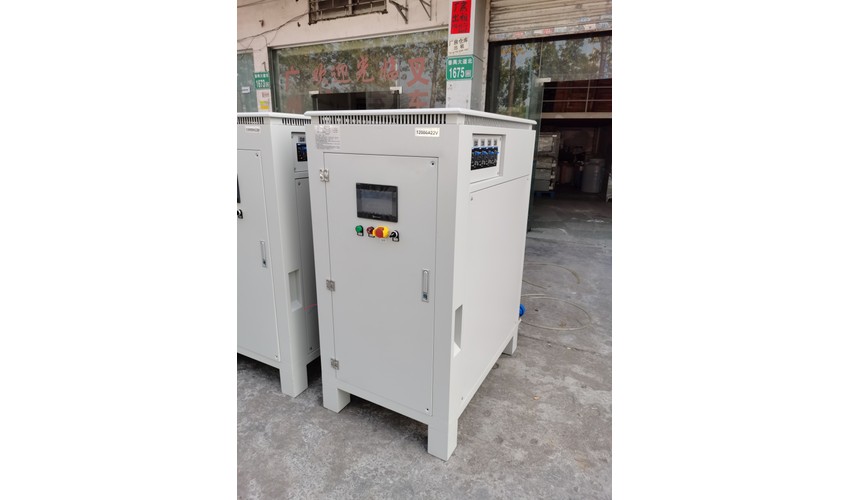
In the modern industrial landscape, the efficiency of electrochemical processes serves as the backbone for high-value manufacturing, ranging from surface finishing and metal refining to advanced chemical synthesis. Central to these operations is the DC power supply, a critical component that dictates not only the quality of the final product but also the operational overhead of the facility. As industry standards shift toward greener, more sustainable practices, the transition from traditional transformer-based rectifiers to high-frequency switching-mode power supplies (SMPS) has become a technical mandate. Specifically, the 500A 100V air-cooled power supply configuration has emerged as a high-performance standard for medium-scale electrolytic applications requiring precision, modularity, and high energy efficiency.
The Technological Shift: High-Frequency Switching vs. Conventional Rectification
Traditional industrial power supplies typically relied on Silicon Controlled Rectifiers (SCR) or heavy iron-core transformers. While robust, these systems suffer from significant energy losses due to their reliance on line-frequency (50/60 Hz) conversion. In contrast, modern high-frequency switching power supplies utilize advanced power electronics—typically utilizing Insulated Gate Bipolar Transistors (IGBTs) or Silicon Carbide (SiC) MOSFETs—to convert electrical energy at frequencies ranging from 20 kHz to over 100 kHz.
This high-frequency operation enables a significant reduction in the size and weight of magnetic components such as inductors and transformers. For a 500A 100V system, the physical footprint is reduced by nearly 60% compared to legacy units, providing engineers with greater flexibility in facility floor planning and cabinet integration. More importantly, the rapid switching cycle allows for tighter regulation of output current and voltage, ensuring that the electrolytic process remains stable even in the presence of grid fluctuations or variable load impedance.
Efficiency Standards and Harmonic Mitigation
Energy efficiency is the primary driver for industrial upgrades. With a 50kW capacity (500A at 100V), the cumulative energy cost of an electrolytic line is substantial. Legacy SCR-based systems often struggle with low power factors and high Total Harmonic Distortion (THD), which can lead to utility penalties and increased heat dissipation losses.
Modern high-frequency DC power supplies are engineered to achieve power factors exceeding 0.95 across a wide load range. By utilizing Active Power Factor Correction (APFC) and sophisticated PWM (Pulse Width Modulation) control algorithms, these units minimize reactive power draw. Furthermore, high-frequency design inherently addresses ripple current. In electrolysis, high ripple current can lead to inconsistent surface morphology or suboptimal chemical yields. The high-speed feedback loop of an SMPS ensures that the output is remarkably smooth, with ripple levels often kept below 1% of the rated output, drastically improving the repeatability of the electrolysis process.
The Engineering of Air-Cooled Systems
For many mid-sized industrial environments, water cooling presents maintenance challenges—including potential leakage, plumbing complexity, and the requirement for deionized water circuits. The 500A 100V air-cooled model strikes an ideal balance for these facilities.
Thermal management in a 50kW system is non-trivial. To maintain longevity and prevent semiconductor degradation, these power supplies utilize intelligent thermal architectures. This includes the use of high-static-pressure fans with variable speed control, which scale fan performance based on internal heat-sink temperatures. By integrating thermally optimized air-flow channels, the system ensures that critical components operate well below their thermal thresholds, even under continuous 24/7 operation. The selection of high-grade, long-life capacitors and magnetic cores that minimize hysteresis losses ensures that the heat generation is kept to an absolute minimum, further improving the overall efficiency of the air-cooling system.
Precision Control and Digital Integration
Electrolysis is a time-sensitive, parameter-driven process. The move toward Industry 4.0 necessitates that power supplies function as more than just “black boxes.” Modern units equipped with digital signal processors (DSPs) allow for granular control over output characteristics. Operators can program complex ramp-up/ramp-down cycles, periodic polarity reversal (essential for preventing electrode passivation), and constant-current/constant-voltage modes with sub-millisecond response times.
Integration with industrial protocols such as Modbus, Profibus, or Ethernet/IP allows for real-time monitoring of voltage, current, and temperature metrics. This data is invaluable for predictive maintenance. By tracking efficiency trends and output ripple, plant managers can identify potential component wear before it results in unplanned downtime, thereby protecting the throughput of the entire production line.
Operational Advantages in Electrochemical Applications
- Enhanced Surface Quality: In electrolytic metal plating, the high-frequency stability ensures a uniform deposit, reducing reject rates and subsequent polishing requirements.
- Chemical Yield Consistency: In electro-synthesis, precision current control directly correlates to the purity and yield of the chemical product, ensuring tighter adherence to quality standards.
- Scalability: The compact nature of these high-frequency units makes them ideal for modular design. For facilities requiring higher currents, units can be paralleled, or for higher voltage requirements, series configurations can be utilized with intelligent master-slave control mechanisms.
- Lower Maintenance: Without the need for complex cooling pumps, fluid filters, or frequent valve replacements, the air-cooled system offers a “set-and-forget” reliability that appeals to modern, lean manufacturing environments.
Sustainability and Regulatory Compliance
Global regulations such as the IEC 60146-1-1 standard govern the performance and safety of semiconductor converters. Choosing a power supply that meets these global standards is not just a regulatory check-box; it is an assurance of electromagnetic compatibility (EMC) and electrical safety. As carbon taxation and energy-usage audits become more prevalent, the adoption of high-efficiency switching technology allows companies to lower their carbon footprint. A 5% increase in efficiency across a 50kW system operating continuously equates to significant kilowatt-hour savings per annum, shortening the ROI window for equipment capital expenditure.
Conclusion
For the industry professional, the selection of a 500A 100V air-cooled DC power supply is a strategic decision that bridges the gap between high-power requirements and modern efficiency mandates. By shifting away from antiquated rectification methods in favor of high-frequency switching, manufacturers can achieve tighter process control, improved product quality, and significantly reduced operational expenses. As we look toward the future of electrochemical manufacturing, the ability to integrate sophisticated, high-performance DC power conversion will remain a defining competitive advantage.
By prioritizing systems that offer high-frequency switching, intelligent air cooling, and digital monitoring capabilities, businesses can ensure their electrolytic processes remain resilient, scalable, and environmentally responsible. Whether for metal finishing, precious metal extraction, or specialized industrial electrolysis, investing in the right power supply architecture is the fundamental step toward achieving excellence in the electrochemical domain.