
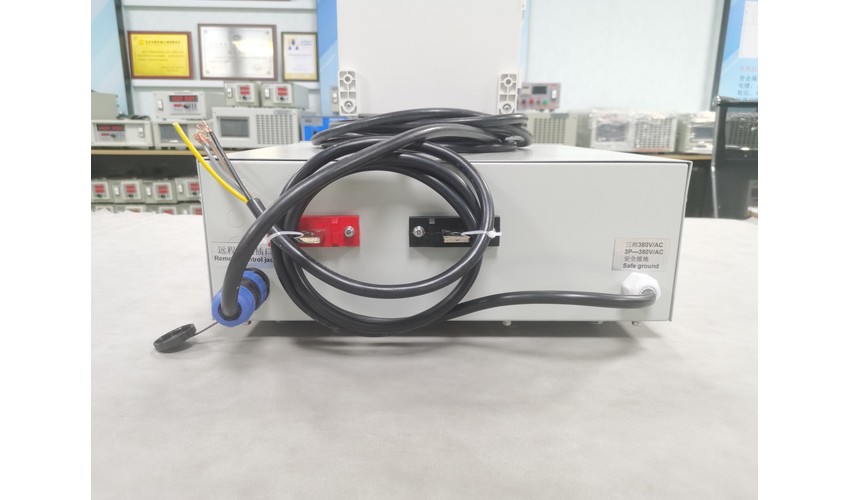
In the modern landscape of water treatment and industrial disinfection, the on-site generation of sodium hypochlorite has become the gold standard for safety, cost-efficiency, and operational reliability. At the heart of these electrochemical systems lies a critical component often overlooked: the DC power supply. For high-capacity installations, the 3000A 15V oil-immersed power supply represents the pinnacle of engineering, designed to withstand the harsh, corrosive environments inherent to chlorine production while maintaining the precise current density required for optimal electrolytic efficiency.
The Architecture of Resilience: Oil-Immersed Technology
Electrolysis plants are notoriously unforgiving environments. The presence of chlorine gas, moisture, and potential salt spray creates an atmospheric profile that rapidly degrades standard electrical components. Conventional air-cooled rectifiers often suffer from rapid circuit board oxidation, transformer overheating, and insulation breakdown due to the ingress of corrosive aerosols.
By contrast, the 3000A 15V oil-immersed system utilizes a sealed approach. The transformer, rectifying diodes, and critical control components are submerged in a high-dielectric insulating oil. This design serves a dual purpose. First, it provides a hermetic seal against the corrosive exterior environment, ensuring that the internal electronics remain pristine regardless of external air quality. Second, it acts as a superior cooling medium compared to air, effectively wicking heat away from the core and mitigating the risks associated with thermal stress.
Mastering Thermal Management in High-Current Applications
Operating at 3000A with a 15V output creates a significant thermal footprint. In electrolysis, stability is non-negotiable; fluctuations in power delivery can lead to inconsistent chlorine concentrations and increased byproduct formation. The oil-immersed design manages this thermal load with exceptional consistency.
Unlike air-cooled systems, which rely on fans that can fail or draw contaminated air into the cabinet, an oil-immersed unit utilizes the thermal mass of the oil to buffer against rapid temperature fluctuations. Heat is dissipated through external radiators or heat exchangers, which can be strategically located away from the primary electrolysis zone. This thermal stability ensures that the rectifiers operate at an optimal temperature range, preventing ‘thermal runaway’ and significantly extending the lifespan of the semiconductor components. By keeping the junction temperatures low and stable, the power supply maintains a high power factor and efficiency rating, translating directly into lower electricity costs per kilogram of generated chlorine.
Corrosion Resistance: The Primary Defense
Sodium hypochlorite generation involves salt (brine) as a primary precursor. If salt dust or moisture enters sensitive electronics, the resulting conductive bridge leads to arcing, short circuits, and catastrophic equipment failure. The ‘Oil-Immersed’ specification is not merely a cooling choice; it is a defensive strategy.
Modern 3000A 15V power supplies utilize specialized transformer oils that are moisture-resistant and chemically inert. The tank itself is typically fabricated from high-grade carbon steel with industrial-grade epoxy coating or stainless steel to prevent corrosion from the outside-in. For facilities located near coastal regions or in humid climates, this level of environmental isolation is the difference between a system that runs for 20 years and one that requires component replacement every three years. The internal logic controllers—if integrated within the same housing—are protected by secondary seals, ensuring the digital intelligence of the unit remains isolated from the harsh realities of the electrochemical process.
Precision Power Delivery for Electrolytic Efficiency
At 15V, the system is tuned for the specific electrochemical potential required to break down sodium chloride molecules efficiently. The 3000A capacity provides the massive electron flow necessary for high-volume production. In these applications, voltage ripple must be kept to an absolute minimum.
High-quality oil-immersed units employ multi-phase rectification coupled with advanced filtering circuits. By minimizing ripple, the system ensures that the electrode plates in the electrolyzer receive a clean, constant DC stream. This prevents localized overheating on the anode/cathode surfaces and reduces the incidence of calcification, which is a major cause of cell degradation. Furthermore, the robust nature of the oil-immersed transformer allows for instantaneous load response; when the system ramps up to meet peak water treatment demand, the power supply provides stable voltage without the ‘droop’ common in lower-tier switch-mode power supplies.
Reliability: The Operational Imperative
In municipal water treatment or large-scale industrial processes, downtime for a disinfection system is a liability that can lead to regulatory non-compliance. The inherent reliability of 3000A 15V oil-immersed rectifiers stems from their simplicity and rugged construction. With fewer moving parts than forced-air systems (which rely on delicate fans and high-RPM cooling assemblies), the oil-immersed unit is essentially maintenance-free.
Maintenance cycles for these units are significantly extended. Operators are generally required only to perform periodic oil dielectric analysis and ensure the external heat exchangers are free of debris. This shift from ‘corrective maintenance’ to ‘predictive maintenance’ allows industrial plants to plan their capital expenditure and operational budgets with far greater accuracy.
Sustainability and Efficiency Trends
As the industry moves toward greener water treatment practices, the energy efficiency of the electrolysis process is under the microscope. The use of high-efficiency transformers inside the oil-immersed housing minimizes hysteresis losses. When combined with smart control interfaces, modern units can modulate their 3000A output based on real-time oxidant demand, effectively preventing the over-generation of sodium hypochlorite. This not only saves on electricity costs but also minimizes the chemical footprint of the plant, as excess product can degrade over time if not used efficiently.
Conclusion
For sodium hypochlorite generation systems operating at scale, the power supply is the heart of the operation. The transition to a 3000A 15V oil-immersed architecture provides a robust, reliable, and highly efficient foundation for critical disinfection infrastructure. By effectively decoupling sensitive electrical components from a hostile, corrosive environment and providing superior thermal dissipation, these systems represent the smartest investment for facilities that cannot afford to compromise on their disinfection capabilities.
Reliability is not just about a warranty; it is about the structural integrity of the equipment design. By selecting oil-immersed technology, engineers are choosing a proven, industrial-grade solution that stands the test of time, environment, and demand. Whether for a large municipal drinking water plant or a sprawling industrial cooling tower system, the 3000A 15V oil-immersed power supply provides the steady, relentless power required to keep water safe and operations running at peak performance.