
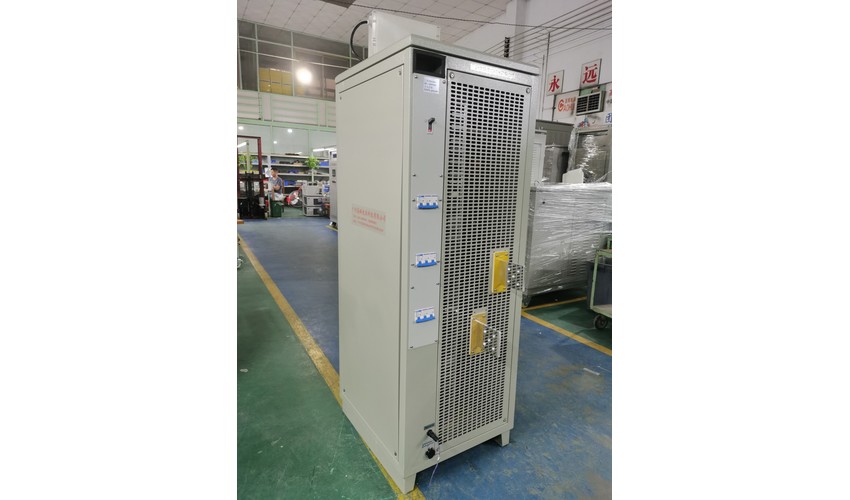
In the modern industrial landscape, the treatment of complex wastewater—ranging from heavy metal-laden plating effluents to high-COD chemical process waters—demands more than just conventional power conversion. As environmental regulations tighten globally, industrial facilities are increasingly turning to advanced electrochemical processes, such as electrocoagulation, electro-oxidation, and electrowinning. At the heart of these critical systems lies the power supply, a component that must balance high-output performance with unwavering resilience. GAOHUI has emerged as a leader in this domain, specifically with their 500A 36V air-cooled series, engineered to withstand the harshest industrial conditions while delivering precise, continuous power.
The Critical Demand for Reliability in Wastewater Treatment
Industrial wastewater treatment plants (WWTPs) are inherently punishing environments. A power supply unit (PSU) utilized in these facilities is exposed to moisture, aggressive chemical vapors, ambient dust, and often, erratic grid power quality. Reliability is not merely a performance metric; it is an operational imperative. Downtime in an electrochemical wastewater treatment train can lead to regulatory non-compliance, production bottlenecks, and environmental violations.
GAOHUI’s 500A 36V air-cooled power supply is built on a foundation of industrial-grade durability. Unlike consumer or general-purpose commercial PSUs, the GAOHUI units utilize high-frequency switching technology coupled with robust power components rated for significant thermal headroom. By prioritizing a high MTBF (Mean Time Between Failures), GAOHUI ensures that the electrowinning and electro-oxidation processes remain uninterrupted, even under 24/7 heavy-load operations.
Advancing Corrosion Resistance: The GAOHUI Difference
One of the most frequent causes of power supply failure in industrial wastewater applications is internal corrosion. Acidic fumes and high humidity levels easily penetrate standard enclosures, leading to oxidation on circuit boards and degraded contact points.
GAOHUI addresses this challenge through a multi-tiered approach to corrosion resistance. First, the chassis is constructed from high-gauge materials finished with specialized industrial-grade powder coatings that are impervious to standard airborne chemical agents. Second, and more importantly, the internal printed circuit board (PCB) assemblies are treated with a high-performance conformal coating. This protective layer acts as a barrier against moisture and conductive dust, effectively preventing the microscopic shorts and electrolytic corrosion that typically plague unprotected electronics.
Furthermore, the selection of internal components—from high-conductivity busbars to gold-plated connectors—is dictated by the need for long-term exposure to challenging atmospheres. By integrating these anti-corrosion safeguards, GAOHUI extends the effective service life of their 500A 36V units by years, rather than months, in comparison to standard off-the-shelf alternatives.
Mastering Heat Management in Air-Cooled Architectures
Heat is the silent enemy of power electronics. In a 500A 36V setup, managing thermal dissipation is complex, particularly when high power density is required. While liquid cooling is often viewed as the solution for high-current systems, it introduces mechanical complexity, maintenance overhead, and the risk of leaks—which are disastrous in electrical environments.
GAOHUI has perfected the air-cooled architecture for its 500A 36V units. The cooling design centers on three key pillars: intelligent airflow ducting, oversized high-efficiency heatsinks, and proactive thermal monitoring.
- Intelligent Airflow Ducting: The internal layout of the GAOHUI PSU is optimized for laminar flow. By strategically placing intake and exhaust ports, the unit minimizes air turbulence, ensuring that high-velocity airflow reaches the MOSFETs and rectifiers directly. This design prevents “hot spots” that are common in inefficiently packed power supplies.
- Oversized Heatsinks: GAOHUI utilizes aluminum extrusions with high fin-density. These heatsinks provide a large surface area for heat exchange, ensuring that the power components remain well below their junction temperature limits, even when operating at the maximum 500A load.
- Proactive Thermal Management: The integration of smart fan-control algorithms means the cooling system reacts to real-time temperature fluctuations. By modulating fan speeds based on load and ambient conditions, the unit not only maintains peak efficiency but also reduces acoustic noise and power consumption of the cooling assembly itself.
High-Precision Output for Electrochemical Processes
Beyond durability and thermal resilience, the GAOHUI 500A 36V power supply excels in output precision. Electrochemical wastewater treatment requires stable voltage and current control to maintain consistent ion transfer rates. Ripple current, which is a common symptom of inferior power supplies, can lead to uneven plate wear and ineffective contaminant precipitation.
GAOHUI’s power electronics design focuses on minimizing output ripple, ensuring a clean DC stream that maximizes the efficiency of the electrodes. This stability translates directly to lower energy consumption per kilogram of removed contaminant, offering a tangible ROI (Return on Investment) for the plant operator through lower electricity bills and less frequent electrode maintenance.
Seamless Integration and Industry 4.0 Compatibility
In the era of Industrial Internet of Things (IIoT), a power supply cannot be a “black box.” GAOHUI’s 500A 36V units are designed for integration into modern SCADA and PLC control environments. Equipped with digital communication interfaces (such as RS485 or Modbus), these units allow facility managers to remotely monitor voltage, current, and internal temperatures.
This level of transparency enables predictive maintenance. Instead of waiting for a component to fail, maintenance teams can identify thermal trends or voltage drifts, allowing them to service the unit during scheduled downtime. This intelligence is the cornerstone of modern industrial maintenance strategies and underscores GAOHUI’s commitment to providing a holistic power solution rather than just a standalone hardware piece.
Conclusion: The Strategic Choice for Wastewater Infrastructure
When specifying power supplies for electrochemical wastewater treatment, engineers must look beyond the nameplate rating. The true cost of an industrial power supply is its total cost of ownership—a calculation that incorporates energy efficiency, downtime avoidance, and maintenance requirements.
GAOHUI’s 500A 36V air-cooled power supply is designed to excel in this calculation. By combining superior corrosion-resistant engineering, innovative thermal management, and high-precision power output, it provides a stable and reliable foundation for even the most demanding wastewater treatment protocols. As industries continue to face the challenge of sustainable water management, GAOHUI provides the power to meet those challenges head-on—cleanly, efficiently, and without compromise.
For facility engineers and system integrators seeking to upgrade their infrastructure, GAOHUI’s technology represents a commitment to excellence, ensuring that the vital work of wastewater treatment is powered by the very best in industrial electrical engineering.