
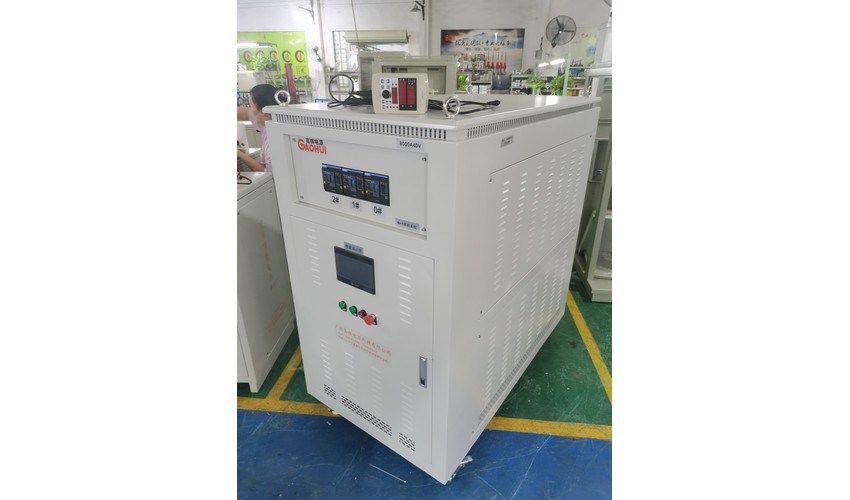
In the modern industrial landscape, where uptime is synonymous with profitability, the architecture of power distribution systems remains the backbone of operational success. Among the most critical components in high-demand environments—such as chemical processing plants, offshore platforms, and heavy manufacturing facilities—is the EC Power unit. Specifically, the 1000A 48V oil-immersed configuration has emerged as the gold standard for applications requiring relentless reliability under extreme conditions. By utilizing dielectric oil as both a coolant and an insulator, these systems solve the triad of common industrial failures: heat accumulation, environmental degradation, and electrical instability.
The Architecture of Reliability
Reliability in power systems is not merely about the duration of operation; it is about the consistency of output under stress. The 1000A 48V specification denotes a high-amperage, low-voltage profile that is typically utilized in sensitive control systems, electrochemical processes, or high-density DC distribution arrays. When these units are oil-immersed, the internal components are submerged in a refined mineral or synthetic oil. This immersion provides an immediate buffer against the thermal cycling that leads to component fatigue. Unlike air-cooled systems, which are prone to dust ingress and moisture accumulation, the sealed oil-filled tank creates a hermetic environment that protects critical junctions from the fluctuations of the ambient atmosphere.
Superior Corrosion Resistance: Defeating the Elements
One of the primary killers of industrial power infrastructure is corrosion. In coastal areas or chemical production zones, salt-laden air or corrosive vapors can degrade electrical contacts, lead to insulation breakdown, and induce catastrophic short-circuiting. The oil-immersed EC Power unit addresses this by physically isolating internal components from the external environment.
Because the internal busbars, transformers, and power electronics are completely encapsulated in a dielectric fluid, the oxygen and moisture levels that catalyze oxidation are eliminated. This makes the 1000A 48V system exceptionally robust in environments where traditional dry-type transformers would require frequent maintenance or enclosure replacements. For facilities operating in harsh climates, the oil-immersed design serves as a maintenance-free barrier, significantly extending the service life of the power infrastructure and drastically lowering the total cost of ownership.
Advanced Heat Management: The Role of Dielectric Oil
Heat is the enemy of efficiency. In high-amperage applications like 1000A systems, I²R losses (resistive heating) can build up rapidly, causing thermal runaway in poorly designed systems. Conventional air-cooling relies on the movement of ambient air, which is often contaminated or inconsistent in industrial settings. If the ambient temperature rises, the cooling efficiency drops, leading to derating or forced shutdowns.
Oil-immersed systems leverage the high thermal conductivity and high specific heat capacity of dielectric oil. As the oil circulates via natural convection or forced cooling loops, it effectively draws heat away from the core components and dissipates it through the exterior walls of the tank (often equipped with cooling fins or radiators). This thermal management strategy ensures that the power electronics remain within their optimal operating temperature range regardless of external spikes. By stabilizing the temperature, these systems ensure that the 48V output remains stable, preventing voltage drops or fluctuations that could disrupt sensitive downstream electronic equipment.
Design Considerations for the 1000A 48V Power Module
Implementing a 1000A 48V oil-immersed system requires precision engineering. The tank design must account for the expansion and contraction of the oil during load variations. Modern units often utilize a bladder-type conservator or a nitrogen-cushioned system to ensure that the oil remains free of moisture and oxygen throughout its lifecycle.
Furthermore, the selection of the dielectric fluid itself is a critical engineering decision. High-grade mineral oils provide excellent insulating properties, while synthetic esters may be chosen for their fire-resistance and biodegradability—a significant factor for companies focused on ESG (Environmental, Social, and Governance) mandates. The 1000A rating also necessitates the use of high-conductive copper buswork, which, when immersed in oil, allows for a more compact design compared to air-insulated busbars that require larger clearances for dielectric strength.
Integration and Safety Protocols
While oil-immersed systems are inherently safer from an electrical arcing perspective due to the insulating properties of the oil, they require rigorous safety monitoring. Integration of smart sensors is now standard practice. Monitoring devices continuously track the dissolved gas levels, moisture content, and the temperature of the oil. These preventative diagnostics allow maintenance teams to predict potential failure points—such as internal arcing or insulation degradation—well before they manifest as a system trip.
By integrating these units into a centralized SCADA (Supervisory Control and Data Acquisition) system, operators can maintain real-time oversight of the 48V output, ensuring the 1000A load is distributed effectively and safely across the facility’s power grid. This level of visibility transforms the EC Power unit from a “black box” component into a controllable, data-rich asset that enhances the intelligence of the entire facility.
Conclusion: The Future of Industrial Power
As industrial processes become more complex and the demand for higher current densities in low-voltage DC applications grows, the engineering community must continue to prioritize systems that can withstand the rigors of the field. The 1000A 48V oil-immersed EC Power system stands out as a bridge between high-performance electrical engineering and rugged mechanical design.
By leveraging the synergy between superior thermal management and complete environmental isolation, these units provide a level of reliability that dry-type systems simply cannot match in extreme applications. For engineers and facility managers aiming to optimize performance while minimizing downtime, the investment in oil-immersed power infrastructure is more than a purchase—it is a strategic decision to secure the longevity and stability of their most critical operations. In an age of volatility, the oil-immersed power system remains the bedrock of predictable, high-amperage power delivery.