
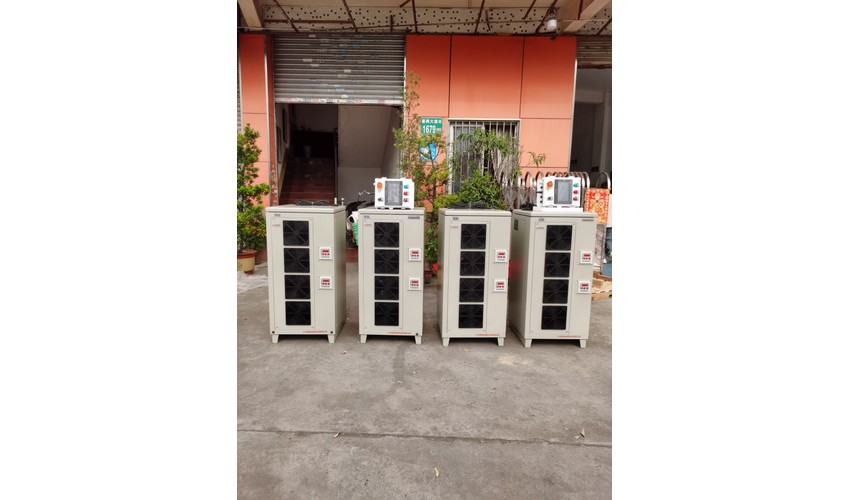
The Evolution of On-Site Disinfection
As industrial and municipal sectors pivot toward sustainable and safer chemical management, on-site sodium hypochlorite generation has emerged as the gold standard for water treatment. Central to these systems is the power supply—the heartbeat of the electrolytic cell. As we approach 2026, the industry is seeing a seismic shift toward robust, air-cooled 5000A 36V systems that prioritize modularity, efficiency, and intelligence.
Understanding the 5000A 36V Architecture
When specifying a power supply for a sodium hypochlorite generator, the 5000A 36V configuration represents a ‘sweet spot’ for medium-to-large scale industrial operations. The amperage (5000A) determines the rate of chlorine production, while the voltage (36V) ensures the cell operates within the optimal electrochemical threshold to prevent anode passivation and excessive heating.
Air-cooled units have traditionally competed with liquid-cooled alternatives. However, by 2026, advancements in power electronics—specifically Silicon Carbide (SiC) MOSFETs—have enabled air-cooled 5000A systems to operate with unprecedented thermal efficiency. These units eliminate the complexity of coolant loops, pump maintenance, and leak risks, making them the preferred choice for facilities prioritizing uptime and reduced CAPEX.
The Buyer’s Guide: Critical Selection Criteria
Selecting a 5000A 36V power supply is not merely a purchase; it is a long-term operational commitment. Buyers must evaluate the following pillars:
- Efficiency and Power Factor: Look for units that maintain a power factor > 0.95 across the full load range. In 2026, energy utility costs are at an all-time high; a 2% increase in conversion efficiency can equate to thousands of dollars in annual savings.
- Thermal Management: Ensure the unit employs intelligent, variable-speed fan control. This prevents dust ingestion during low-load periods, extending the life of internal components.
- Digital Integration: Modern power supplies must feature Modbus TCP/IP or Profinet connectivity. This allows for real-time monitoring of DC ripples, voltage stability, and thermal metrics, facilitating predictive maintenance.
- Harmonics Mitigation: Industrial environments require strict adherence to IEEE 519 standards. A high-quality unit must incorporate integrated harmonic filters to protect the plant’s electrical infrastructure.
ROI Analysis: The Total Cost of Ownership (TCO)
To justify the investment in a 5000A 36V air-cooled power supply, stakeholders must look beyond the sticker price. The ROI is driven by four primary factors:
- Operational Efficiency (OPEX): By converting AC to DC with minimal heat loss, you maximize the electrolysis rate per kilowatt-hour.
- Maintenance Reduction: By choosing air-cooled technology, you eliminate the overhead of fluid chemistry management, heat exchangers, and secondary pumps. This reduces maintenance labor by an estimated 30% compared to legacy liquid-cooled systems.
- Chemical Independence: Generating chlorine on-site eliminates the logistical costs and safety risks associated with transporting and storing bulk hazardous chemicals like concentrated bleach or chlorine gas.
- Longevity: High-end 5000A units designed with modular power blocks allow for ‘hot-swapping’ components. This ensures that even if a power module fails, the system remains at 80-90% capacity, preventing costly production stoppages.
2026 Industrial Trends: What to Expect
As we look toward the 2026 landscape, the power electronics sector in water treatment is undergoing three major transformations:
- AI-Driven Maintenance: The next generation of 5000A power supplies will utilize machine learning to analyze output ripples. By identifying harmonic signatures indicative of electrode scaling, the system will alert operators to clean the electrolytic cells before the efficiency drops, optimizing salt and electricity consumption.
- Decentralized Microgrids: With the rise of industrial microgrids, power supplies are becoming ‘grid-aware.’ Units are now being designed to participate in demand-response programs, where the 5000A unit can subtly throttle its intake during peak grid stress without compromising the disinfection concentration of the water flow.
- Cybersecurity Readiness: With critical infrastructure under constant digital threat, the 2026 standard for power supply firmware includes encrypted hardware security modules (HSM) and secure boot processes to prevent unauthorized remote access to the power conversion parameters.
Installation and Environmental Best Practices
For a 5000A 36V air-cooled unit to achieve its rated lifespan of 15+ years, environmental control is non-negotiable.
- Air Quality: Although the units are ruggedized, installing them in a pressurized, filtered environment will prevent the accumulation of chlorine-rich aerosols on PCB boards, which can cause corrosion.
- Cabling: At 5000A, DC busbar design is critical. Minimize distance between the power supply and the electrolytic cell to reduce voltage drop (IR loss). Use high-conductivity, silver-plated copper busbars with proper expansion joints to handle thermal cycling.
- Grounding: Robust ground loops are essential to mitigate EMI (Electromagnetic Interference) which can corrupt sensor data for pH and ORP (Oxidation-Reduction Potential) probes in the main treatment stream.
Conclusion: The Strategic Choice
The move toward on-site generation is accelerating, and the power supply is the most significant factor in the system’s overall reliability. The 5000A 36V air-cooled power supply, when chosen from a manufacturer that integrates advanced thermal management and digital communication, represents the pinnacle of modern electrochemical engineering.
By focusing on high-efficiency conversion, ease of maintenance, and compatibility with the evolving industrial IoT standards, facility managers can ensure that their disinfection processes are not only compliant with the most stringent environmental regulations of 2026 but are also optimized for maximum financial return.
When evaluating providers, seek out partners who offer not just the hardware, but a comprehensive support lifecycle, including spare parts availability and firmware upgrade paths. The right investment today will serve as the reliable backbone for your facility’s safety, compliance, and profitability for the next decade.