
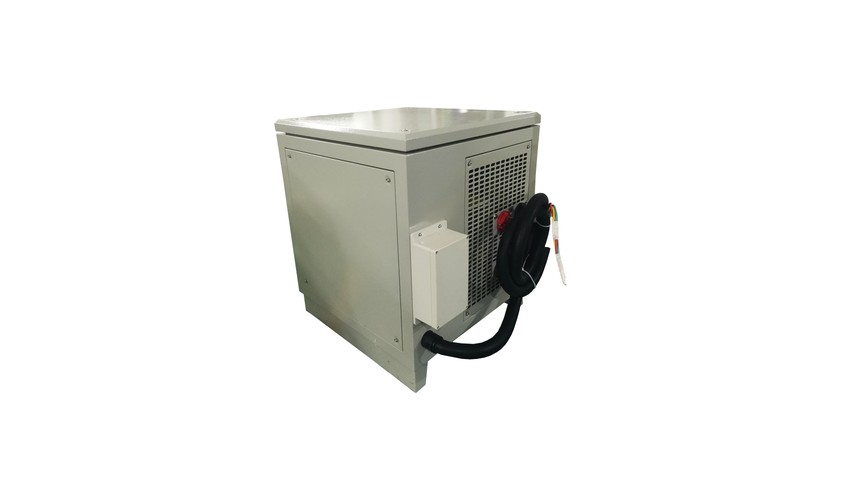
In the modern landscape of heavy industrial manufacturing—particularly within steel rolling and high-precision metallurgical processing—the removal of oxide scale is a mission-critical operation. As production demands increase, the infrastructure supporting these processes must evolve. At the heart of this evolution is the power delivery architecture. For engineers and facility managers, the specification of a 2000A 100V air-cooled power supply for scale removal systems represents a delicate balance between raw power delivery and high-frequency efficiency. This article delves into how next-generation switching topologies are redefining the efficiency benchmarks for large-scale descaling operations.
The Necessity of Precision in Descaling Power
Scale removal systems are designed to strip iron oxide layers from metal surfaces, usually through high-pressure water impingement or electrochemical assist methods. When these systems are powered by high-capacity 2000A 100V units, the primary challenge lies in maintaining consistent, ripple-free current delivery. Fluctuations in current can lead to inconsistent descaling, resulting in surface defects that are costly to rectify downstream.
Traditional power architectures, often reliant on aging thyristor or heavy transformer-based designs, struggle with thermal dissipation and slow response times. The shift toward high-frequency switching power supplies (HF-SPS) has provided a solution that is both more compact and significantly more responsive to load variations.
Advancing High-Frequency Switching Topologies
Modern 2000A 100V power supplies utilize advanced high-frequency switching—typically leveraging Insulated Gate Bipolar Transistors (IGBTs) operating at ultrasonic frequencies. By shifting the switching frequency beyond the traditional 50/60Hz limits of transformer-based systems, these units achieve several engineering milestones:
-
Reduction in Passive Components: High-frequency operation allows for smaller inductors and capacitors. This is not merely a matter of footprint; it reduces the energy stored in the magnetic field, enabling faster dynamic response to the sudden load shifts common in industrial descaling triggers.
-
Superior Transient Response: In a descaling system, the power demand can fluctuate rapidly as nozzles engage or electrochemical parameters shift. A high-frequency switching system can adjust its PWM (Pulse Width Modulation) duty cycle in microseconds, ensuring that the 2000A output remains stable under erratic load profiles.
-
Decreased Electromagnetic Interference (EMI): While high-frequency switching introduces potential EMI concerns, modern, well-shielded power supplies incorporate sophisticated soft-switching techniques—such as Zero Voltage Switching (ZVS) or Zero Current Switching (ZCS). These techniques minimize voltage/current overlap during the switching interval, effectively reducing the noise spectrum while simultaneously decreasing switching losses.
The Thermal Advantage: Air-Cooled Efficiency
While liquid cooling is often viewed as the default for high-current applications, air-cooled 2000A 100V systems offer distinct operational advantages. By optimizing the airflow path and utilizing high-efficiency heat sink materials (such as extruded aluminum with specialized fin geometries), manufacturers can eliminate the risks associated with liquid coolant leaks, pumps, and heat exchangers.
To achieve the 2000A rating in an air-cooled chassis, efficiency is the linchpin. If a power supply operates at 90% efficiency, it must dissipate 20kW of heat—a significant challenge for air cooling. Modern systems have pushed this efficiency threshold toward 95–97%. This reduction in waste heat not only simplifies the thermal management strategy but also lowers the total cost of ownership (TCO) through reduced electricity consumption.
Energy Efficiency Standards and Sustainability
In the era of ISO 50001 energy management standards, the efficiency of industrial equipment is no longer an optional metric; it is a regulatory and financial imperative. A 2000A 100V unit that gains a 3% increase in efficiency over an older counterpart saves tens of thousands of kilowatt-hours annually.
When selecting a power supply for scale removal, facility managers should prioritize units that incorporate Power Factor Correction (PFC). A high power factor (typically >0.95) ensures that the facility draws power efficiently from the grid, reducing reactive power charges and minimizing the burden on local transformers. Furthermore, high-frequency switching allows for modular design. Instead of one monolithic 2000A block, designers can opt for N+1 redundant architectures, where several 500A or 1000A modules operate in parallel. If one module fails, the system continues to function, albeit at a slightly reduced capacity, preventing catastrophic downtime in the descaling line.
Integration and Digital Control
Beyond hardware efficiency, the modern power supply acts as a data node within the Industry 4.0 ecosystem. Current units offer advanced digital communication interfaces, such as PROFINET, Modbus TCP/IP, or EtherCAT. These protocols allow the power supply to report real-time voltage, current, and temperature data to the plant’s Central Control System (CCS).
This digital integration is vital for predictive maintenance. By analyzing the current waveforms, the control system can detect signs of component degradation within the power supply before a failure occurs. It also allows for the automated optimization of the descaling process: the power output can be dynamically adjusted based on the specific type of alloy passing through the line, optimizing both energy usage and surface quality.
Conclusion: Selecting the Right Power Architecture
The move toward 2000A 100V air-cooled power supplies driven by high-frequency switching is a clear indicator of industry trends toward leaner, more intelligent manufacturing. By prioritizing high-frequency efficiency, robust thermal management, and digital connectivity, facilities can ensure their scale removal processes are not only effective but also aligned with modern sustainability goals.
When evaluating providers, stakeholders should look for proven track records in high-current applications, a commitment to rigorous thermal testing, and the inclusion of advanced diagnostic capabilities. As the industry continues to push for faster throughput and lower scrap rates, the stability and efficiency of your power delivery will remain the foundational component of high-quality metal production. Investing in high-efficiency, air-cooled power systems is not just an equipment upgrade; it is a strategic step toward long-term operational excellence.