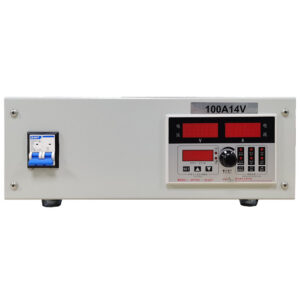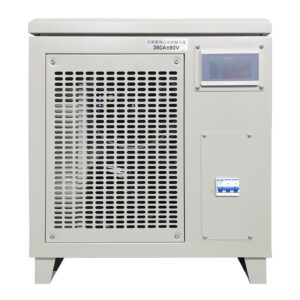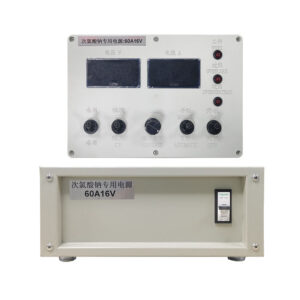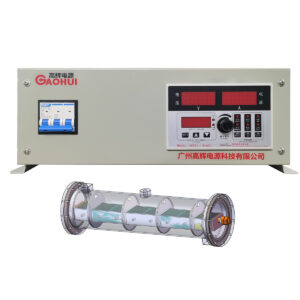
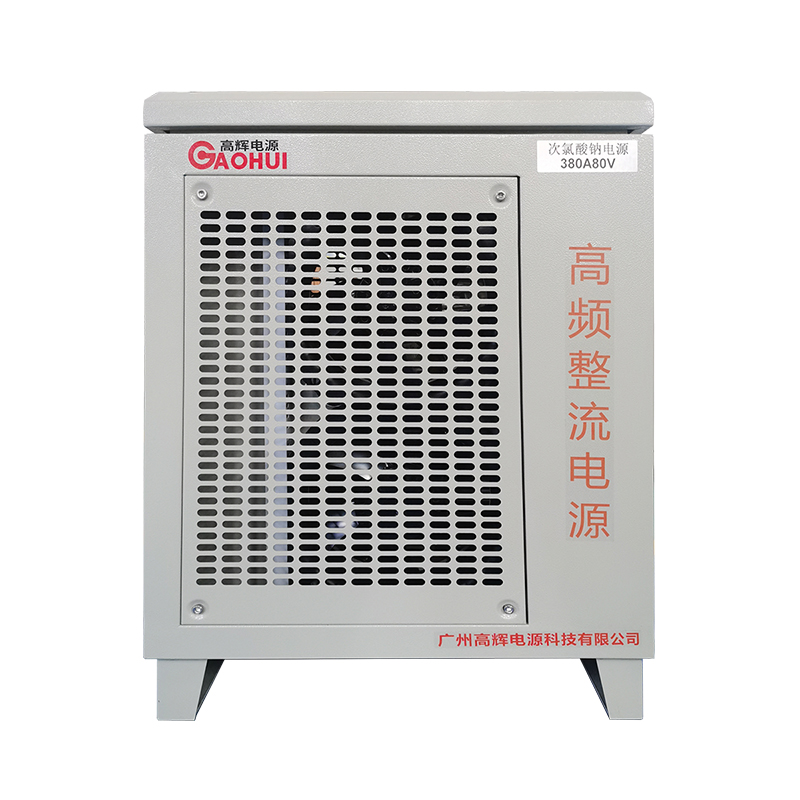
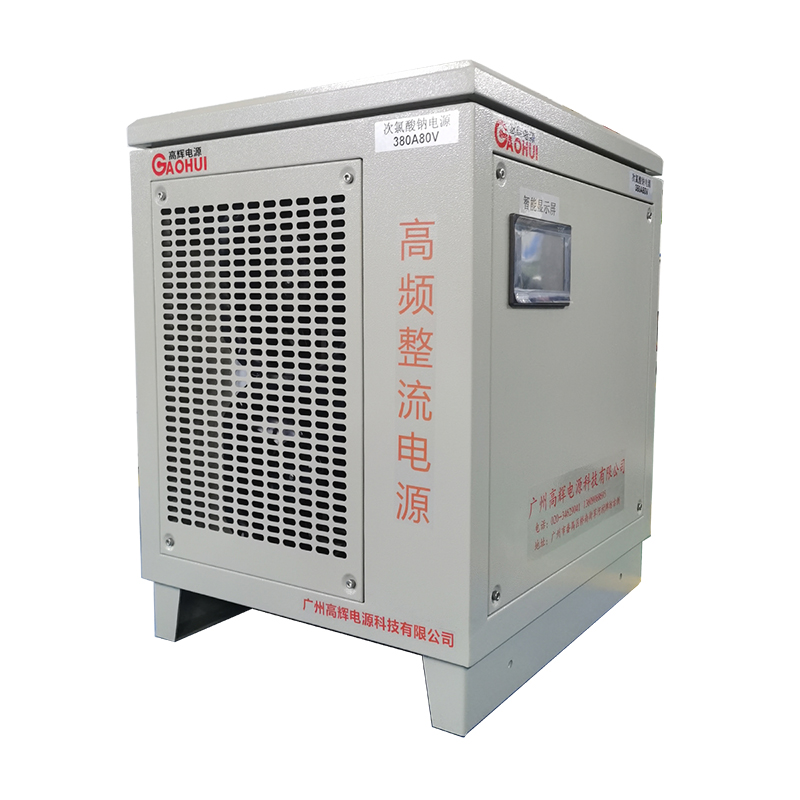
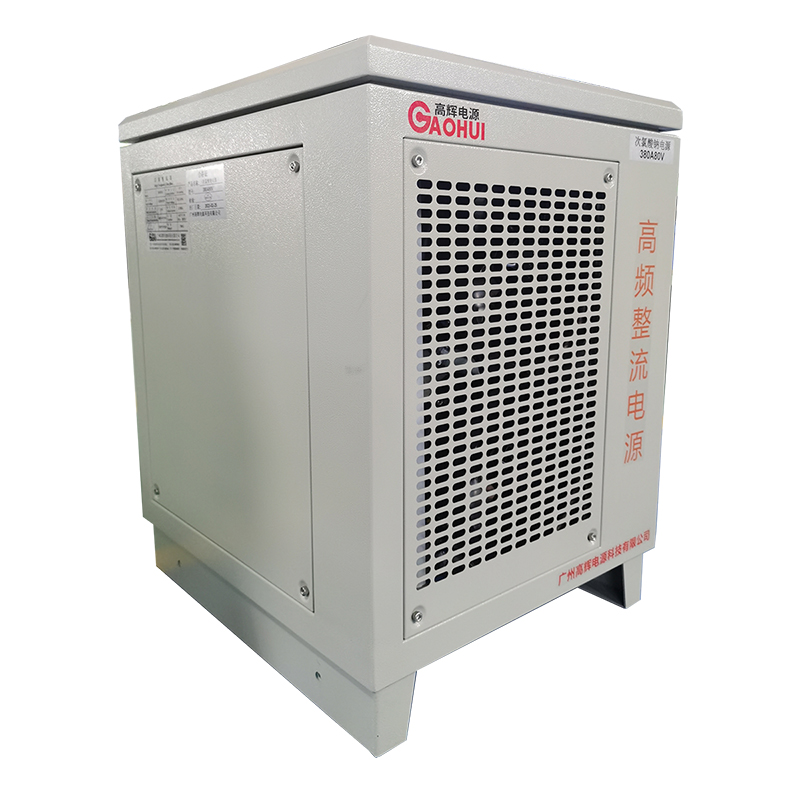
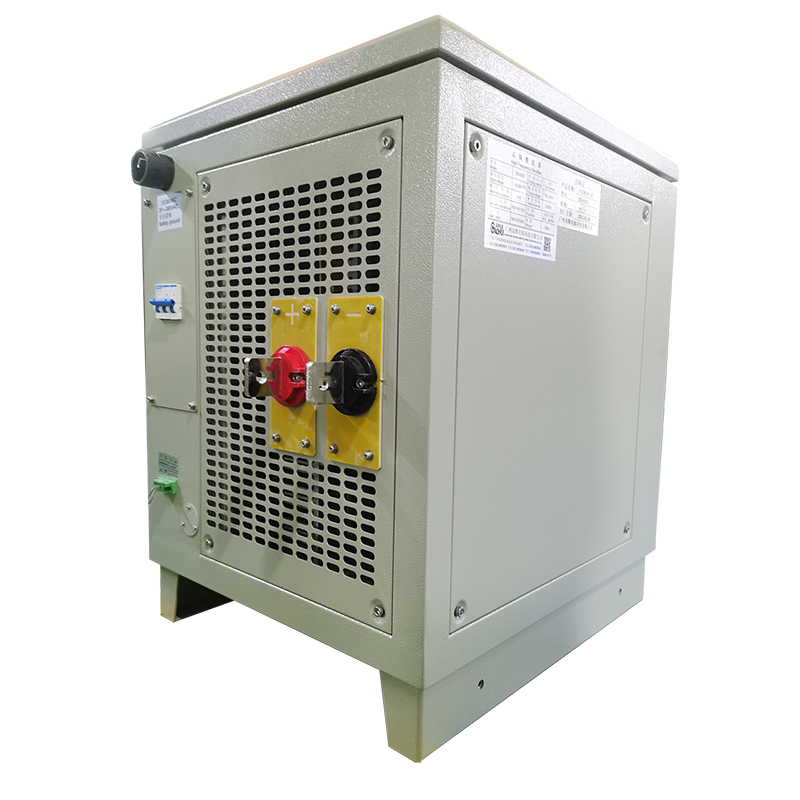
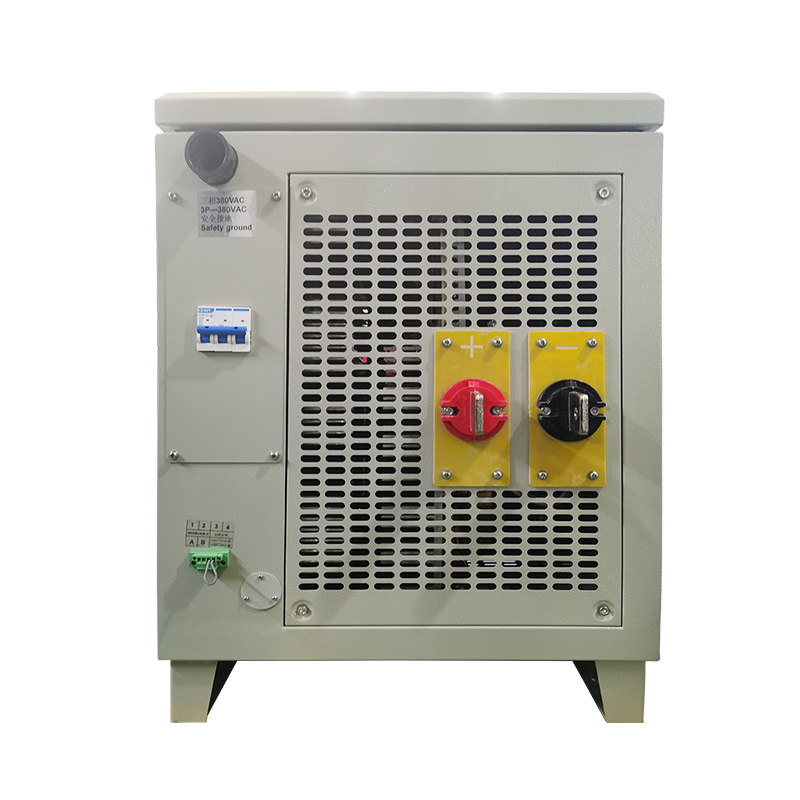
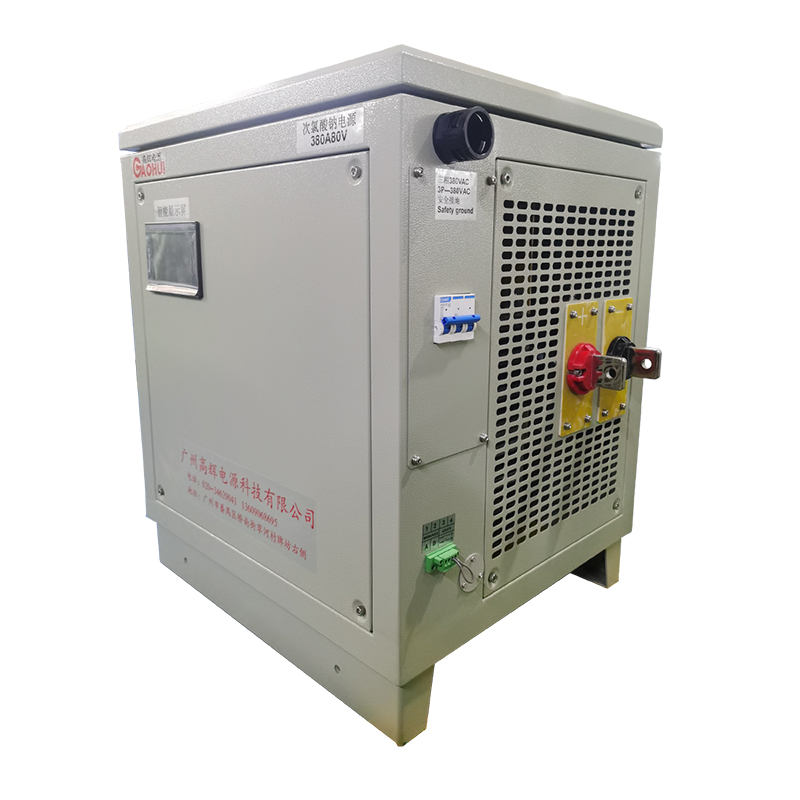
Product Parameters
| Voltage | 24V | |||
| Current | Rated installed power (kW) | Available chlorine production g/h | (L*B*Hmm) | Weight (KG) |
| 50A | 1.2 | 100 | 360*335*160 | 10 |
| 100A | 2.4 | 200 | 400*380*170 | 20 |
| 150A | 3.6 | 300 | 400*380*170 | 20 |
| 200A | 4.8 | 400 | 400*380*170 | 20 |
| 300A | 7.2 | 600 | 500*450*230 | 30 |
| 400A | 9.6 | 800 | 500*450*230 | 30 |
| 500A | 12 | 1000 | 500*450*230 | 30 |
| 750A | 18 | 1500 | 500*450*230 | 30 |
| 1000A | 24 | 2000 | 580*510*690 | 90 |
| 1200A | 28.8 | 2400 | 580*510*690 | 90 |
| 1500A | 36 | 3000 | 580*510*690 | 90 |
Overview
In an electrolytic cell, a diluted sodium chloride solution undergoes a series of electrochemical reactions under the influence of positive and negative electrodes to produce a sodium hypochlorite solution. Sodium hypochlorite is a strong oxidizing agent; it generates hypochlorite ions in aqueous solution and then produces sodium hypochlorite through electrolysis. It possesses the same oxidizing and disinfecting properties as other chlorine derivatives.
Electrode reactions
- Anode: 2Cl⁻ – 2e⁻ → Cl₂↑
- Cathode: 2H⁺ + 2e⁻ → H₂↑
- Overall reaction: NaCl + H₂O Electrolysis → NaClO + H₂↑
Applications
- Electrolysis of 2-5% brine
- Electrolysis via seawater connection
Structure
The water treatment power supply primarily consists of a rectifier-filter circuit, a full-bridge converter circuit, a high-frequency transformer, a high-frequency rectifier-filter circuit, an auxiliary power circuit, and a main control unit. The main control unit circuit mainly comprises phase loss protection, temperature protection, overload protection, short-circuit protection, and a PWM circuit with PI regulation.
The three-phase grid voltage is rectified and filtered after passing through the power switch, yielding a smoothed 520VDC supply for the inverter circuit. The inverter circuit primarily employs high-power MOSFET or IGBT modules to form a full-bridge converter. When the PWM output control signal drives the power modules through isolated drivers, two sets of diagonal transistors conduct alternately. This generates a high-frequency pulse voltage in the primary winding of the high-frequency transformer. The secondary voltage is transformed by the high-frequency transformer, rectified, and then supplies energy to the load.
Specifications
- The power supply can operate in either voltage-regulated current-limited mode or current-regulated voltage-limited mode, with seamless switching between the two states.
- DC output voltage regulation accuracy ranges from 50% to 100%. When input voltage fluctuates by 10% or load changes occur, the output voltage remains stable with regulation accuracy ≤0.5%.
- Incorporates filtering functionality to prevent interference with instruments during power-up, eliminate grid pollution, and mitigate current inrush phenomena.
- Phase Loss Protection: Automatically locks out when any phase is missing from the three-phase AC input. Resumes operation automatically after fault resolution.
- Overcurrent Protection: Automatically enters overcurrent shutdown and alarm state when current exceeds rated value.
- Short-circuit protection: In case of load short-circuit or internal component short-circuit, the circuit breaker automatically disconnects the power supply.
- Over-temperature protection: When abnormal temperatures of semiconductor components (e.g., IGBT, Schottky diodes) reach ≥80°C, the electronic switch on the main control board activates, locking the power supply to effectively protect the unit.
Multifunctional control panel