Electrocoagulation uses controlled DC current to support reactions at iron or aluminum electrodes. The resulting coagulant species can help form flocs for downstream separation, while the actual process response depends on water chemistry, electrode area, current density, mixing and solids handling.
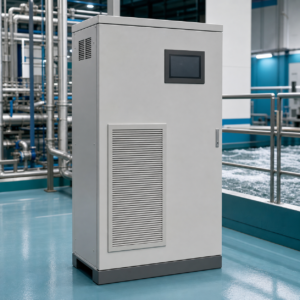
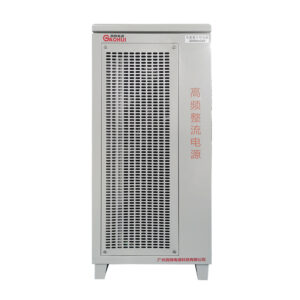
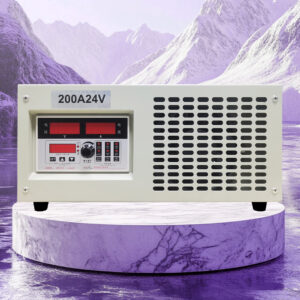
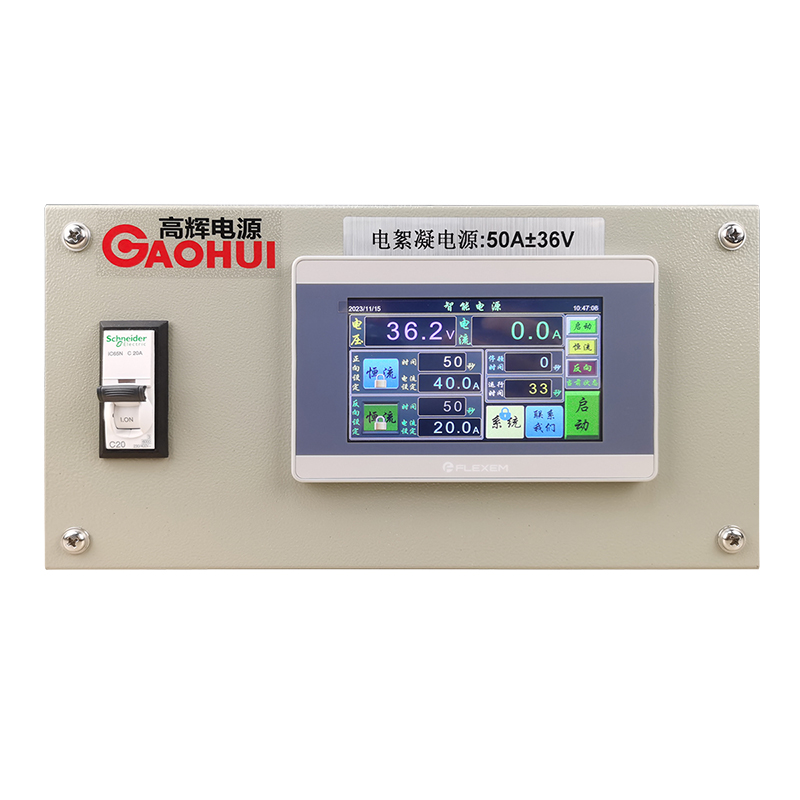
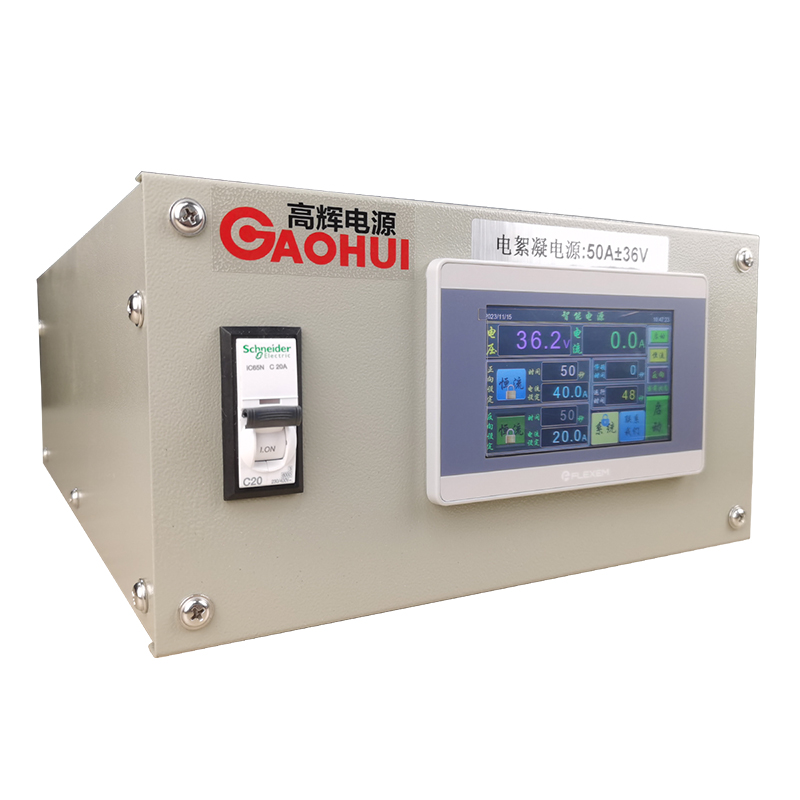
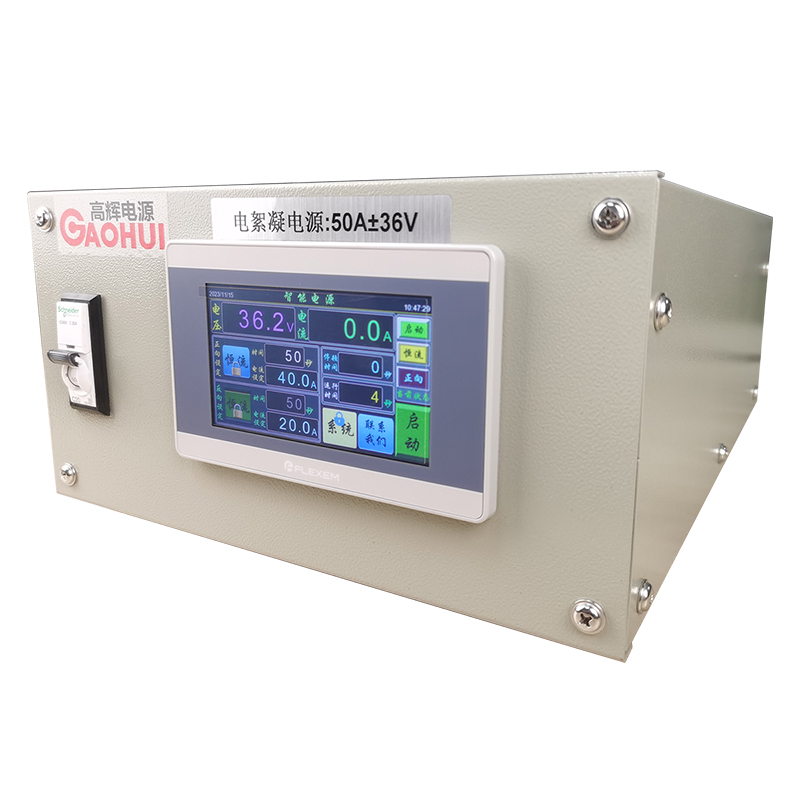
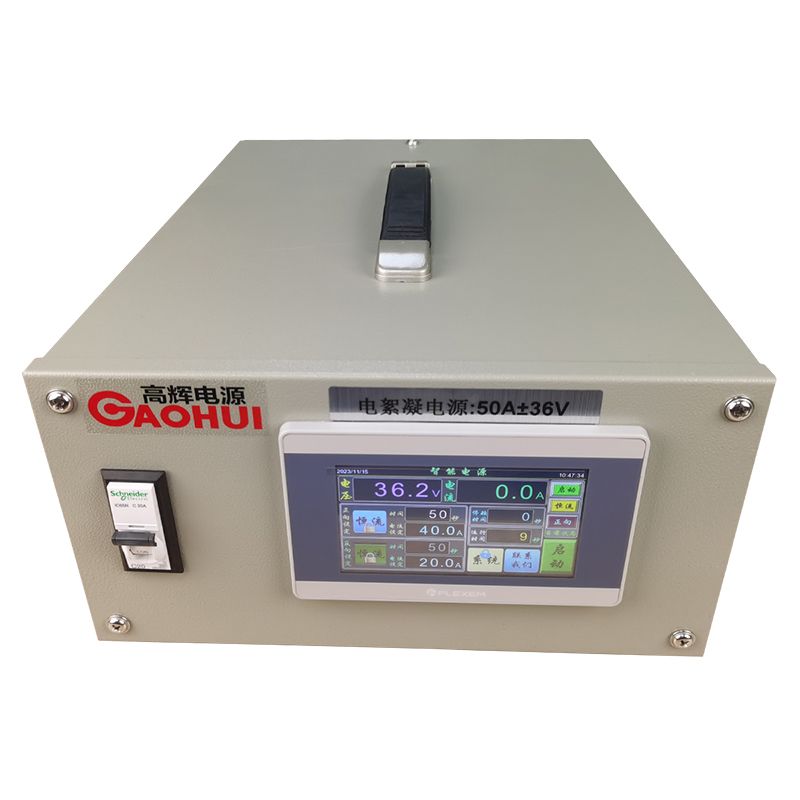
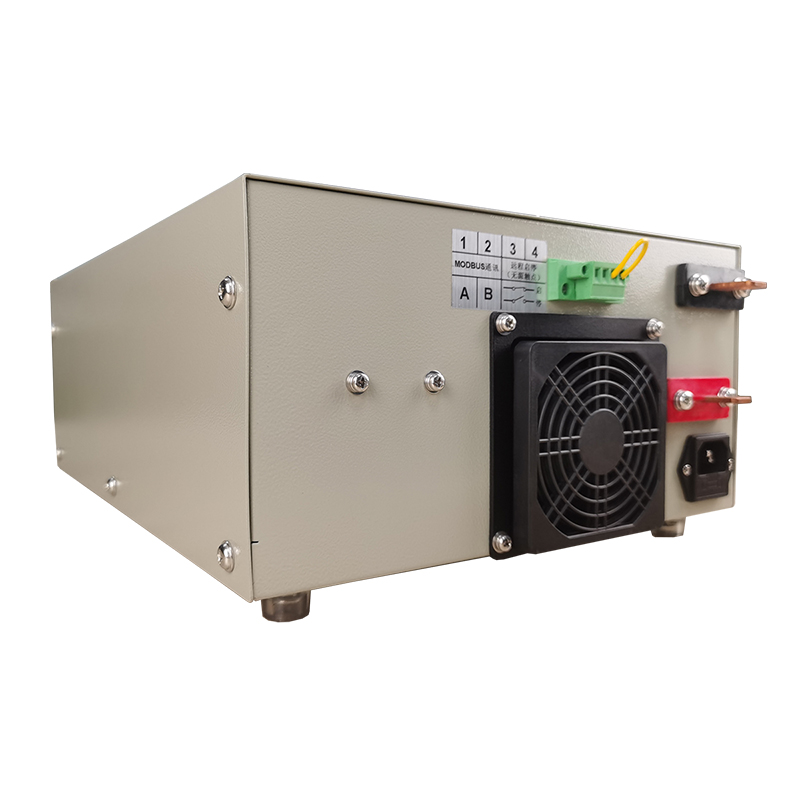
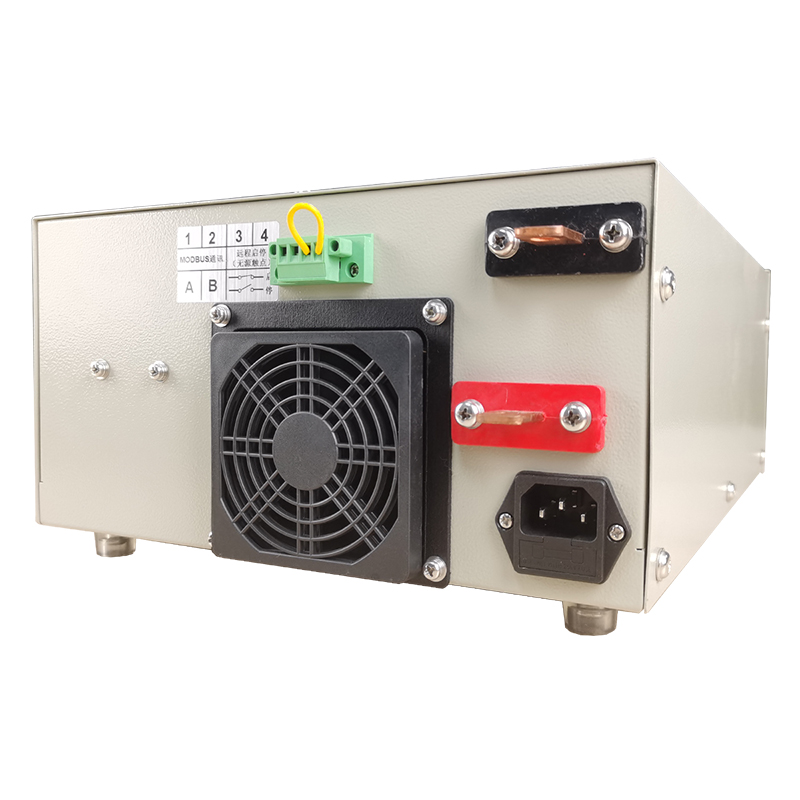
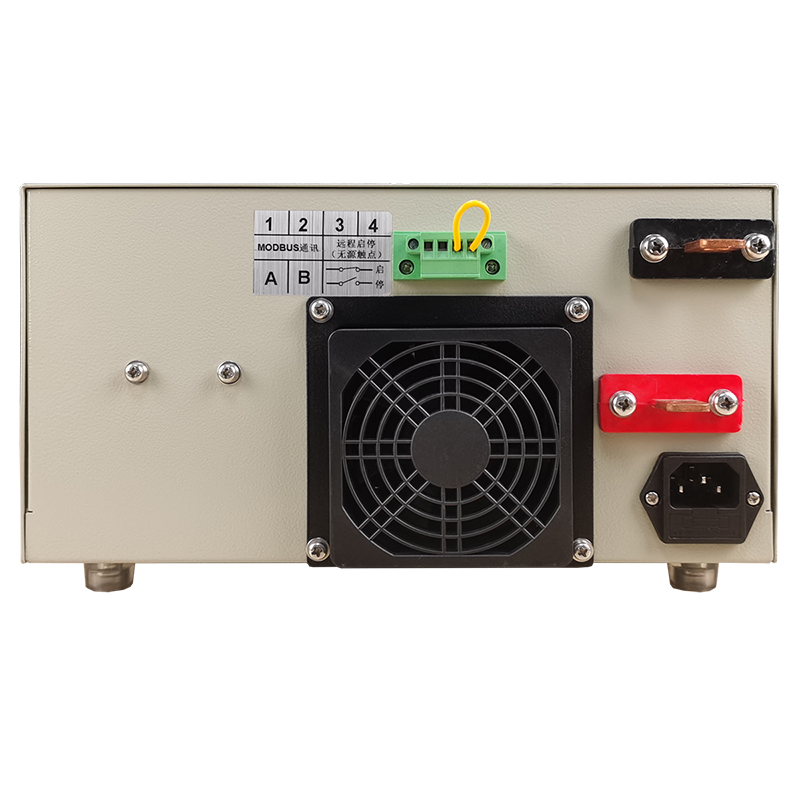
This compact 36V 50A air-cooled rectifier is a reference supply for pilot systems, small treatment cells and modular electrocoagulation skids. It is designed to sit close to the reactor and provide an adjustable operating range for process testing and repeatable operation.
Key functions for compact electrocoagulation systems
- Adjustable DC voltage and current: set the electrical load around electrode area, conductivity and target current density.
- Constant-current or constant-voltage operation: choose the control mode that matches the reactor and pilot data.
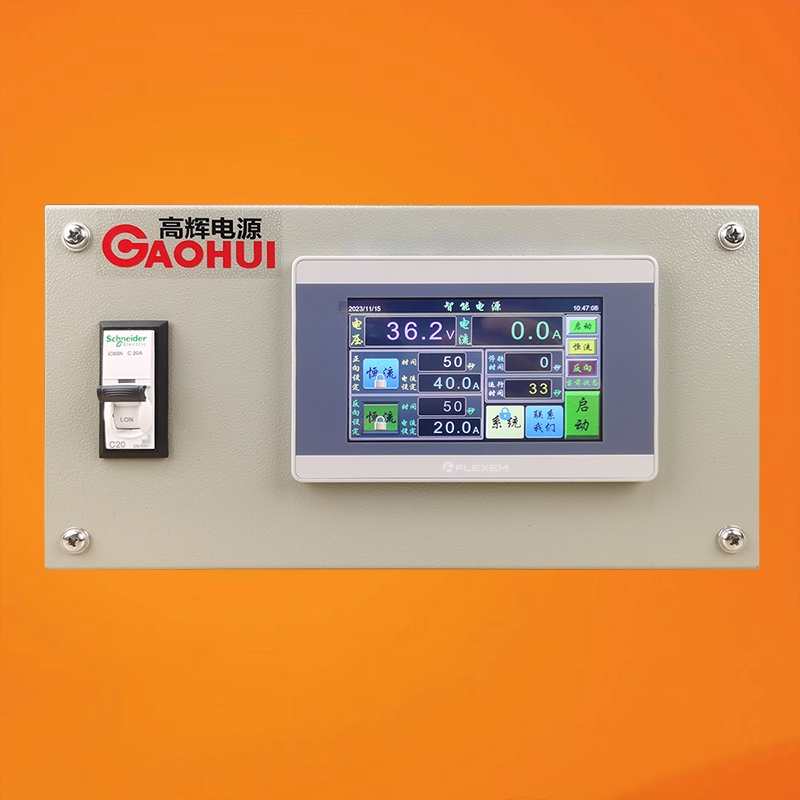
- 4.3-inch local interface: view output values and adjust the working setpoint at the cabinet.
- Forced-air cooling: remove heat during normal operation when ventilation clearance is available.
- External control integration: discuss start/stop, setpoint, run feedback and alarm signals for the skid.
- Optional reversal or timing logic: configure only when electrode maintenance or the process sequence requires it.
These functions control the electrical input; they do not guarantee a fixed phosphorus, COD or solids-removal result.
Reference configuration
| Item | Reference configuration |
|---|---|
| Rated DC output | 0–36 V, 0–50 A |
| Rated DC power | 1.8 kW |
| Typical AC input direction | Three-phase 380/415 V reference input |
| Cooling | Forced-air cooling |
| Local operation | 4.3-inch interface |
| Installation | Compact horizontal floor or rack support |
| Approximate enclosure | 270 × 380 × 160 mm |
| Approximate weight | 9.2 kg |
The reference rating does not define flow capacity. Final selection should check electrode material, effective area, gap, conductivity, current density and treatment cycle.
Connecting the supply to the cell
The positive and negative DC outputs connect to the electrode busbars using conductors sized for the continuous current and cable distance. The reactor should confirm liquid level, circulation and downstream separation conditions before output is enabled.
For a compact pilot cell, adjustable output helps the process team compare current density and treatment time without changing the power hardware. Any reversal, timing or interlock sequence should be coordinated with the electrode strategy and complete skid.
Selection information
- Electrode material, quantity, effective area and gap
- Water conductivity, pH and temperature range
- Target current density or pilot current and voltage
- Cell connection and cable distance
- Batch or continuous flow and treatment time
- Required local, remote or PLC control signals
Compare this compact supply with our electrochemical wastewater rectifier range. If the process requires a higher-voltage series-connected oxidation reactor, review the 250A 120V electrocatalytic oxidation rectifier instead.
Is 50A enough for every electrocoagulation cell?
Not necessarily. Required current depends on electrode area, current density, conductivity and the operating cycle. Pilot data should establish the useful range.
Can the unit run constant voltage?
Constant-current or constant-voltage operation can be configured around the reactor and process strategy.
Is automatic reversal included by default?
No. Reversal is added only when the electrode and maintenance strategy require it.
Request a cell review
Send the electrode drawing, water conductivity, pilot readings, treatment cycle, available AC supply and control requirements. We can then confirm the current and voltage envelope for the complete electrocoagulation cell.