
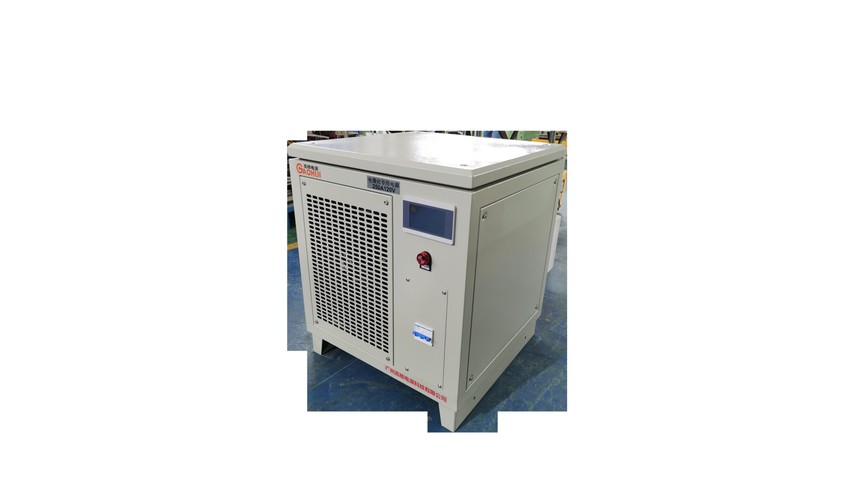
Water treatment is a cornerstone of public health, environmental sustainability, and industrial operations worldwide. From municipal drinking water plants to industrial wastewater facilities, the processes involved are complex and demand equipment of the highest caliber. At the heart of many advanced electrochemical water treatment technologies – such as electrochlorination, electrocoagulation, and electrodialysis – lies the direct current (DC) power supply, specifically the industrial rectifier. For high-volume applications, a robust power solution like the 3000A 48V air-cooled rectifier is not merely a component; it is a critical investment in operational continuity and treatment efficacy.
In the demanding context of water treatment, where uptime is paramount and environments are inherently harsh, the selection of a rectifier system is dictated by three primary factors: unparalleled reliability, robust corrosion resistance, and sophisticated heat management. This article delves into why these attributes are non-negotiable for a 3000A 48V air-cooled rectifier, ensuring optimal performance and longevity in the most challenging conditions.
The Imperative of Unwavering Reliability
For any water treatment plant, downtime is not just an inconvenience; it can lead to severe operational disruptions, regulatory non-compliance, and even public health risks. A 3000A 48V rectifier, powering crucial electrochemical processes, must deliver continuous, stable DC output under varying load conditions. Reliability in such a system is engineered from the ground up. It begins with the selection of high-grade components – including silicon-controlled rectifiers (SCRs) or insulated-gate bipolar transistors (IGBTs), high-capacity transformers, and industrial-grade capacitors – sourced from reputable manufacturers. These components are often specified with substantial derating factors to ensure they operate well within their design limits, significantly extending their lifespan and enhancing stability.
Furthermore, advanced control systems and comprehensive protection features are integral to reliability. Modern rectifiers incorporate sophisticated digital signal processors (DSPs) to maintain precise voltage and current regulation, guarding against fluctuations that could impair treatment efficiency. Built-in safeguards against overcurrent, overvoltage, short circuits, and thermal overload provide multi-layered protection, automatically shutting down the unit or alerting operators to prevent damage. Redundant design architectures, such as N+1 modularity for critical components (though less common in a single 3000A unit, the internal design emphasizes robust individual components), and rigorous factory acceptance testing under simulated load conditions further assure a rectifier’s capacity to perform flawlessly over years of continuous operation.
Fortifying Against Corrosion: A Battle Against the Elements
The environment within a water treatment facility is notoriously corrosive. The presence of moisture, chlorine gas, ozone, hydrogen sulfide, and various other aggressive chemicals creates an atmosphere that can rapidly degrade standard industrial equipment. For a rectifier, particularly one operating at 3000A, exposure to these elements can lead to component failure, short circuits, and compromised safety.
Superior corrosion resistance is therefore a fundamental design consideration. Rectifiers destined for water treatment must feature robust enclosures, often constructed from marine-grade aluminum, stainless steel, or heavy-gauge, powder-coated steel with specific NEMA 4X (or IP65 equivalent) ratings. These enclosures are sealed with durable gaskets to prevent the ingress of water, dust, and corrosive gases. Internally, printed circuit boards (PCBs) are typically coated with conformal coatings – thin polymeric films – to shield sensitive electronic components from moisture and chemical attack. Connectors, busbars, and fasteners are also chosen for their inherent corrosion resistance, often utilizing nickel-plated copper, brass, or stainless steel alloys. Strategic placement of vents with filters and the use of positive pressure systems in some designs can further minimize the entry of corrosive air, extending the operational life of the internal electronics.
Mastering Heat: The Efficacy of Air Cooling for 3000A 48V Systems
Generating 3000 Amperes of DC current at 48 Volts inevitably produces a significant amount of heat. Efficient heat management is critical not only for maintaining the rectifier’s operational efficiency but also for prolonging the lifespan of its internal components. Elevated temperatures accelerate the degradation of semiconductors, capacitors, and insulation materials, leading to premature failure.
For a 3000A 48V system, air cooling offers a practical and effective solution, balancing performance with maintenance simplicity and cost-effectiveness compared to complex liquid cooling systems. The design focuses on maximizing heat dissipation through intelligent airflow and advanced heat sink technology. High-efficiency aluminum or copper heat sinks, often custom-designed with optimized fin geometries, are directly coupled to the power semiconductors. Powerful, industrial-grade fans, frequently equipped with variable speed control, are strategically placed to draw cool ambient air into the enclosure, channel it over the heat-generating components, and exhaust the warmed air efficiently.
Modern air-cooled systems also incorporate advanced thermal management strategies, including multiple temperature sensors that continuously monitor critical component temperatures. This data is fed back to the control system, allowing for dynamic adjustment of fan speeds to maintain optimal operating temperatures while minimizing energy consumption and acoustic noise. Furthermore, careful attention to internal layout ensures unimpeded airflow paths, preventing hot spots and ensuring uniform cooling across the entire power train. Integrated air filters prevent dust and debris accumulation on heat sinks, maintaining cooling efficiency over time and reducing maintenance requirements.
Conclusion
The role of a 3000A 48V air-cooled rectifier in modern water treatment facilities cannot be overstated. It is the powerhouse that drives essential electrochemical processes, directly impacting water quality, environmental compliance, and operational economics. The synergy of unwavering reliability, robust corrosion resistance, and intelligent air-cooled heat management transforms a mere power supply into a strategic asset. Investing in a rectifier engineered with these core principles ensures not only consistent performance and extended operational life but also contributes significantly to the overall efficiency and sustainability of critical water treatment infrastructure. For plant managers and engineers, selecting a rectifier that embodies these characteristics is a clear path to achieving their operational goals with confidence and peace of mind.