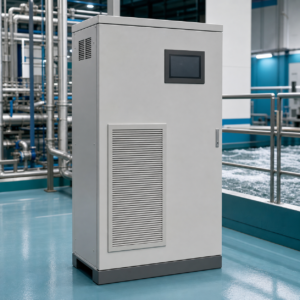
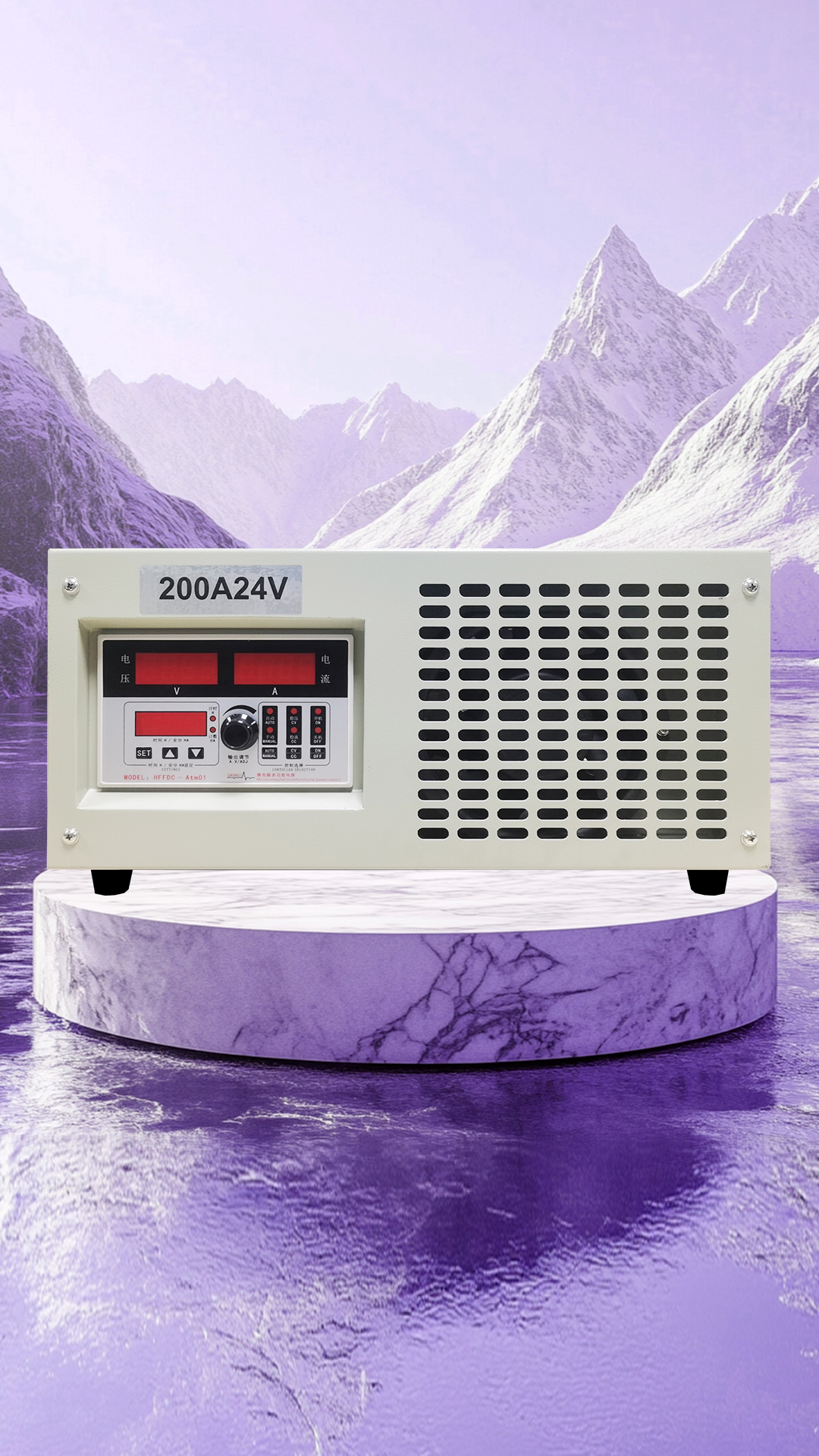
Electrocoagulation uses controlled DC current at iron or aluminum electrodes to support coagulant generation and floc formation. The rectifier controls electrical loading, while water chemistry, electrode area, mixing and downstream separation determine the treatment response.
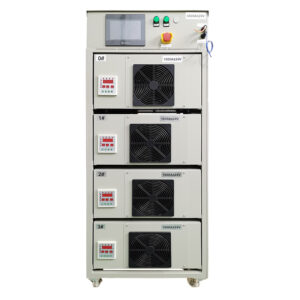
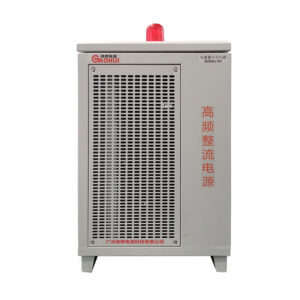
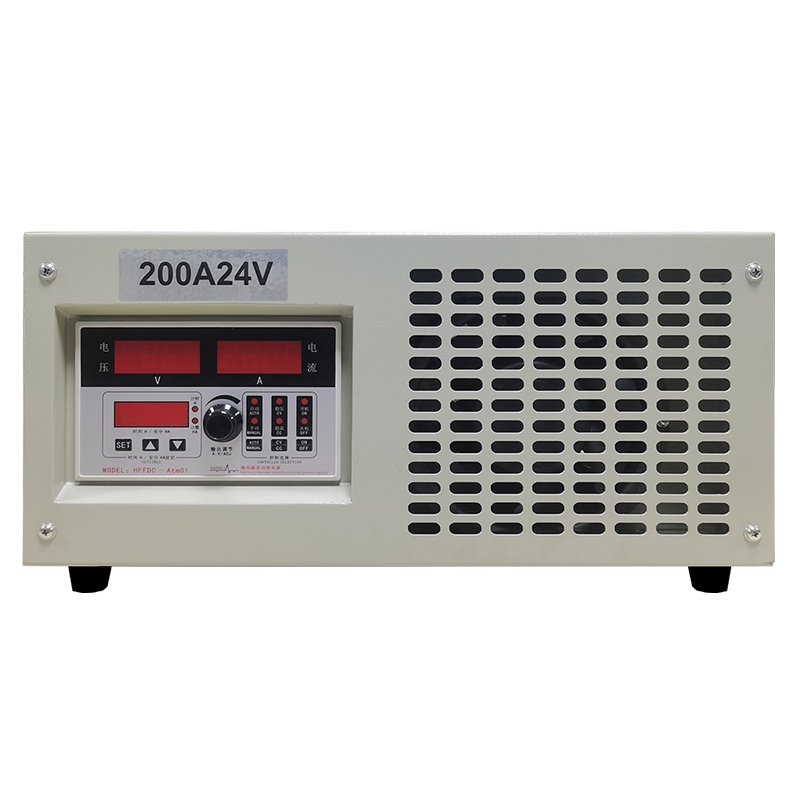
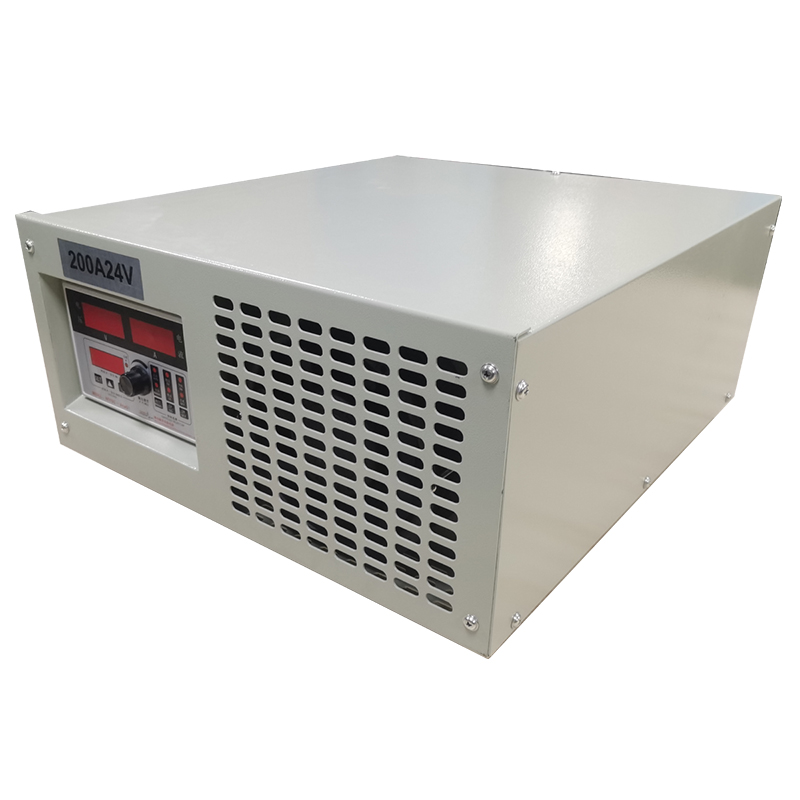
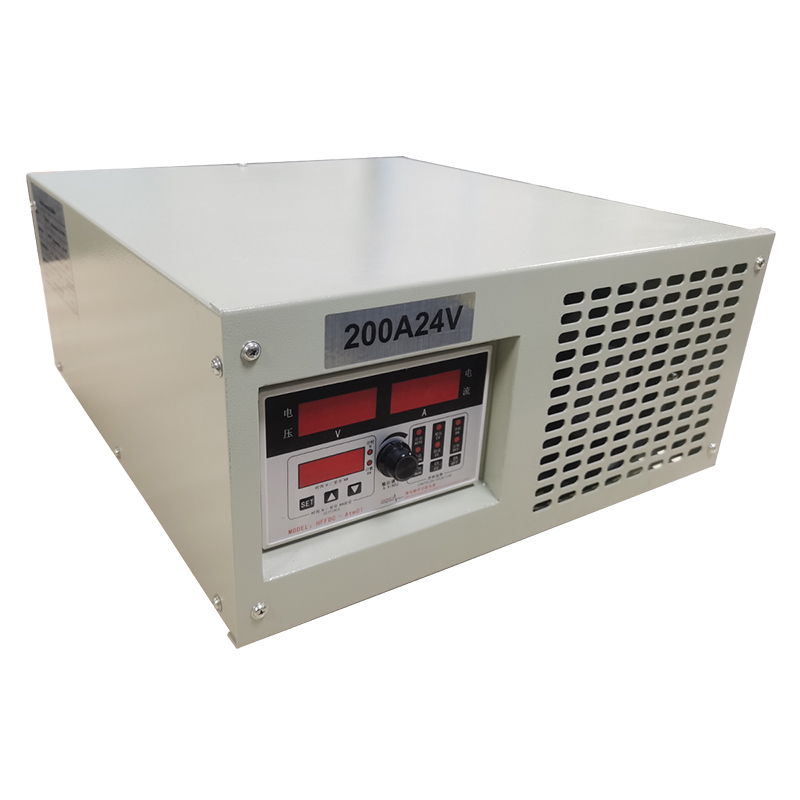
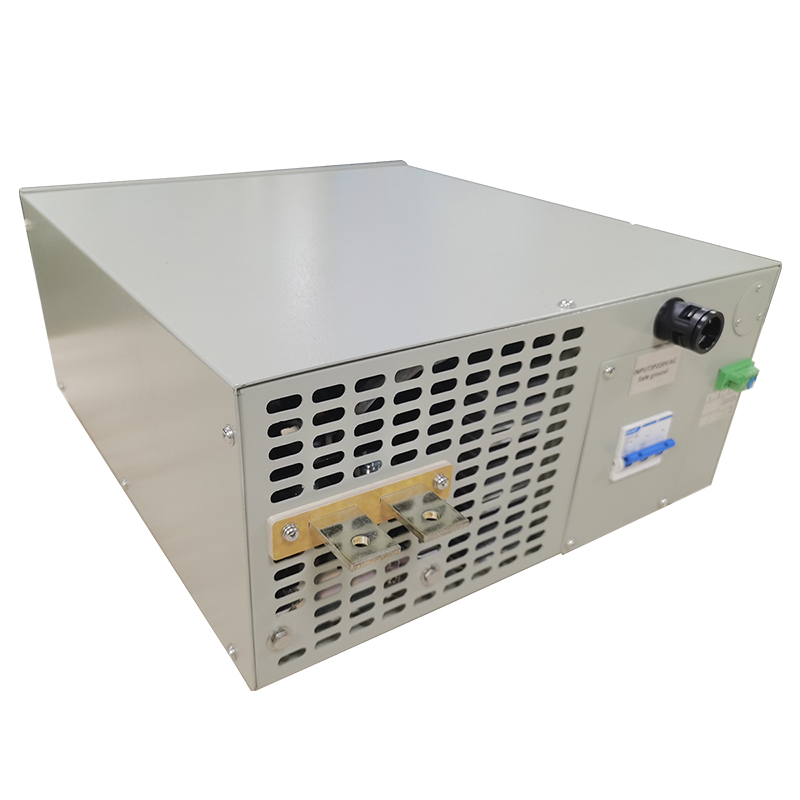
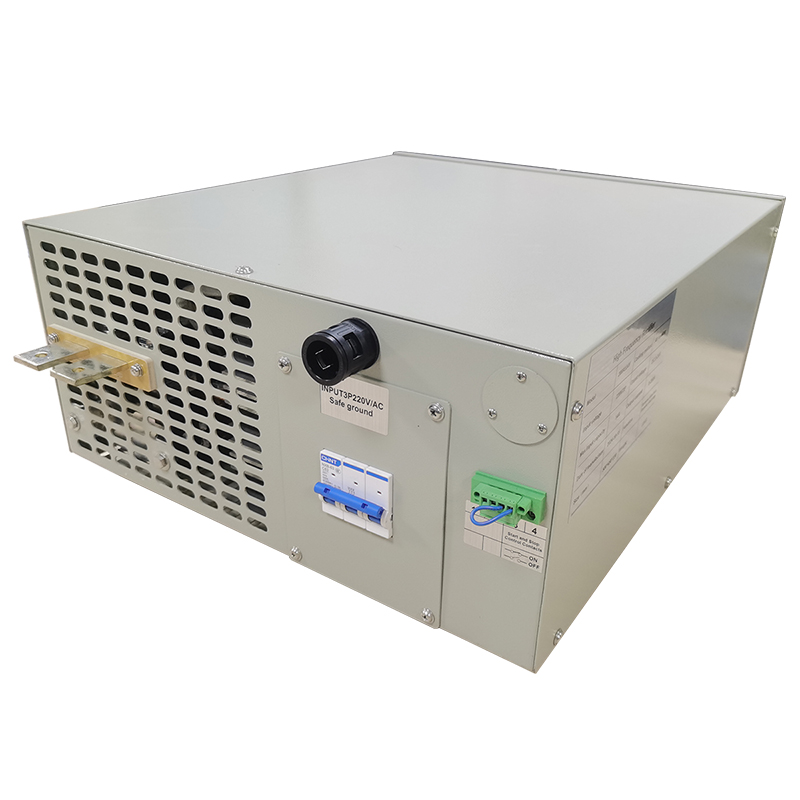
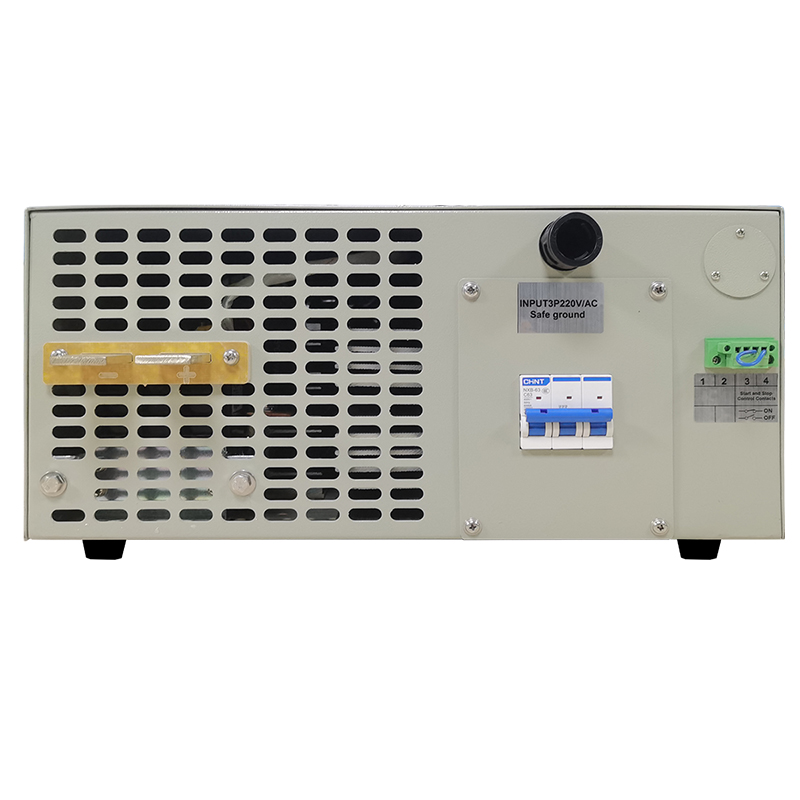
This 24V 200A air-cooled rectifier is a reference configuration for compact and medium electrocoagulation cells. The horizontal cabinet can sit on a floor support or rack near the treatment skid, with smart control functions available for coordinated operation.
Key functions for the treatment system
- Adjustable DC voltage and current: set the load around electrode area, conductivity and target current density.
- Constant-current or constant-voltage operation: select the mode that fits the reactor and pilot data.
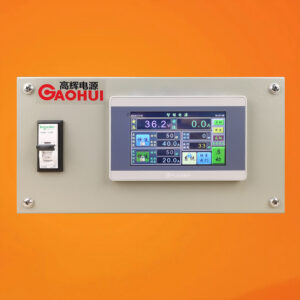
- Smart local control: monitor output values and adjust the working setpoint at the cabinet.
- Start/stop and alarm integration: connect the supply with pumps, levels, flow and skid safety signals.
- Forced-air cooling: remove heat during normal operation when ventilation clearance is provided.
- Optional timing or reversal: configure only when the electrode and maintenance strategy requires it.
These functions manage the electrical input and do not guarantee a fixed removal percentage or compliance result.
Reference configuration
| Item | Reference configuration |
|---|---|
| Rated DC output | 0–24 V, 0–200 A |
| Rated DC power | 4.8 kW |
| Typical AC input direction | Three-phase 380/415 V reference input |
| Cooling | Forced-air cooling |
| Control | Smart local interface and configurable external signals |
| Installation | Horizontal floor or rack support |
| Approximate enclosure | 450 × 500 × 230 mm |
| Approximate weight | 33 kg |
Final ratings should be checked against electrode area, current density, conductivity, connection method and treatment cycle.
Connecting and selecting the supply
Connect the DC outputs to the electrode busbars with conductors sized for continuous current and cable distance. Confirm liquid level, circulation, mixing and downstream separation before enabling output.
Select current from effective electrode area and target current density, then verify voltage across electrode gaps, connections and the complete reactor. Include conductivity variation, electrode ageing and the longest operating cycle.
See the electrochemical wastewater rectifier range for other output envelopes. For a higher-voltage series-connected oxidation load, compare the 250A 120V electrocatalytic oxidation rectifier.
Can the 200A rating be selected from flow rate alone?
No. Electrode area, current density, conductivity, cell connection and treatment time must also be checked.
Is smart control the same as automatic reversal?
No. Smart control can coordinate operation, while reversal is a separate function configured only when the electrode strategy needs it.
Can this supply guarantee phosphorus removal?
No. Results depend on water chemistry, electrode consumption, reaction time and downstream solids separation.
Request a project configuration
Send the electrode drawing, conductivity range, pilot current and voltage, treatment cycle, AC input and control requirements. We can then confirm the electrical envelope and function combination for the complete cell.