
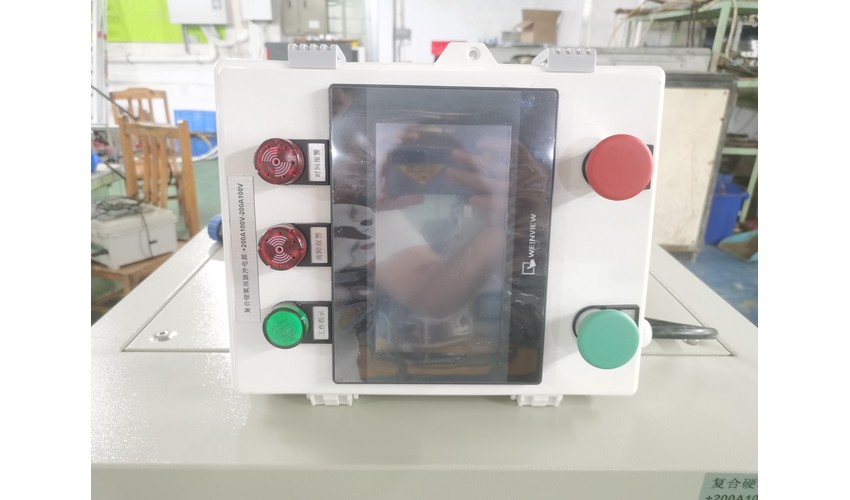
In the modern industrial landscape, where precision meets high-intensity output, the demand for stable, high-amperage direct current (DC) has reached unprecedented levels. Whether in electroplating, hydrogen electrolysis, or heavy-duty arc welding, the power supply is the beating heart of the process. Among these, the 2000A 12V water-cooled EC (Electrochemical) Power system stands as a critical component, designed to bridge the gap between immense current density and operational longevity.
The Architecture of High-Current Density
The 2000A 12V configuration represents a unique engineering challenge. Providing 24kW of total power requires not only sophisticated semiconductor switching but also a robust thermal management strategy. Unlike air-cooled systems, which are prone to dust accumulation and ambient temperature fluctuations, the water-cooled EC power system utilizes a liquid-to-liquid or liquid-to-air heat exchange mechanism. This allows for a significantly higher power density, enabling the unit to maintain its 2000A output within a smaller, more modular footprint. By isolating the critical electronics from the surrounding environment, manufacturers can ensure that the internal components operate within an ideal thermal window, regardless of the harshness of the factory floor.
Heat Management: Beyond Simple Dissipation
Thermal fatigue is the silent killer of industrial power supplies. When a system pushes 2000A, the I²R (resistive) heating in the busbars and MOSFET/IGBT stages is substantial. In an air-cooled system, the thermal resistance between the component junction and the ambient air is often too high to prevent localized ‘hot spots.’
Our advanced water-cooled architecture utilizes micro-channel cold plates that facilitate direct contact cooling. By employing high-thermal-conductivity materials such as copper or aluminum-silicon carbide (AlSiC), the heat is transferred away from the junction point into a circulating coolant loop (typically a water-glycol mixture). This approach offers several operational advantages:
- Precise Thermal Regulation: By modulating coolant flow rate and inlet temperature, the power supply can maintain a near-constant internal temperature, drastically extending the Mean Time Between Failures (MTBF).
- Reduced Thermal Cycling: By minimizing temperature swings, we mitigate the mechanical stress caused by the expansion and contraction of PCB traces and solder joints, effectively preventing micro-cracking.
- Noise Reduction: The elimination of high-speed cooling fans reduces both acoustic pollution and the ingestion of airborne contaminants into the electronics cabinet.
Corrosion Resistance: The Achilles’ Heel of Industrial Power
Operating in electrochemical environments presents a unique threat: atmospheric corrosion. Many industrial facilities are saturated with acid mists, alkaline vapors, or high humidity—all of which are detrimental to copper busbars and delicate control circuitry. A standard power supply would succumb to oxidation or electrolytic corrosion within months.
To combat this, our 2000A 12V EC power systems are designed with a ‘Total Isolation’ philosophy. The cooling loops are constructed from high-grade stainless steel and corrosion-resistant alloys, preventing galvanic corrosion between dissimilar metals. Furthermore, the electronic control modules are housed in NEMA-rated enclosures that utilize conformal coating on all PCBs. This dual-layer defense—hermetic sealing for power components and chemical-resistant barriers for control logic—ensures that the equipment remains operational even in the most aggressive chemical processing environments.
Reliability Through Intelligent Control
The reliability of an EC power system is not merely a function of its physical robustness; it is also a result of its intelligence. Modern 2000A systems incorporate real-time monitoring of cooling performance. If a pump stalls or if a flow restriction is detected, the system does not wait for a catastrophic failure. Instead, the intelligent controller triggers a soft-shutdown or derates the current to maintain safe operating parameters while alerting the operator.
Furthermore, these systems feature advanced diagnostic suites that track internal temperatures across multiple points. By monitoring the thermal gradient between the cooling plate and the semiconductors, the system can predict component degradation before it leads to downtime. This predictive maintenance capability is essential for industrial operations where downtime costs can reach thousands of dollars per hour.
Optimizing for High-Efficiency Operations
Efficiency in a 12V, 2000A system is critical. Every 1% of efficiency lost translates to 240W of heat that must be removed by the cooling system. Through the use of advanced wide-bandgap (WBG) materials such as Silicon Carbide (SiC) in the power stages, our systems significantly reduce switching losses compared to traditional Silicon-based IGBTs. The combination of high-efficiency switching and superior water cooling results in an overall system efficiency that consistently exceeds 94%. This reduction in wasted energy not only lowers operating costs but also reduces the burden on the facility’s cooling infrastructure.
Implementation and Integration
Integrating a high-current system into an existing facility requires careful consideration of the power distribution architecture. For a 2000A 12V installation, the busbar design is just as important as the power supply itself. The use of laminated busbars is recommended to minimize parasitic inductance, which can lead to voltage spikes that stress the capacitors and switching components. Our systems come equipped with modular connection points, allowing for seamless integration into existing copper or aluminum bus networks.
Moreover, the scalability of the water-cooled design allows for parallel operation. By utilizing a master-slave configuration, facilities can scale their current output to 4000A, 6000A, or beyond, all while sharing a common cooling loop. This modularity ensures that the investment is future-proof, allowing businesses to grow their production capacity without discarding their existing power infrastructure.
Conclusion: The Strategic Value of Robust Power
Choosing a 2000A 12V water-cooled EC power system is an investment in the long-term reliability of an industrial process. When heat management is solved through liquid cooling, and when corrosion resistance is built into the core material selection, the power supply ceases to be a consumable item and becomes a foundational asset.
Reliability is the sum of many small, well-engineered details: the efficiency of the cold plate, the integrity of the seals, the intelligence of the thermal monitoring sensors, and the protection of the control logic against environmental agents. By prioritizing these elements, industrial operators can move past the recurring cycle of power supply repairs and toward a future of continuous, predictable, and high-performance manufacturing.
In the final analysis, the difference between a system that serves and a system that fails lies in its resilience. For the demanding world of electrochemical processing, the water-cooled 2000A solution is not just an option—it is the professional standard for those who cannot afford to have the power go out.