
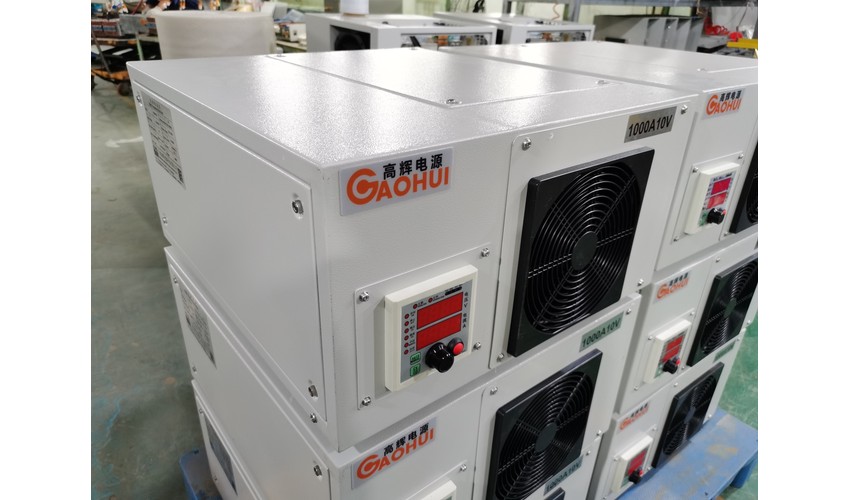
In the modern industrial landscape, the efficiency of surface preparation and metal finishing processes is directly tethered to the stability and performance of the power delivery systems employed. Among the most demanding applications is the use of electrolytic scale removal systems, which require precise, high-current delivery to effectively clean metal substrates. For heavy-duty industrial applications, the 3000A 48V water-cooled power supply has emerged as the gold standard. This article examines the technical requirements, engineering considerations, and operational benefits of deploying high-capacity power solutions in scale removal processes.
The Critical Role of High-Amperage Power Supplies
Scale removal—specifically electrolytic descaling—relies on the principle of electrochemical conversion to strip oxides, mill scale, and contaminants from the surface of metal workpieces. To achieve consistent results across large surface areas or continuous production lines, the power supply must be capable of delivering high amperage (3000A) at a controlled voltage (48V).
Voltage stability and current density are the primary drivers of throughput. When the power supply lacks the necessary headroom, the process becomes inconsistent, leading to uneven descaling and potential metallurgical defects. The 3000A 48V architecture provides the ideal balance of electrochemical force to drive the dissociation of oxides without damaging the base metal, making it an essential component for high-volume manufacturing environments.
Advanced Heat Management: The Water-Cooled Imperative
Thermal management is the most significant challenge in high-current power electronics. A system operating at 3000A generates substantial internal heat due to resistance, even with high-efficiency switching topologies. Traditional air-cooled systems often reach their limits in industrial environments where ambient temperatures are high and airborne particulate matter is abundant.
Water-cooled systems offer a transformative advantage in this context. By circulating coolant directly through the heat sinks of power modules and transformers, these systems can maintain an optimal junction temperature, which is directly linked to the lifespan of electronic components.
- High Power Density: Water-cooled designs allow for a significantly smaller footprint. Because water has a higher heat capacity than air, these power supplies can pack 3000A of output into a cabinet size that would be impossible with forced-air cooling.
- Elimination of Contaminant Ingress: Air-cooled systems require intake vents, which draw in metallic dust, moisture, and corrosive vapors—common byproducts of scale removal processes. A water-cooled, sealed-cabinet design isolates sensitive electronics from the harsh environment, drastically reducing maintenance intervals and the risk of short-circuiting.
- Thermal Stability: By maintaining a consistent temperature, the internal resistance of the power supply remains stable, ensuring that the 48V output remains precise regardless of the duty cycle. This thermal consistency prevents ‘drift’ in the descaling process, ensuring every batch meets rigorous quality standards.
Corrosion Resistance and Reliability in Harsh Environments
Electrolytic scale removal systems inherently operate in environments where corrosive electrolytes and moisture are present. A failure in the power supply due to corrosion can lead to catastrophic downtime. Consequently, professional-grade 3000A 48V systems are engineered with specific material science considerations:
- NEMA/IP Rated Enclosures: The cabinets housing the power electronics are typically constructed from high-grade stainless steel or powder-coated aluminum, designed to withstand both physical impact and chemical degradation.
- Encapsulated Magnetics: The internal transformers and inductors are often encapsulated in epoxy resins or specialized thermal-conductive materials to prevent oxidation and moisture penetration.
- Corrosion-Resistant Cooling Loops: The water-cooling infrastructure itself is a point of failure if not handled correctly. Top-tier systems utilize copper or stainless steel tubing, preventing galvanic corrosion within the cooling circuit and ensuring that coolant remains pure and free of debris that could clog narrow passages.
Reliability is not merely about the components; it is about the design architecture. Industrial-grade power supplies utilize modularity, allowing maintenance teams to hot-swap individual power stages without shutting down the entire 3000A array. This redundancy is vital for 24/7 manufacturing operations where every minute of downtime incurs significant financial loss.
Achieving Precision Control: The 48V Advantage
While the 3000A capacity handles the current demand, the 48V threshold is deliberate. In electrolytic descaling, the voltage determines the rate of electron transfer. If the voltage is too low, the process is sluggish; if too high, it may cause pitting or hydrogen embrittlement.
Modern 3000A 48V power supplies integrate sophisticated microprocessor control systems. These units allow operators to perform:
* Constant Current (CC) Mode: Maintaining a steady current flow despite changes in the electrolyte concentration or electrode distance, ensuring uniform scale removal.
* Pulsed Output Capability: Many modern systems allow for pulsed voltage output, which can effectively break up difficult, stubborn scale layers while reducing the overall thermal load on the electrolyte bath.
* Remote Monitoring and Integration: Industrial IoT (IIoT) capabilities allow plant managers to monitor voltage and current signatures in real-time, predicting potential issues before they manifest as process failures.
Best Practices for Installation and Maintenance
For a system providing 3000A, the integration process is as important as the hardware itself. The following practices are essential for long-term reliability:
- Coolant Quality Management: Use deionized water with anti-corrosion additives in the closed-loop system. Regularly monitor the pH levels and conductivity of the coolant to prevent bio-fouling or mineral buildup in the heat exchangers.
- Busbar Integrity: At 3000A, even a slight increase in resistance at a connection point can cause massive heat buildup. Busbars should be constructed of high-purity copper, silver-plated at contact points, and torqued to exact specifications to prevent localized hotspots.
- Environmental Sealing: Ensure that the input and output cable glands are properly sealed to prevent the entry of acidic fumes, which can degrade internal PCBs over time. Even a small hole in a sealed cabinet can act as a chimney for corrosive vapors.
Conclusion
The move toward 3000A 48V water-cooled power supplies represents a sophisticated shift in how industrial scale removal is managed. By prioritizing thermal stability, corrosion-resistant design, and precise control architectures, industrial operators can achieve a level of consistency and uptime previously unattainable with legacy cooling methods.
As manufacturing tolerances tighten and the demand for sustainable, high-speed production increases, the importance of reliable power supply infrastructure becomes paramount. Investing in advanced, water-cooled electrolytic power delivery is not merely a technical upgrade; it is a strategic decision to minimize risk, maximize throughput, and ensure the long-term integrity of the manufacturing process.