
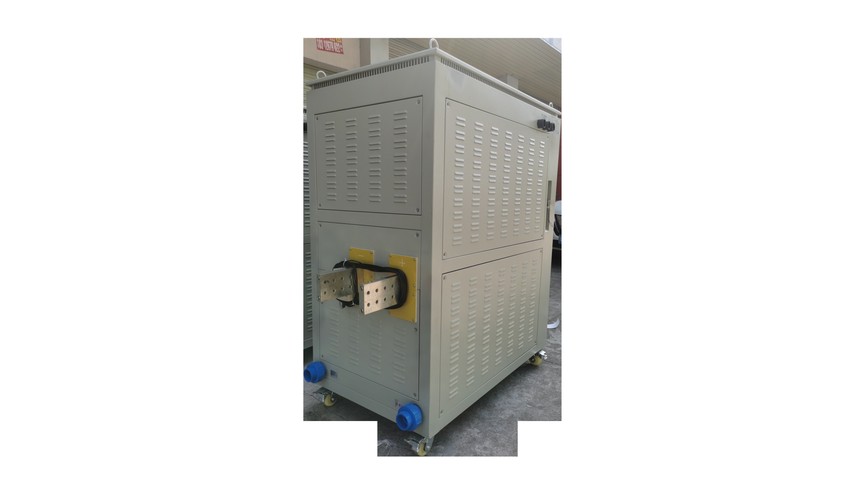
Introduction: The Evolution of Industrial Power in 2026
As industrial processes become increasingly digitized and automated, the demand for precision power delivery has never been higher. For electrochemical processing, metal finishing, and large-scale testing facilities, the ‘Scale Collection Power Supply’ has emerged as the backbone of operational efficiency. Specifically, the 1000A 100V configuration represents a critical sweet spot for mid-to-large-scale industrial applications. As we move into 2026, industry standards are shifting away from traditional, bulky transformer-rectifier units toward advanced, air-cooled switched-mode power supplies (SMPS) that offer unparalleled control and integration capabilities.
Understanding the 1000A 100V Specification
The 1000A 100V rating implies a 100kW capacity. While this is substantial, the true value lies in the architecture of the delivery system. An air-cooled 1000A 100V unit is designed for environments where liquid cooling is either cost-prohibitive or physically impractical. Modern air-cooled units have evolved to handle high-duty cycles through sophisticated airflow management, intelligent thermal sensors, and high-frequency MOSFET/IGBT switching modules.
Buyer’s Guide: Key Considerations for Procurement
When evaluating a 1000A 100V power supply for your facility, the technical specifications must align with your production lifecycle. Here is what procurement managers must prioritize in 2026:
-
Efficiency Ratings: In 2026, energy consumption is the primary driver of operational expenditure (OPEX). Look for units with a minimum efficiency rating of 94-96%. A 2% variance in efficiency on a 100kW system translates to thousands of dollars in wasted electricity annually.
-
Ripple Current & Precision: For sensitive electrochemical processes, the ripple factor determines the quality of the end product. Modern digital control loops should maintain a ripple factor below 1% RMS, ensuring stability in deposition or testing accuracy.
-
Connectivity & IIoT Readiness: A power supply is no longer a ‘black box.’ In 2026, seamless integration with SCADA (Supervisory Control and Data Acquisition) and PLC (Programmable Logic Controller) systems is non-negotiable. Ensure the unit supports standard protocols such as Modbus TCP/IP, Profinet, or EtherCAT for real-time remote monitoring.
-
Thermal Management Design: Since this unit is air-cooled, the intake filtration and fan longevity are critical. Look for modular fan arrays that allow for hot-swappable maintenance without shutting down the entire 1000A line.
ROI Analysis: Beyond Initial Capital Expenditure
Calculating the Return on Investment (ROI) for a high-capacity power supply requires looking at the Total Cost of Ownership (TCO).
- Energy Savings: By switching from legacy SCR-based power supplies to modern high-frequency SMPS technology, firms often see a reduction in power draw by 15-20%. At 100kW, operating 24/7, this can equate to a payback period of less than 18 months.
- Maintenance Downtime: The shift toward modular, air-cooled components reduces the time spent on complex coolant maintenance. Minimal maintenance translates to higher ‘Up-time,’ which is the most significant contributor to ROI in high-throughput industrial environments.
- Product Yield: Improved precision in current delivery reduces scrap rates. If your current system has a 2% rejection rate due to power instability, upgrading to a high-precision 1000A 100V unit can reclaim that value almost immediately.
2026 Industrial Trends: The Shift toward Smart Power
As we analyze the industrial landscape for 2026, three major trends are defining the power supply market:
-
Predictive Maintenance via AI: Manufacturers are now embedding sensor suites that utilize machine learning to predict component failure. A 1000A 100V system that alerts the facility manager to a cooling fan degradation three weeks before failure is worth double the price of a ‘dumb’ unit.
-
Grid-Interactivity: With the rise of renewable energy integration, power supplies are becoming grid-responsive. In 2026, the best power supplies can perform peak shaving and load shedding, allowing the facility to participate in demand-response programs, turning the power supply into a profit-generating asset rather than a cost center.
-
Sustainability Compliance: Environmental, Social, and Governance (ESG) reporting is now standard for mid-market and enterprise industrial players. Modern power supplies provide granular energy consumption data, allowing companies to accurately report their carbon footprint for each unit produced.
Installation and Best Practices for Air-Cooled Systems
While air-cooled systems are easier to install than water-cooled counterparts, they require specific environmental considerations.
- Environmental Enclosures: Even the best air-cooled unit will fail if exposed to harsh, conductive dust or corrosive fumes. Ensure the unit is housed in an IP54 or NEMA 12 rated enclosure if the production floor contains abrasive particulates.
- Ambient Temperature Regulation: Ensure the room ventilation can handle the thermal load of the unit. A 100kW unit, even at 95% efficiency, will dissipate 5kW of heat directly into the room. Proper HVAC sizing is a prerequisite for long-term reliability.
- Cable Management: At 1000A, current density is an engineering challenge. Use high-conductivity copper busbars and ensure all connections are torqued to manufacturer specifications. Thermal imaging inspections should be conducted quarterly during the first year of operation to identify ‘hot spots’ at connection points.
Conclusion: Future-Proofing Your Facility
Investing in a 1000A 100V Scale Collection Power Supply is a strategic move that affects the productivity of your entire production line. In 2026, the divide between industry leaders and laggards will be defined by their ability to integrate smart, efficient, and reliable power systems. By prioritizing high-frequency SMPS architecture, IIoT connectivity, and predictive maintenance capabilities, your organization will not only see a rapid ROI but will also be positioned to navigate the tightening regulatory and energy-cost landscape of the coming decade.
When you select your supplier, look beyond the technical specs on the datasheet. Partner with manufacturers who offer robust technical support, long-term warranty commitments, and a clear roadmap for software updates. The power supply you choose today will be the foundation of your production capacity for years to come—make sure it is capable of scaling with your ambitions.