
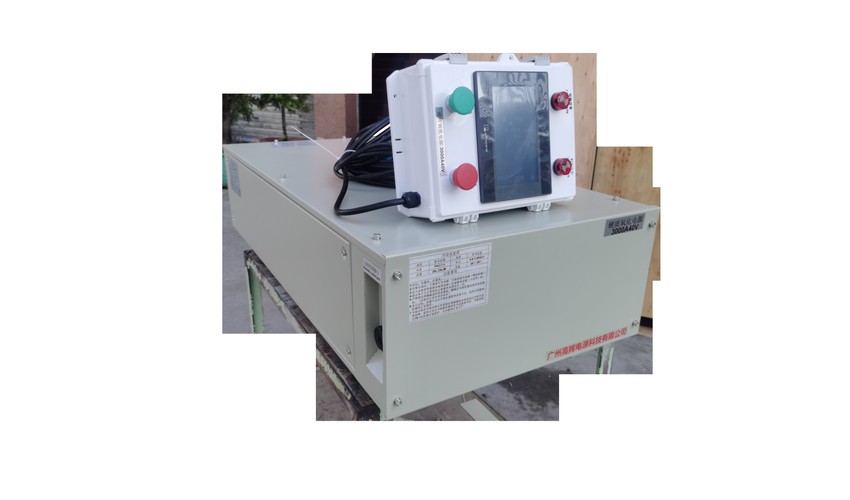
In the modern industrial landscape, wastewater management has shifted from a regulatory burden to a cornerstone of corporate sustainability. As environmental standards tighten globally, the Electro-Fenton (EF) process has emerged as a premier Advanced Oxidation Process (AOP), capable of mineralizing recalcitrant organic pollutants that conventional biological treatments cannot touch. However, the efficacy of an EF system is fundamentally tied to the precision and reliability of its power delivery. GAOHUI, a global leader in high-power industrial electronics, has responded to this need with its flagship 12000A 24V Water-Cooled Electro-Fenton Power Supply—a system designed to redefine the intersection of high-frequency power conversion and energy efficiency.
The Critical Role of Power Electronics in Electro-Fenton Processes
Electro-Fenton technology relies on the electrochemical generation of hydroxyl radicals (•OH) via the reduction of oxygen at the cathode and the catalytic cycle of iron ions. To achieve high degradation rates of chemical oxygen demand (COD) and color removal, the power supply must provide a highly stable, ripple-free DC current. The GAOHUI 12000A 24V unit is engineered specifically for the electrochemical load profile, which is inherently dynamic. Unlike standard rectifiers, GAOHUI’s architecture is built to manage the fluctuating impedance of electrochemical cells, ensuring consistent ion generation without energy-wasting thermal spikes.
High-Frequency Switching Technology: The GAOHUI Edge
At the core of the GAOHUI 12000A system lies advanced High-Frequency (HF) Pulse-Width Modulation (PWM) switching technology. Traditional line-frequency rectifiers are often bulky, inefficient, and prone to significant harmonic distortion. By utilizing state-of-the-art Insulated Gate Bipolar Transistors (IGBTs) switching at high frequencies, GAOHUI achieves a significantly higher power density and a more responsive control loop.
High-frequency switching offers two distinct advantages for Electro-Fenton applications:
1. Precision Control: The instantaneous response time of the switching regulator allows for precise adjustment of current density. This is crucial for optimizing the H2O2 production rate at the cathode, ensuring that the concentration of hydroxyl radicals remains within the ‘kinetic sweet spot’ of the oxidation reaction.
2. Reduced Transformer Size and Loss: By operating at high frequencies, the magnetic components—transformers and inductors—are reduced in size, which inherently lowers resistive heating and core losses. This design shift is a primary driver in GAOHUI’s superior efficiency ratings compared to traditional silicon-controlled rectifier (SCR) systems.
Thermal Management: The Case for Water Cooling
Operating at a massive 12000A output presents an extraordinary thermal challenge. In the harsh, often corrosive environments of industrial chemical treatment plants, air-cooled systems are prone to dust ingress, humidity damage, and high maintenance overhead. The GAOHUI 12000A 24V system utilizes a closed-loop liquid cooling architecture, which provides several performance benefits:
- Thermal Stability: By utilizing water cooling, the internal components are kept at a constant, lower operating temperature. This significantly extends the Mean Time Between Failures (MTBF) of the power modules and prevents the degradation of capacitors and semiconductors.
- Compact Footprint: Water cooling allows for higher component integration density. A system capable of outputting 288kW of power (12000A x 24V) occupies a footprint significantly smaller than an air-cooled equivalent, permitting easier integration into modular skid-mounted treatment plants.
- Protection Against Environment: Because the power electronics are sealed within an IP54 or IP65-rated enclosure, the sensitive electronics are isolated from chemical fumes, humidity, and conductive dust, which are common byproducts of an Electro-Fenton facility.
Energy Efficiency: Meeting Global Sustainability Mandates
Energy expenditure is the highest operational cost in AOP wastewater treatment. GAOHUI has prioritized energy efficiency in the design of the 12000A/24V unit, achieving efficiencies exceeding 92% under full load. This is accomplished through three primary design philosophies:
- Low On-State Resistance: By selecting premium-grade semiconductors, GAOHUI minimizes the voltage drop across switching devices, thereby reducing heat dissipation.
- Power Factor Correction (PFC): The system includes active PFC circuitry that ensures the input power factor remains close to unity (>0.95). This reduces reactive power demand from the grid, lowering energy utility surcharges for the end-user.
- Intelligent Load Management: The GAOHUI digital controller monitors the electrochemical cell performance in real-time. If the reaction rate stabilizes, the controller can dynamically modulate the output, avoiding unnecessary power draw—a feature that can reduce cumulative energy usage by up to 15% over the course of a 24-hour treatment cycle.
Control, Integration, and Industry 4.0
In an era of smart manufacturing, the GAOHUI power supply is built to be a node within a larger digital ecosystem. The system features advanced PLC connectivity, supporting protocols such as Modbus, Profibus, and CAN bus. This allows plant operators to monitor voltage, current, and temperature in real-time from a centralized SCADA system. Furthermore, the unit features data logging and predictive maintenance diagnostics; should the cooling flow rate drop or a component show signs of overheating, the system provides proactive alerts, preventing catastrophic downtime.
Reliability and Maintenance
GAOHUI’s engineering team recognizes that wastewater treatment is a non-stop, 24/7 mission. The modular design of the 12000A unit ensures that maintenance can be performed with minimal disruption. Internal modules can be swapped quickly, and the water-cooling channels are designed for easy maintenance, preventing the scale build-up that often plagues industrial cooling systems. This modularity ensures that when servicing is required, the downtime is measured in minutes rather than days.
Conclusion: The Future of Electro-Fenton Power
As industries face increasing pressure to eliminate persistent organic pollutants from their waste streams, the efficiency and reliability of the power supply powering their Electro-Fenton systems become paramount. GAOHUI’s 12000A 24V Water-Cooled Power Supply represents a fusion of high-frequency engineering, robust industrial design, and a deep commitment to energy efficiency. By choosing GAOHUI, facilities are not merely buying a rectifier; they are investing in a sustainable future, where advanced water treatment is both highly effective and economically viable. With a proven track record in the field, GAOHUI remains the preferred partner for engineers aiming to optimize their AOP systems to the highest possible performance standards.