
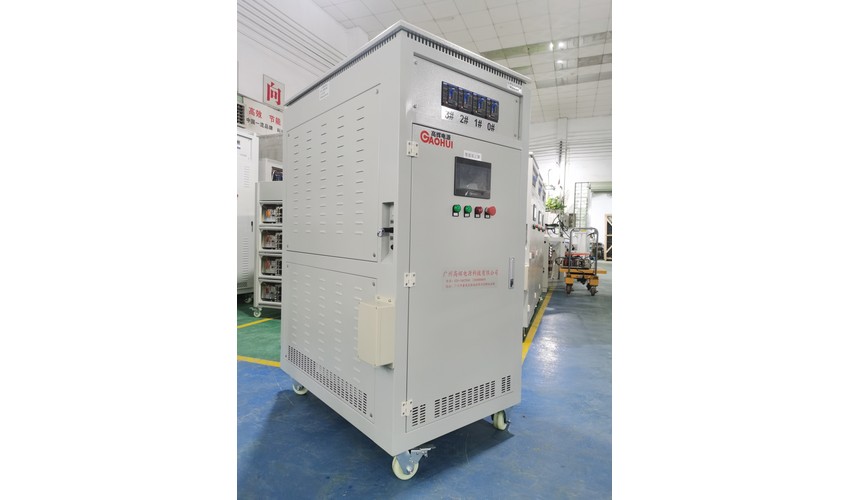
As the global water crisis intensifies, the industrial landscape for desalination is undergoing a rapid technological shift. By 2026, the mandate for efficiency, footprint reduction, and operational resilience has moved from a strategic goal to a baseline operational requirement. For facility managers and procurement officers, the selection of power supply systems—specifically high-amperage, high-reliability units like the 3000A 24V water-cooled architecture—is no longer just a hardware purchase; it is a critical investment in the longevity and profitability of the desalination asset.
The Shift to Water-Cooled Efficiency
The move toward water-cooled power supplies is driven by the density requirements of modern desalination plants. Traditional air-cooled systems, while easier to deploy in non-critical environments, struggle with the high-salinity, high-humidity atmospheres inherent to desalination facilities. Corrosion is the silent killer of electrical infrastructure. Water-cooled 3000A 24V power supplies utilize a closed-loop system, isolating sensitive electronics from the ambient, often corrosive, environment. This design choice significantly extends the Mean Time Between Failures (MTBF) and reduces the necessity for air filtration and climate-controlled rooms, which are expensive to maintain.
Technical Specifications: Defining the 3000A 24V Standard
When evaluating a 3000A 24V power supply, buyers must look beyond the raw output. For 2026, the industry standard demands a synergy of power density and intelligent control.
- Efficiency Ratings: Look for units that guarantee >94% efficiency at full load. In a 3000A environment, a 1% improvement in efficiency can translate to tens of thousands of dollars in annual energy savings per module.
- Thermal Management: The heat exchanger must be sized for high-salinity water conditions. Ensure the unit features redundant cooling circuits to prevent thermal shutdowns.
- Digital Integration: Modern desalination plants utilize Industry 4.0 standards. The power supply must support Modbus TCP/IP or Profinet protocols for real-time monitoring of ripple, voltage stability, and cooling performance.
ROI: Beyond the Purchase Price
Calculating the Return on Investment (ROI) for a 3000A water-cooled power supply requires a Total Cost of Ownership (TCO) approach.
- Operational Expenditure (OPEX) Reduction: Air-cooled systems require massive airflow. By moving to water-cooled units, plants reduce the burden on HVAC systems. For a 3000A system operating 24/7, the reduction in ancillary cooling energy consumption often results in a payback period of under 24 months.
- Maintenance Intervals: Water-cooled systems exhibit significantly lower thermal stress on electrolytic capacitors and power semiconductors. A well-specified 3000A system should offer a 10-year operational life with minimal part replacements, effectively halving the maintenance cost profile compared to older, air-cooled generations.
- Downtime Mitigation: In large-scale reverse osmosis (RO) or electrodialysis (EDR) processes, a power failure is not just a downtime event—it is a production loss that cascades through the entire plant. The reliability of premium water-cooled power electronics ensures that these systems act as a buffer against supply chain interruptions.
2026 Industrial Trends: The Road Ahead
As we look toward 2026, three primary trends are dictating the procurement landscape for desalination power supplies:
- Modular Scalability: Plants are moving away from monolithic, single-point-of-failure power supplies. The modern trend is to use modular 3000A units that can be paralleled. This ensures that if one module requires maintenance, the plant continues to operate at reduced but continuous capacity.
- Sustainable Energy Harvesting: Newer power supply controllers are being designed to interface seamlessly with intermittent renewable energy sources, such as offshore wind or integrated solar PV. The power supply acts as a sophisticated power factor corrector, smoothing the volatility inherent in renewable inputs.
- Predictive Analytics: Using embedded sensor suites, power supplies in 2026 are ‘smart.’ They track internal temperature trends, component aging, and vibration, allowing maintenance teams to schedule service before a failure occurs. This predictive capability is becoming a standard procurement requirement for high-availability tenders.
Buyer’s Guide: What to Demand from Vendors
When soliciting bids for 3000A 24V water-cooled power supplies, ensure your procurement RFI/RFP includes the following mandatory criteria:
- Environmental Hardening: Request IP54 or higher ratings. The interior electronics must be conformal coated to withstand the saline air typical of desalination sites.
- Harmonic Distortion Specs: In large plants, high-current power supplies can introduce harmonics that damage other equipment. Insist on units with active PFC (Power Factor Correction) that keep THDi (Total Harmonic Distortion of current) under 5%.
- Support and Lifecycle: Do not purchase based on datasheet specs alone. Evaluate the vendor’s capacity for on-site commissioning, training, and the availability of localized spare parts inventories. In a 24/7 desalination environment, a 48-hour part delivery guarantee is a vital safety net.
Conclusion
The selection of a 3000A 24V water-cooled power supply is a strategic decision that bridges the gap between raw plant capacity and long-term operational profitability. As we approach 2026, the focus has pivoted decisively toward resilience, efficiency, and intelligence. By prioritizing modularity, predictive maintenance capabilities, and high-efficiency thermal management, procurement leaders can ensure their desalination assets remain at the vanguard of industrial water production. Investing in high-grade power electronics is not merely about keeping the pumps and membranes running; it is about securing the stable output that global industrial and municipal sectors rely upon.