
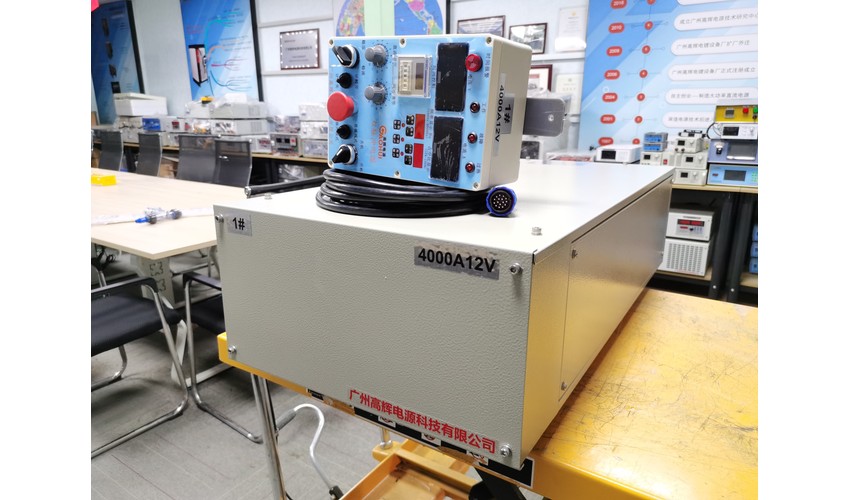
In the modern industrial landscape, water treatment—ranging from electrocoagulation to electro-deionization and heavy metal recovery—demands more than just raw power; it requires surgical precision and extreme reliability. At the heart of these complex electrochemical systems lies the industrial rectifier. Specifically, the 1000A 24V water-cooled rectifier has emerged as the gold standard for mid-to-large-scale operations. By leveraging high-frequency switching technology, these units are revolutionizing how facilities manage energy consumption while improving the efficacy of water purification processes.
The Shift to High-Frequency Switching Technology
Traditional industrial rectifiers often relied on silicon-controlled rectifier (SCR) technology, which, while robust, operated at low frequencies. This necessitated the use of massive iron-core transformers and bulky filtering components, leading to substantial energy losses and significant heat generation.
Modern water treatment rectifiers have transitioned to Insulated Gate Bipolar Transistor (IGBT) based high-frequency switching technology. By operating at frequencies ranging from 20kHz to 100kHz, these rectifiers transform AC power into DC with unprecedented agility. The fundamental advantage here is size and efficiency: high-frequency components are significantly smaller and more efficient than their low-frequency counterparts. This allows for a compact footprint, which is critical in modular water treatment plants where space is at a premium. Furthermore, the precision offered by Pulse Width Modulation (PWM) allows for near-instantaneous adjustment of voltage and current, ensuring that electrochemical reactions remain within their optimal parameters regardless of fluctuations in influent water quality.
Why 1000A 24V? The Ideal Operating Window
For many water treatment applications, such as electrocoagulation (EC) or anodic oxidation, the 1000A 24V configuration represents the ‘sweet spot’ of electrical delivery. The 24V output provides sufficient potential to overcome the ohmic resistance of various water compositions, while the 1000A capacity provides the high current density required to achieve rapid ion migration and bubble formation in flotation processes.
This specific voltage-current pairing is particularly effective in high-throughput environments where the turnover rate of the water volume is high. The 24V threshold is also considered safer for industrial maintenance compared to higher-voltage systems, reducing the risk of arcing in high-moisture environments typical of water treatment facilities.
The Necessity of Water Cooling Systems
Operating at 1000A creates a significant thermal load. Even with high efficiency, the heat dissipation required to keep power semiconductors within their safe operating area is substantial. Air-cooled rectifiers often struggle in the harsh, humid, or corrosive environments inherent to water treatment plants. Dust, chemical vapors, and moisture can infiltrate air-cooled enclosures, leading to premature component failure, corrosion of PCBs, and potential short-circuits.
Water-cooled rectifiers offer a superior solution. By utilizing a closed-loop liquid cooling system, the heat generated by the power modules is transferred directly to a cooling medium. This design provides several distinct advantages:
1. Environment Sealing: Because the unit does not rely on ambient air intake, it can be hermetically sealed against external pollutants. This is vital in facilities where chlorine or other corrosive chemicals are present.
2. Thermal Stability: Liquid cooling maintains a constant, optimal operating temperature for components, which extends the lifespan of capacitors and semiconductors significantly.
3. Higher Power Density: Without the need for massive heatsinks and airflow channels, the internal components can be packed more tightly, resulting in a more rugged, compact unit.
Energy Efficiency: Meeting Modern Standards
Sustainability is no longer a corporate ‘nice-to-have’—it is an economic imperative. Industrial energy consumption is a primary operating cost in water treatment. Traditional SCR rectifiers typically operate at 80-85% efficiency. In contrast, modern high-frequency 1000A 24V rectifiers often achieve efficiency ratings exceeding 92-95%.
This 10% gain in efficiency translates into massive cost savings over the equipment’s lifespan. Furthermore, the higher efficiency means less waste heat is produced, which reduces the load on the facility’s cooling infrastructure. When multiplied by the thousands of operating hours required in continuous-duty water treatment, the Return on Investment (ROI) of upgrading to high-frequency, water-cooled technology becomes highly compelling.
Advanced Control and Monitoring
Modern rectifiers serve as more than just power supplies; they are ‘smart’ devices that integrate into a facility’s SCADA (Supervisory Control and Data Acquisition) system. The 1000A 24V units are equipped with digital communication protocols such as Modbus, Profibus, or Ethernet/IP.
This connectivity allows operators to perform:
– Remote Monitoring: Real-time data logging of voltage, current, and temperature, enabling predictive maintenance.
– Dynamic Load Balancing: Automatically adjusting the power output based on real-time sensors measuring water conductivity, pH levels, or flow rates.
– Fault Analysis: Rapid diagnostic reporting that alerts technicians to potential issues—like cooling water flow restrictions or input power spikes—before they lead to total system downtime.
Reliability in Harsh Environments
In the water treatment sector, equipment failure can lead to regulatory compliance issues and potential environmental fines. Reliability is predicated on the design of the rectifier’s magnetic components and the quality of its switching logic. High-frequency rectifiers utilize advanced ferrites and nanocrystalline materials in their transformers, which are less prone to saturation and loss than traditional silicon steel cores. When housed in a robust, water-cooled chassis, these rectifiers can withstand the rigors of 24/7 operation with minimal downtime.
Conclusion: The Strategic Investment
Choosing the right power infrastructure is a strategic decision that influences the performance, efficiency, and longevity of the entire water treatment process. The move toward 1000A 24V water-cooled rectifiers using high-frequency switching technology is a clear trend in the industry, driven by the need for higher precision, improved energy efficiency, and superior durability.
For facilities looking to optimize their processes, the investment in high-efficiency power electronics provides an immediate payoff in energy cost reduction and a long-term benefit in operational stability. As water quality standards become more stringent and energy prices remain volatile, the adoption of advanced rectifiers will separate the industry leaders from those struggling with outdated, inefficient, and unreliable power delivery systems. By focusing on thermal management, frequency agility, and smart integration, facility managers can ensure their water treatment processes are as efficient and resilient as possible.