
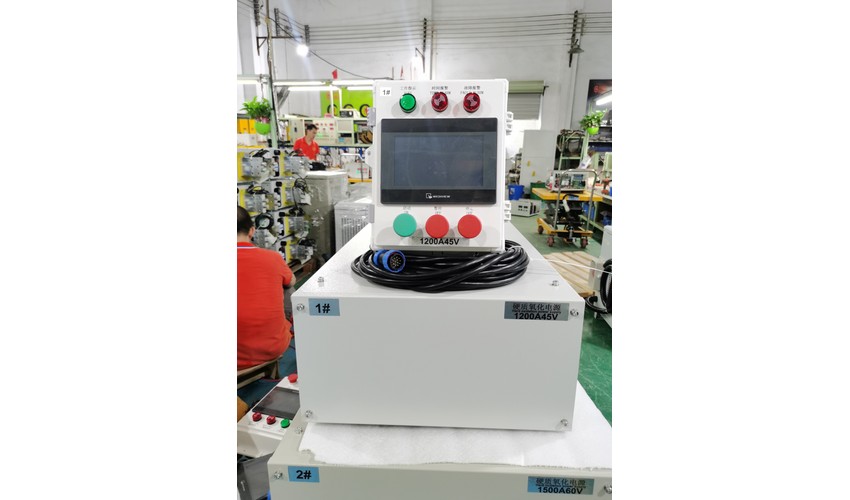
In the modern landscape of heavy industrial water treatment—ranging from electro-coagulation and electro-flocculation to metal recovery and brine electrolysis—the efficiency of the power conversion system is the primary determinant of operational cost. As facilities face mounting pressure to reduce carbon footprints and adhere to stringent global energy efficiency standards, the industry is witnessing a seismic shift from traditional silicon-controlled rectifier (SCR) technology toward advanced high-frequency switching power supplies. Central to this evolution is the 12000A 15V oil-immersed rectifier, a powerhouse designed to deliver precision, reliability, and unparalleled energy performance.
The Shift Toward High-Frequency Switching Technology
Historically, industrial electrolysis utilized bulky, low-frequency transformer-rectifiers. These systems relied on line-frequency (50/60Hz) transformers, which are inherently inefficient and massive in physical footprint. The current generation of 12000A 15V rectifiers utilizes high-frequency (HF) switching technology, typically operating in the range of 20kHz to 100kHz.
By leveraging Insulated Gate Bipolar Transistors (IGBTs) or Metal-Oxide-Semiconductor Field-Effect Transistors (MOSFETs), these systems can convert AC to DC with significantly reduced conversion losses. The use of high-frequency switching allows for smaller, more efficient magnetic components (transformers and inductors). This reduction in mass does more than save space; it drastically minimizes hysteresis and eddy current losses, which are the primary culprits of energy waste in older, low-frequency designs. For a 12000A output, even a 2% improvement in conversion efficiency translates to thousands of kilowatt-hours saved annually, directly impacting the bottom line for large-scale water treatment plants.
The Engineering Superiority of Oil-Immersed Designs
While air-cooled systems are common in light-duty environments, the 12000A 15V specification dictates a requirement for extreme environmental robustness. Water treatment facilities are inherently challenging environments, often characterized by high humidity, corrosive chemical vapors, and conductive dust.
Oil immersion is the gold standard for these high-power applications for three primary reasons:
- Thermal Stability: Oil provides superior thermal conductivity compared to air. In a 12000A system, heat generation within the power modules is constant and high. Oil immersion ensures that the heat is dissipated evenly across the tank walls, preventing hot spots that can degrade power components and lead to premature failure.
- Environmental Protection: By hermetically sealing the critical electronic components and the transformer windings in dielectric oil, the rectifier becomes impervious to the corrosive atmosphere common in water treatment plants. This design eliminates the risk of short-circuits caused by moisture ingress or chemical deposition, ensuring 24/7 uptime.
- Longevity and Maintenance: Because the electronics are shielded from airborne contaminants, the internal components remain in a ‘clean-room’ state for decades. This dramatically reduces the need for frequent maintenance cycles, as there are no cooling fans to clog or air filters to replace.
Energy Efficiency Standards and Sustainability
Energy efficiency in water treatment is no longer just an operational preference; it is a regulatory mandate. The modern 12000A 15V high-frequency rectifier is designed to meet and exceed stringent international energy standards (such as IEC and IEEE guidelines).
Modern power electronics in these units feature advanced Power Factor Correction (PFC) circuitry. By maintaining a high power factor—often exceeding 0.95—these rectifiers minimize reactive power consumption, reducing the load on the facility’s electrical distribution system and avoiding utility penalties. Furthermore, the precision of high-frequency control allows for a near-instantaneous response to load changes in the electrolytic cell. In water treatment, where the resistivity of the influent can change rapidly, the ability of the rectifier to adjust output voltage and current in milliseconds ensures that the electrolytic process remains within the optimal electrochemical window, preventing energy waste through over-potential or improper chemical reactions.
Precision Control and Process Optimization
The 15V output rating, while seemingly modest, provides high-density energy delivery essential for overcoming the ohmic resistance in electrolytic cells. However, raw power is insufficient without granular control. High-frequency rectifiers allow for sophisticated ripple control. A low output ripple (typically <1%) is critical for the stability of electrochemical reactions. High ripple current can cause uneven electrode wear and inconsistent coagulation results. By utilizing advanced Pulse Width Modulation (PWM) and digital control loops, 12000A rectifiers ensure a stable, clean DC output that promotes uniform electrode depletion and maximizes the lifespan of the treatment equipment.
Integration with modern Building Management Systems (BMS) and SCADA networks is now standard. These rectifiers provide real-time telemetry on voltage, current, temperature, and harmonic distortion. This data-driven approach allows engineers to move from reactive maintenance to predictive diagnostics. By monitoring the power signatures of the rectifier, operators can detect fouling in the electrolysis cells before it becomes a process bottleneck, saving significant resources on downtime and labor.
Selecting the Right Infrastructure
For industrial operators, the selection of a 12000A 15V oil-immersed rectifier should be viewed as a long-term capital investment. When evaluating suppliers, the focus should remain on:
- Switching Frequency and Topology: Ensure the unit utilizes high-frequency IGBT modules for maximum conversion efficiency.
- Cooling Efficiency: Evaluate the design of the heat exchanger integrated with the oil tank—liquid-to-liquid or liquid-to-air cooling systems should be matched to the facility’s ambient climate.
- Control Versatility: Look for systems that offer digital interfaces (Modbus, Profibus, Ethernet IP) to ensure seamless integration into existing process control frameworks.
- Durability Ratings: Verify that the oil-containment system is compliant with local environmental regulations and that the internal components are rated for continuous, full-load operation.
Conclusion
The 12000A 15V oil-immersed high-frequency rectifier stands at the intersection of power electronics and environmental engineering. By replacing antiquated, inefficient technologies with high-frequency switching and robust, sealed cooling architectures, industrial plants can achieve significant energy savings while enhancing the reliability of their water treatment processes.
As we move toward a future defined by water scarcity and tighter environmental regulations, the demand for precision, efficiency, and durability in electrical infrastructure will only grow. Investing in state-of-the-art rectifier technology is not merely an operational upgrade—it is a foundational step toward building a more sustainable and cost-effective industrial future.