
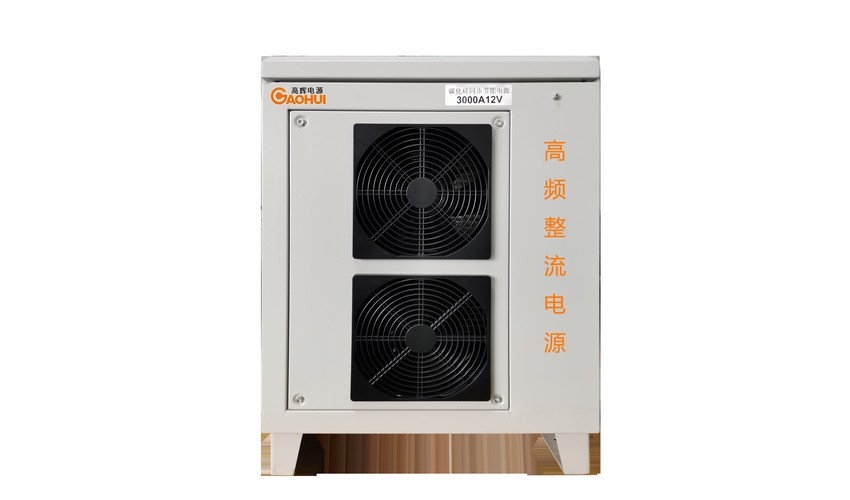
Industrial processes generate vast quantities of wastewater, often laden with dissolved salts, heavy metals, and other contaminants that pose significant environmental and operational challenges. Effective wastewater treatment is not just a regulatory requirement but a cornerstone of sustainable manufacturing. Among the advanced separation technologies available, electrodialysis (ED) stands out for its efficiency in desalinating and purifying aqueous streams. At the heart of a successful electrodialysis system lies a precise and reliable power supply: the Electrodialysis rectifier. This crucial component converts incoming AC power into the stable DC voltage and current essential for driving ion migration and achieving efficient wastewater purification.
The Principle of Electrodialysis and its Power Requirements
Electrodialysis is an electrochemical membrane process that separates ions from an aqueous solution through an electric field. The system typically consists of alternating cation-exchange and anion-exchange membranes, arranged between two electrodes. When a DC electric field is applied, cations migrate towards the cathode and anions towards the anode, passing through selective membranes and resulting in the concentration of ions in some compartments and their depletion in others. This process is highly effective for removing dissolved salts, acids, and bases from water, making it invaluable for various industrial applications, including demineralization, desalination, and product recovery.
The success of electrodialysis hinges entirely on the quality and stability of the applied DC power. Inconsistent voltage, fluctuating current, or excessive ripple can severely impair separation efficiency, damage membranes, and increase operational costs. Therefore, the power supply must be capable of delivering highly regulated, ripple-free DC power, often with the flexibility to adjust voltage and current based on the specific feed water characteristics and desired treatment outcomes. This is precisely where the advanced capabilities of a purpose-built rectifier come into play.
Advanced Electrodialysis Rectifier Technology for Superior Performance
Modern Electrodialysis rectifier units are far more sophisticated than traditional transformer-rectifier sets. They leverage cutting-edge power electronics to deliver unmatched precision, reliability, and energy efficiency. A key advancement in this field is the widespread adoption of IGBT technology (Insulated Gate Bipolar Transistor). IGBT-based rectifiers offer several advantages crucial for ED applications:
- High Frequency Switching: IGBTs enable high-frequency switching, leading to smaller, lighter rectifiers with superior dynamic response and reduced output ripple.
- Precise Control: They allow for highly accurate control of output voltage and current, ensuring optimal operating conditions for the ED stack and protecting sensitive membranes.
- High Efficiency: Minimized power losses during rectifier conversion directly contribute to significant energy efficiency, a critical factor in large-scale industrial operations.
- Fast Response: Rapid adjustments to power output can compensate for changes in feed water conductivity or membrane fouling, maintaining consistent performance.
These features translate into greater process stability, extended membrane life, and ultimately, lower total cost of ownership for industrial wastewater treatment plants.
Key Features and Benefits
- Modular Design: Allows for easy scalability, maintenance, and redundancy.
- High Power Factor: Reduces reactive power consumption and minimizes stress on the electrical grid.
- Low Harmonic Distortion: Ensures compliance with grid regulations and protects other electrical equipment.
- Comprehensive Protection Features: Includes overcurrent, overvoltage, short circuit, and over-temperature protection for enhanced safety and reliability.
- User-Friendly HMI: Intuitive human-machine interface for easy monitoring, control, and data logging.
- Remote Monitoring & Control: Enables integration with plant SCADA systems for automation and remote diagnostics.
- Efficient Cooling Systems: Available in air-cooled, water-cooled, or oil-cooled configurations to suit diverse industrial environments.
Technical Specifications for Industrial Applications
Selecting the right rectifier involves a careful evaluation of its technical specifications to match the specific demands of the electrodialysis process. Here’s a typical range of parameters:
| Parameter | Typical Range for Industrial ED Rectifiers |
|---|---|
| Input Voltage / Frequency | 3-phase 380-480VAC ±10%, 50/60Hz |
| Output Voltage Range | 0-100V DC (customizable up to 500V DC) |
| Output Current Range | 0-500A DC (customizable up to 10,000A DC) |
| Efficiency | >90% (up to 96% for advanced models) |
| Power Factor | >0.95 at full load |
| Control Mode | Constant Voltage (CV) / Constant Current (CC) selectable, Pulse Mode |
| Ripple Factor | <2% RMS |
| Cooling Method | Forced Air Cooling, Water Cooling, Oil Cooling |
| Protection Level (IP) | IP20 to IP65 (depending on environment) |
| Communication Interface | RS485, Modbus RTU/TCP, Profibus, Ethernet |
Enhancing Operational Efficiency and Sustainability
Beyond the technical specifications, the ultimate impact of an advanced rectifier is its contribution to operational efficiency and environmental sustainability. By providing precise and stable power, these rectifiers optimize the electrodialysis process, leading to consistently high rates of contaminant removal and reduced membrane fouling. The high energy efficiency significantly lowers electricity consumption, which is often a major operating cost in electrodialysis. Furthermore, the reliability and advanced diagnostic features minimize downtime and maintenance requirements, ensuring continuous and compliant discharge of treated water or recovery of valuable resources. This commitment to efficiency aligns perfectly with modern industrial sustainability goals.
Conclusion
The Electrodialysis rectifier is undeniably a cornerstone technology in contemporary industrial wastewater treatment. Far from being a mere power converter, it is a sophisticated control unit that dictates the performance, efficiency, and longevity of electrodialysis systems. By embracing advanced rectifiers featuring IGBT technology, high energy efficiency, and precise control, industries can achieve superior wastewater purification outcomes, reduce operational costs, and meet stringent environmental standards. As industries continue to seek sustainable and cost-effective solutions for water management, the role of a high-performance electrodialysis rectifier will only grow in importance, driving innovation in sustainable water treatment.