
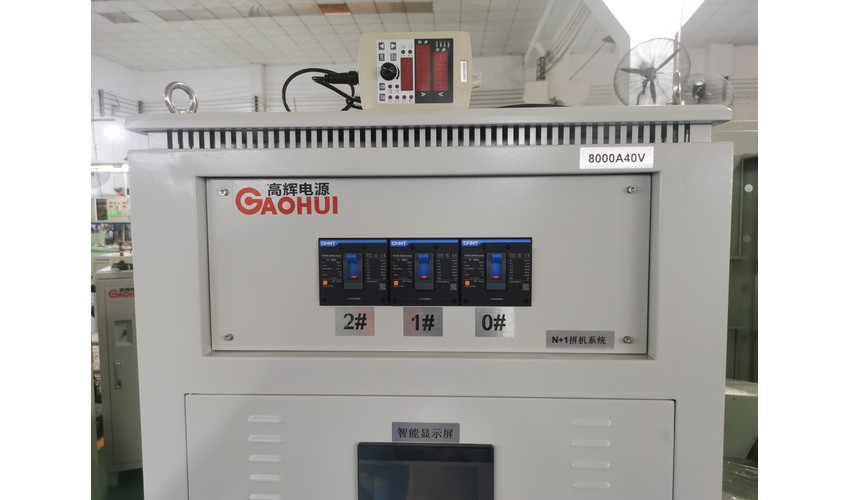
Industrial wastewater presents a significant environmental and operational challenge, demanding robust and efficient treatment solutions. From chemical manufacturing to food processing, industries generate diverse effluent streams requiring specialized purification processes. Many of these advanced treatment methods, such as electrocoagulation, electro-oxidation, and electroflotation, rely critically on a stable and precisely controlled direct current (DC) power supply. This is where the advanced electrochemical rectifier plays an indispensable role, converting alternating current (AC) from the grid into the high-quality DC power essential for effective pollutant removal and resource recovery. Understanding the capabilities and technical specifications of these rectifiers is paramount for achieving optimal wastewater purification.
The efficiency and reliability of a wastewater treatment plant directly correlate with the performance of its power supply unit. Traditional power supplies often fall short in delivering the precise control, energy efficiency, and durability required for demanding industrial applications. Modern electrochemical rectifiers, however, are engineered to meet these stringent requirements, ensuring consistent performance and contributing significantly to the overall sustainability and cost-effectiveness of wastewater management systems.
The Critical Role of Electrochemical Rectifiers in Wastewater Treatment
Electrochemical processes are at the forefront of innovative wastewater treatment strategies due to their ability to break down complex pollutants, remove heavy metals, and disinfect water without the extensive use of chemicals. These processes, including electrocoagulation (EC), electroflotation (EF), and various advanced oxidation processes (AOPs), fundamentally depend on the accurate delivery of DC current and voltage to electrodes submerged in the wastewater. An electrochemical rectifier acts as the heart of such systems, providing the necessary electrical energy for these reactions to occur efficiently.
- Electrocoagulation: The rectifier supplies current to sacrificial anodes (e.g., iron or aluminum), which dissolve to form metal hydroxides. These hydroxides act as coagulants, precipitating pollutants and suspended solids.
- Electro-oxidation: High current density from the rectifier enables direct oxidation of organic pollutants at the anode surface, breaking them down into less harmful substances or CO2 and water.
- Electrodialysis/Electrodeionization: Rectifiers provide the driving force for ion migration across selective membranes, effectively removing dissolved salts and ionic impurities.
The stability and ripple content of the DC output from the rectifier directly impact the efficiency of these electrochemical reactions. High ripple can lead to non-uniform electrode reactions, reduced current efficiency, and increased energy consumption, undermining the entire wastewater purification process.
Advanced Features and Benefits of Modern Electrochemical Rectifiers
Contemporary industrial electrochemical rectifier units are designed with sophisticated features to address the unique challenges of wastewater treatment, offering superior performance and operational advantages:
- IGBT Technology: Insulated Gate Bipolar Transistor (IGBT) technology is central to modern rectifier design. It enables high-frequency switching, providing precise control over output current and voltage, extremely low ripple, and rapid response to load changes. This results in superior process control and enhanced reaction efficiency.
- High Energy Efficiency: Advanced power factor correction (PFC) circuits and optimized transformer designs minimize energy losses, leading to significant reductions in operational costs. High energy efficiency also translates into lower heat generation and extended equipment lifespan.
- Precise Output Control: Rectifiers offer accurate constant current or constant voltage modes with fine adjustment capabilities, crucial for optimizing specific electrochemical reactions. Digital control systems allow for programmable ramps, timers, and multi-step processes.
- Robust Industrial Design: Built to withstand harsh industrial environments, these rectifiers often feature water or forced air cooling, sealed enclosures, and robust component selection to ensure reliability and minimize downtime.
- Remote Monitoring and Control: Integration with SCADA systems via communication protocols (e.g., Modbus, Profibus, Ethernet) allows for real-time monitoring, data logging, and remote control, simplifying operations and predictive maintenance.
- Modular and Expandable: Many systems are designed with modular power blocks, allowing for easy expansion of capacity and N+1 redundancy for enhanced reliability.
Understanding Rectifier Conversion and Control
The core function of an electrochemical rectifier involves converting incoming AC power into a stable DC output suitable for electrochemical cells. This rectifier conversion process typically begins with a transformer to adjust voltage levels, followed by a rectifier bridge (often employing diodes or SCRs, and in advanced units, IGBTs) to convert AC to pulsating DC. Further filtering via inductors and capacitors smooths the DC output, reducing ripple. Modern rectifiers utilize sophisticated digital signal processors (DSPs) to precisely control the switching of IGBTs, achieving unparalleled accuracy and dynamic response. This precise control is vital for maintaining optimal current density and voltage across the electrodes, directly impacting the effectiveness of wastewater purification and reducing electrode fouling.
Technical Specifications for Optimal Performance
Selecting the right electrochemical rectifier involves a careful consideration of its technical specifications to match the specific requirements of the wastewater treatment process. Key parameters ensure compatibility, efficiency, and longevity:
| Specification | Description | Typical Range for Industrial WWT |
|---|---|---|
| Input Voltage | AC input required by the rectifier. | 380V / 400V / 415V / 480V AC (3-Phase) |
| Output Voltage | DC voltage supplied to the electrodes. | 0-60V DC (adjustable) |
| Output Current | DC current supplied to the electrodes. | 100A – 10,000A+ DC (adjustable) |
| Efficiency | Ratio of output power to input power. | >90% – 96% |
| Power Factor | Measure of how effectively AC power is converted to useful work. | >0.95 – 0.99 (with active PFC) |
| Cooling Method | How heat generated by the rectifier is dissipated. | Forced Air, Water Cooling, Oil Cooling |
| Control Interface | Methods for local and remote control. | HMI, Modbus RTU/TCP, Profibus, 0-10V/4-20mA |
| Protection Features | Safeguards against operational faults. | Overcurrent, Overvoltage, Over-temperature, Short Circuit, Phase Loss |
Careful evaluation of these specifications ensures that the chosen rectifier can reliably support the electrochemical process, providing stable power output under varying load conditions and contributing to the overall longevity and cost-effectiveness of the treatment system.
In conclusion, the advancements in electrochemical rectifier technology are profoundly impacting industrial wastewater treatment. By providing highly efficient, precisely controllable, and robust DC power, these rectifiers enable sophisticated electrochemical processes to effectively purify challenging industrial effluents. Investing in a high-quality, technically advanced electrochemical rectifier is not just an equipment choice; it is a strategic decision for industries committed to environmental compliance, operational efficiency, and sustainable wastewater management.