
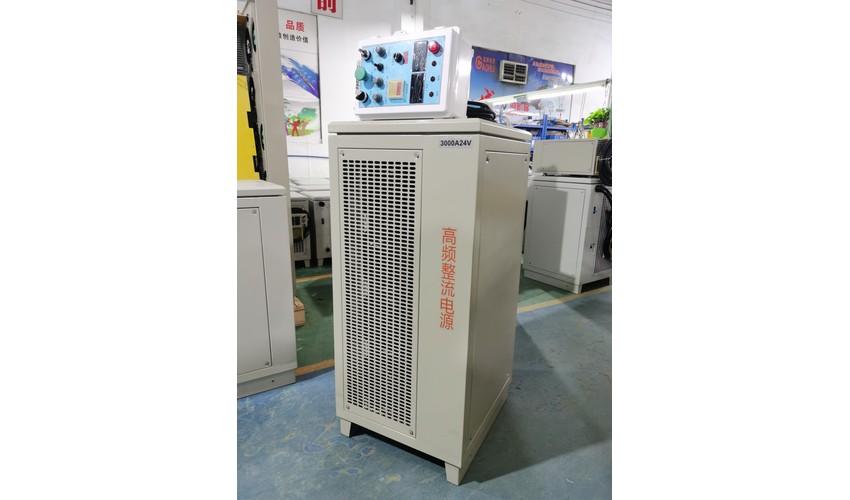
In the critical domain of water treatment, ensuring the purity and safety of water supplies is paramount. Advanced electrochemical processes, such as electrocoagulation, electrochlorination, and cathodic protection for vital infrastructure, rely heavily on a stable and consistent DC power supply. At the heart of these operations lies the Water Treatment Rectifier – a specialized piece of equipment designed to convert AC utility power into the precise DC current required. For demanding industrial applications, a 2000A 24V Oil Immersed Rectifier stands out as an exceptional solution, engineered specifically to deliver unwavering reliability, superior corrosion resistance, and optimized heat management in the most challenging environments.
Unwavering Reliability in Demanding Environments
Water treatment facilities operate continuously, making rectifier reliability a non-negotiable imperative. A failure can lead to significant downtime, compromising treatment efficacy and potentially impacting public health or industrial operations. The 2000A 24V specifications denote a high-power unit capable of sustaining substantial current output, essential for large-scale treatment plants or intensive electrochemical reactions. This level of reliability demands meticulous attention to component selection, structural integrity, and electrical design. Robust construction ensures the unit withstands mechanical stresses and vibrations common in industrial settings.
High-quality silicon diodes, transformers, and control circuitry are carefully chosen for their long operational life and ability to perform consistently under heavy load. Crucially, the oil-immersed design inherently enhances reliability by providing an excellent insulating medium. This prevents electrical breakdown and shields sensitive internal components from external contaminants, thereby extending the system’s overall lifespan and significantly reducing unscheduled maintenance or costly replacements. The result is predictable performance and uninterrupted treatment processes.
Battling Corrosion: The Oil Immersed Advantage
Water treatment plants are notorious for their corrosive atmospheres. The presence of aggressive chemicals like chlorine, ozone, various acids, and high humidity creates an environment that can rapidly degrade conventional electronic equipment. Metal enclosures can rust, and airborne corrosive particles can infiltrate air-cooled systems, attacking circuit boards, connections, and internal windings, leading to premature failure.
This is where the “Oil Immersed” design of a Water Treatment Rectifier offers a decisive advantage. Encasing the rectifier’s core components – including the transformer and rectification diodes – within a sealed tank filled with dielectric oil provides an unparalleled protective barrier. This hermetic sealing completely prevents the ingress of moisture, dust, and corrosive gases, isolating vital internal components from the hostile external environment. The oil acts as an inert shield, preventing oxidation and corrosion of critical electrical connections and windings. This fundamental design choice ensures a clean and stable internal environment, dramatically enhancing the rectifier’s longevity and performance in severe chemical and humid conditions, while minimizing maintenance efforts and associated costs over its operational life.
Superior Heat Management for Sustained Performance
High-power rectifiers, such as a 2000A 24V unit, inherently generate substantial heat during operation due to resistive losses in the transformer windings, diodes, and other conductive elements. Inadequate heat dissipation is a primary cause of component degradation, reduced efficiency, and premature failure in electronic systems. High temperatures accelerate the aging of insulation materials and and can lead to thermal runaway in semiconductors, compromising the rectifier’s stability and output consistency.
The oil-immersed design excels in thermal management. Dielectric oil is an outstanding heat transfer medium, far superior to air in its ability to absorb and dissipate heat. As current flows through the rectifier, the heat generated by the internal components is efficiently absorbed by the surrounding oil. The warmed oil then circulates naturally via convection within the sealed tank, moving towards the cooler tank walls or external cooling fins. These fins are designed to maximize the surface area exposed to the ambient air, facilitating efficient heat exchange and radiating heat away from the unit. This creates an even temperature distribution throughout the rectifier, preventing localized hot spots that can be detrimental to component health.
Compared to air-cooled systems, which rely on fans that can fail, clog with dust, and introduce noise, an oil-immersed system provides a silent, maintenance-free, and highly efficient cooling solution. This superior thermal stability ensures that the rectifier operates within optimal temperature ranges, leading to extended component life, consistent output voltage and current, and sustained high efficiency even under continuous heavy loads. The result is a more reliable and energy-efficient power source for critical water treatment processes.
Conclusion
For advanced water treatment facilities demanding uncompromising performance, the 2000A 24V Oil Immersed Water Treatment Rectifier represents a pinnacle of industrial power supply technology. Its design specifically addresses the unique challenges of these demanding environments. By offering unparalleled reliability through robust construction and component protection, exceptional corrosion resistance via its sealed oil-filled enclosure, and superior heat management through efficient dielectric oil cooling, this rectifier ensures continuous, stable, and cost-effective operation. Investing in such a purpose-built solution is not just an equipment purchase; it’s an investment in the long-term efficiency, safety, and operational continuity of vital water treatment processes, safeguarding both infrastructure and public well-being.