Electrochemical phosphorus removal can use iron or aluminum electrodes to generate coagulant species inside the reactor. Phosphate can then be incorporated into precipitates or flocs that are separated downstream. The rectifier supplies the controlled DC energy for that reaction, but it does not determine removal performance on its own.
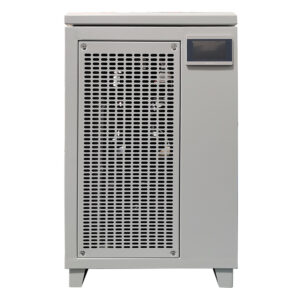
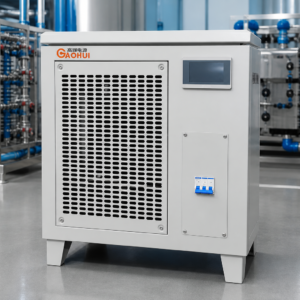
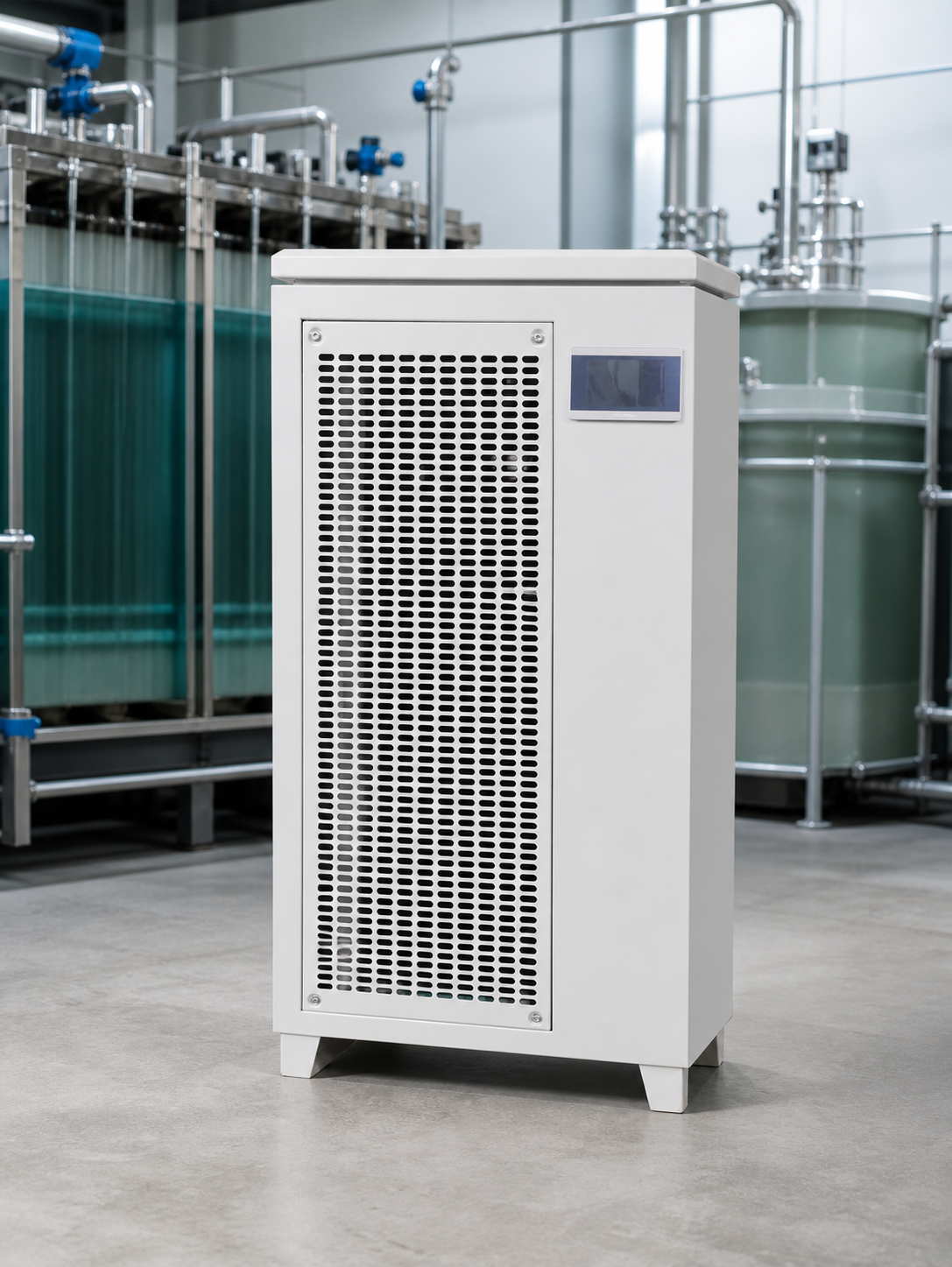
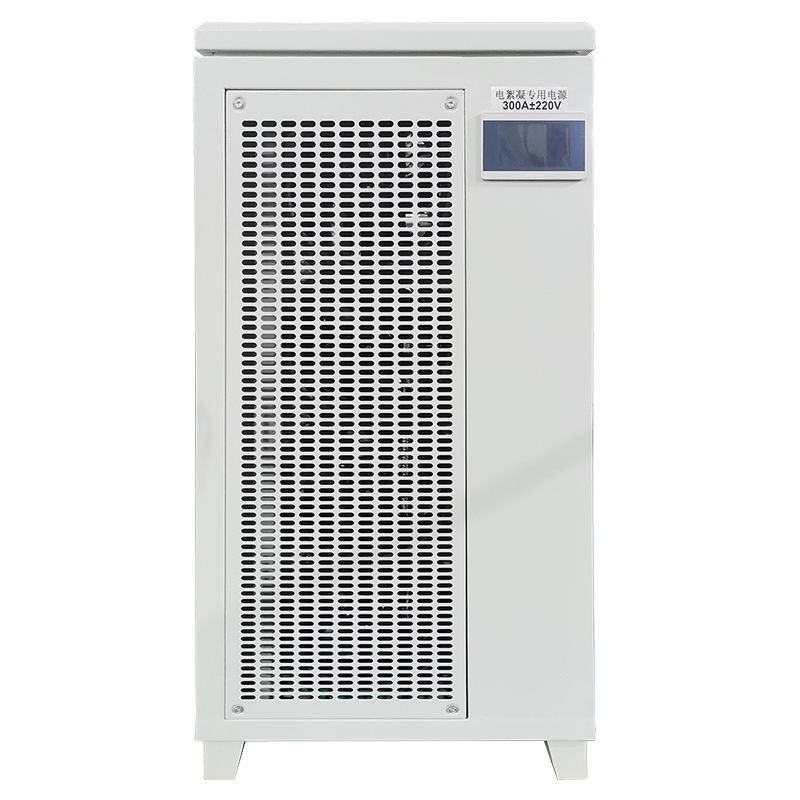
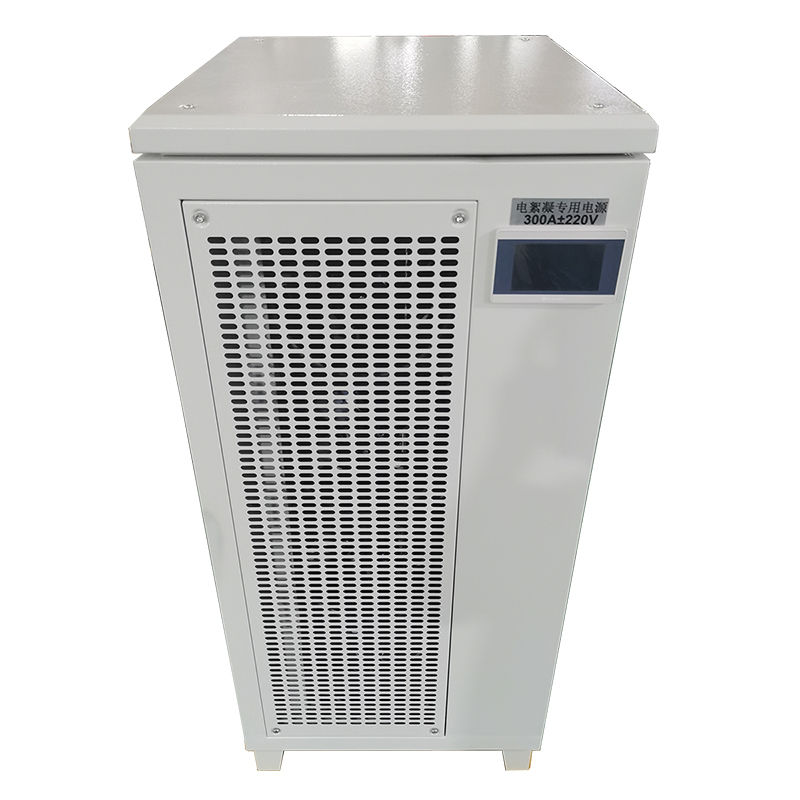
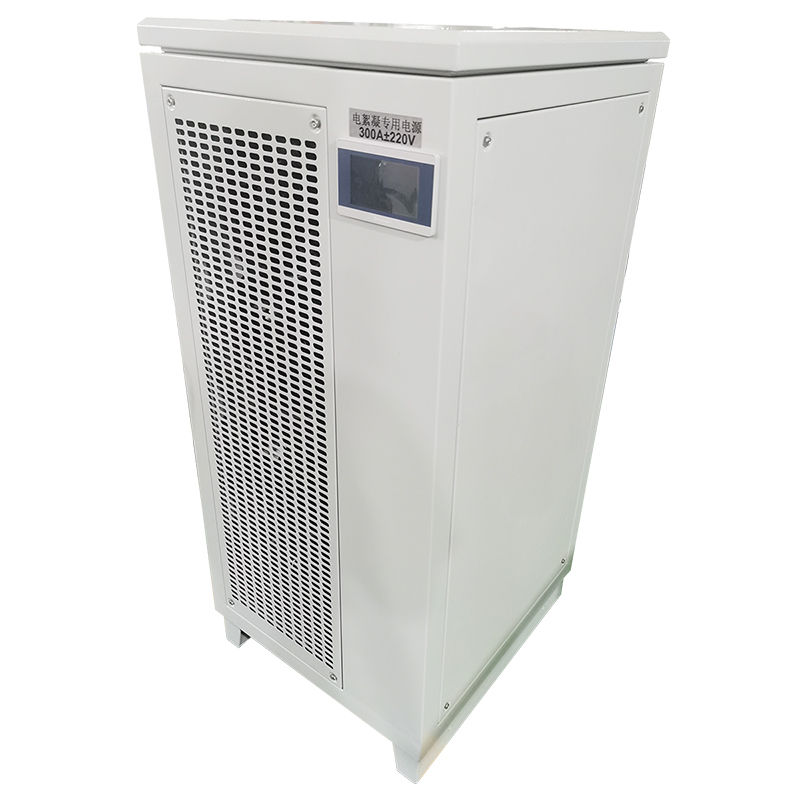
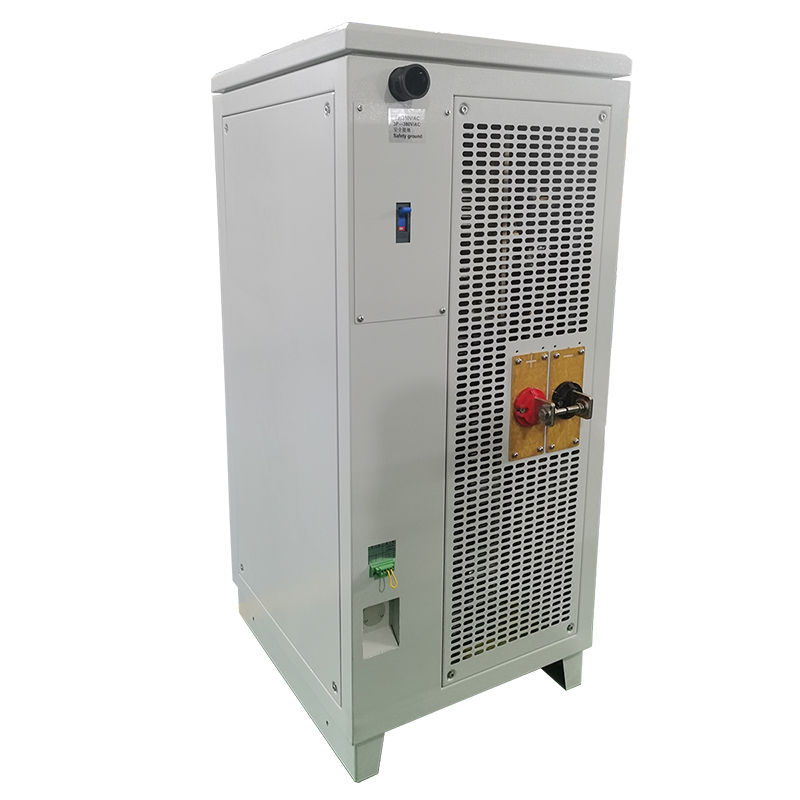
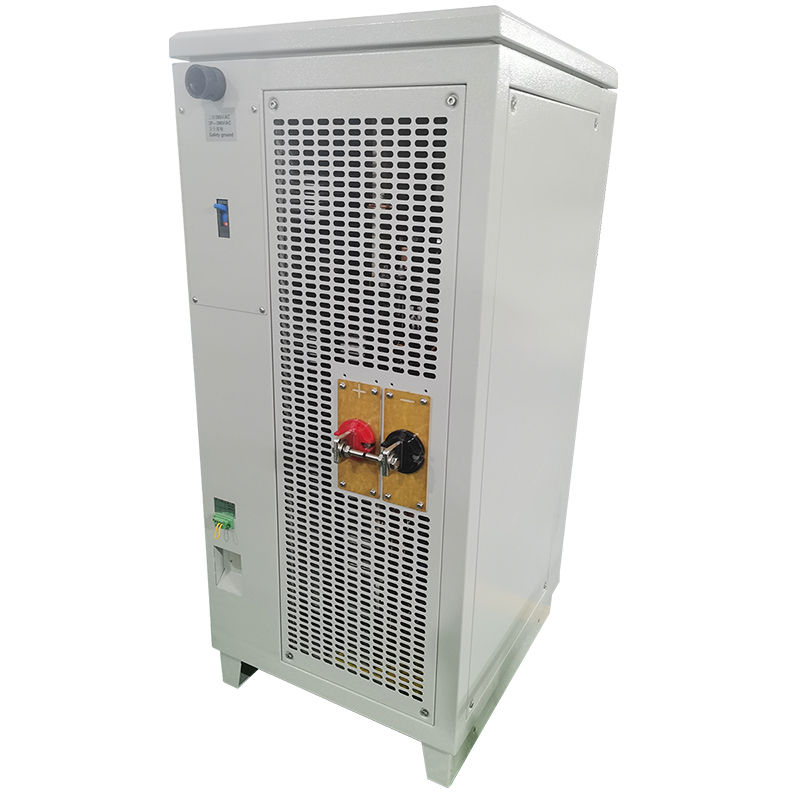
This 220V 300A air-cooled rectifier provides a 66kW output envelope for large or electrically series-connected electrocoagulation reactors. The tall floor-standing cabinet includes a local touch interface and a high-capacity forced-air cooling arrangement.
Key functions for the treatment system
- Adjustable DC voltage and current: set the electrical load around electrode area, conductivity and the selected current density.
- Constant-current operation: help maintain a defined current as solution resistance and electrode condition change.
- Voltage limiting: keep the reactor within the intended electrical envelope instead of relying on the maximum rating.
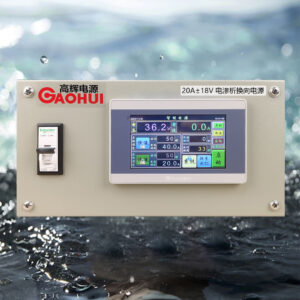
- Local touch operation: view and adjust the working setpoint at the cabinet.
- PLC and skid integration: support start/stop, setpoint, run feedback and alarm signals.
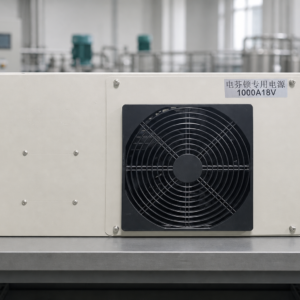
- Forced-air cooling: remove heat during continuous high-power operation when the cabinet has the required ventilation clearance.
These functions support the electrocoagulation process; they do not replace reactor sizing, chemical evaluation or downstream solids separation.
Why this unit combines high voltage and high current
Many single electrocoagulation cells operate at relatively low voltage. A higher system voltage can become necessary when numerous electrode gaps or modules are connected in series, when a bipolar arrangement is used, or when the water has relatively high resistance. It should not be treated as a universal requirement for phosphorus removal.
Current is related to the effective electrode area and selected current density. Voltage must overcome the reaction potential, electrode overpotential, solution resistance, connections and the cumulative drop across the reactor geometry. Both ratings therefore need to be checked against the actual cell design.
Reference configuration
| Item | Reference configuration |
|---|---|
| Rated DC output | 0–220 V, 0–300 A |
| Rated DC power | 66 kW |
| Typical AC input direction | Three-phase 380/415 V |
| Cooling | Forced-air cooling, four-fan reference unit |
| Local operation | 4.3-inch touch interface |
| Installation | Tall floor-standing cabinet |
| Approximate enclosure | 510 × 580 × 1160 mm |
| Approximate weight | 161 kg |
Input voltage, output terminals, communication, protection and enclosure details can be adapted to the installation. Sufficient ventilation clearance must be maintained around the cabinet.
What the rectifier can control
Adjustable DC output allows the operator or PLC to set an electrical loading suitable for the water and electrode condition. Constant-current operation can help maintain a selected current as conductivity and electrode resistance change. Voltage limiting protects the intended operating envelope.
The rectifier can also be integrated with external start/stop, setpoint commands, run feedback and alarms. More advanced sequences—such as staged current, timed batches or polarity management—are considered only when the reactor and electrode strategy require them.
Before output is enabled, the treatment skid should confirm the conditions that protect the reactor: adequate liquid level, correct flow or mixing, available downstream separation and any required ventilation. The final interlock list belongs to the complete system design.
Selecting the output for a phosphorus-removal reactor
Flow rate alone is not enough to select current. A sound starting point combines:
- Effective electrode surface area and target current density
- Iron or aluminum electrode material and consumption strategy
- Monopolar, bipolar, series or parallel connection
- Electrode gap and reactor dimensions
- Conductivity, pH, temperature and expected water variation
- Pilot-test voltage, current, treatment time and phosphorus response
- Clean-to-aged electrode resistance and maintenance practice
- Mixing, retention time and solids-separation method
The rectifier must cover the highest valid operating voltage while still providing useful adjustment at normal conditions. Excessive unused voltage range can make control less practical and should not replace a better reactor configuration.
See our electrochemical wastewater rectifier range for alternative output envelopes. Where microbubble lifting rather than coagulant generation is the main mechanism, the 500A 12V electroflotation rectifier addresses a different process requirement.
What improvement may be possible
With a suitable electrode reactor and downstream separation, electrocoagulation can support phosphate capture, suspended-solids removal, color reduction and the aggregation of some dissolved or colloidal contaminants. Actual performance depends on water chemistry and should be verified with representative tests. No fixed removal percentage can be inferred from the rectifier rating.
Application questions
Does a 220V rectifier apply 220V across every electrode gap?
Not necessarily. In a series or bipolar arrangement, the total output voltage is distributed across multiple gaps or cells. The electrical drawing is required to understand the voltage at each reaction zone.
Can the same supply be used with iron and aluminum electrodes?
The rectifier can supply either load if the required electrical range is compatible. The process chemistry, electrode consumption and operating setpoints may differ, so they must be evaluated separately.
Does the rectifier guarantee total phosphorus compliance?
No. Compliance depends on influent composition, phosphorus form, pH, electrode chemistry, electrical dose, reaction time, solids separation and the full treatment train.
Is polarity reversal standard?
No. It may be useful for some maintenance or electrode strategies, but it changes which surfaces dissolve and react. It is configured only after the process designer confirms the requirement.
What installation space is required?
Allow a stable floor area, service access, ventilation clearance and safe routing for AC input and high-current DC conductors. Final distances should follow the approved cabinet drawing.
Request an engineering check
Provide the reactor electrical diagram, electrode area and gap, water conductivity range, pilot readings, required operating cycle, AC supply and PLC interface. We will use those details to confirm whether the 220V 300A envelope is appropriate and define the cabinet and controls for your phosphorus-removal system.